

Industry: Nickel_Mining | Process: Tailings_Thickening_&_Disposal
Nickel mines move mountains — and leave behind even bigger volumes of tailings. In 2018 alone, global nickel mining generated about 228 million tonnes of tailings (statista.com). These slurries are mostly water with fine solids, a recipe that demands careful containment.
Tailings dam failures remain rare but devastating — 63 worldwide since 1970 (prosiding.perhapi.or.id) — and water has been the underlying cause in most incidents (tailings.info). The operating maxim cited by practitioners is stark: “no water – no problem” (tailings.info).
Indonesia — the world’s largest nickel producer — now generates “hundreds of millions of tonnes” of metal-mining tailings per year, with roughly 11 companies operating tailings dams (prosiding.perhapi.or.id). Tailings are regulated as hazardous (B3) waste (prosiding.perhapi.or.id), and while there is no written law banning deep-sea tailings disposal, policy now forbids new ocean-discharge permits (independensi.com). That shift is forcing more robust on‑land tailings storage facilities (TSFs, engineered impoundments for tailings) and dewatering.
Site characterization and life‑of‑mine design
Best practice starts with thorough site and material characterization: geology, hydrogeology, seismicity, rainfall, terrain, and tailings geochemistry, documented to ICMM/ICOLD standards and sized for the full mine life, including closure (klohn.com; klohn.com). In Indonesia, climate and seismic risks sharpen the need for resilient layouts given tropical storms and earthquakes.
Dam type selection and seismic context
Construction method matters. Upstream-raised dams (built on previously deposited tailings) are cheaper but vulnerable to liquefaction in earthquakes (klohn.com). Where rainfall or seismicity is high — including much of Indonesia — downstream or centerline raises using engineered fill and internal drainage offer greater resilience (klohn.com; klohn.com). Cycloned coarse tailings “sand zones” placed near impermeable cores provide natural filtration.
Slope stability, drainage, and materials
Key failure modes are slope slides and internal erosion, so foundations require full geotechnical investigation and treatment — grouting or cutoffs for weak layers — while embankments are built with quality‑controlled, compacted fill (klohn.com). Core zones use impervious material (clay or membrane), flanked by filter/transition zones to intercept seepage. Wide crests — often many meters — reduce slumping risk. Practitioners stress two themes: minimizing water held in the TSF and using thickened or filtered tailings to reduce hydrologic load (klohn.com).
Redundancy in spillways and freeboard
Designs incorporate dual or emergency spillways on non-critical flanks to route extreme inflows without overtopping, with emergency crests set well above normal decant ranges (klohn.com). Freeboard (vertical distance from water level to dam crest) is non‑negotiable and is maintained with the pond forced away from embankments to maximize buffer (tailings.info).
Instrumentation and independent oversight
Real‑time monitoring anchors operations: piezometers (to track pore pressures), inclinometers (for deformation), and water‑level gauges, with periodic review by an independent dam safety engineer in line with the ICMM Global Tailings Standard (tailings.info). Data‑driven governance is as important as the civil works.
Progressive raising and deposition control
Embankments are raised in stages with strict quality control on each lift. Upstream beach deposition is limited to low‑risk settings; centerline or downstream progressions are typical in wet or seismic regions (klohn.com).
Tailing properties and chemical behavior
Operators characterize particle size, compaction behavior, and chemistry. Where tailings are potentially acid‑generating, designs prevent oxidation — reducing covers or subaqueous storage — and may add stabilizers. Layering fine tails with coarser cycloned sand can promote drainage (klohn.com).
High‑density thickening and water recovery
Modern TSFs integrate high‑rate and paste thickeners to reach >60% solids before deposition, cutting slurry volume and shrinking the water balance burden. In Indonesia’s HPAL (high‑pressure acid leach) laterite projects, Metso Outotec is supplying 25 state‑of‑the‑art thickeners — high‑rate, high‑compression, and paste units — with ReactorwellTM feed systems where applicable (miningmetalnews.com; miningmetalnews.com). Where reclaim water needs treatment before reuse or discharge, unit processes such as a clarifier are commonly applied to remove suspended solids.
Operational water controls and decant capacity
Water management is the dominant safety control. Floating decant barges or towers continuously pump supernatant back to the plant, sized so storm runoff can be removed within 2–4 weeks after a flood (WMC 1998) (tailings.info). Because pumping is mission‑critical, operators install standby generators and spare pumps to maintain decant during outages (tailings.info). Chemical control, where used, is typically delivered via an accurate dosing pump to stabilize water quality in process loops.
Runoff diversions, seepage capture, and screening
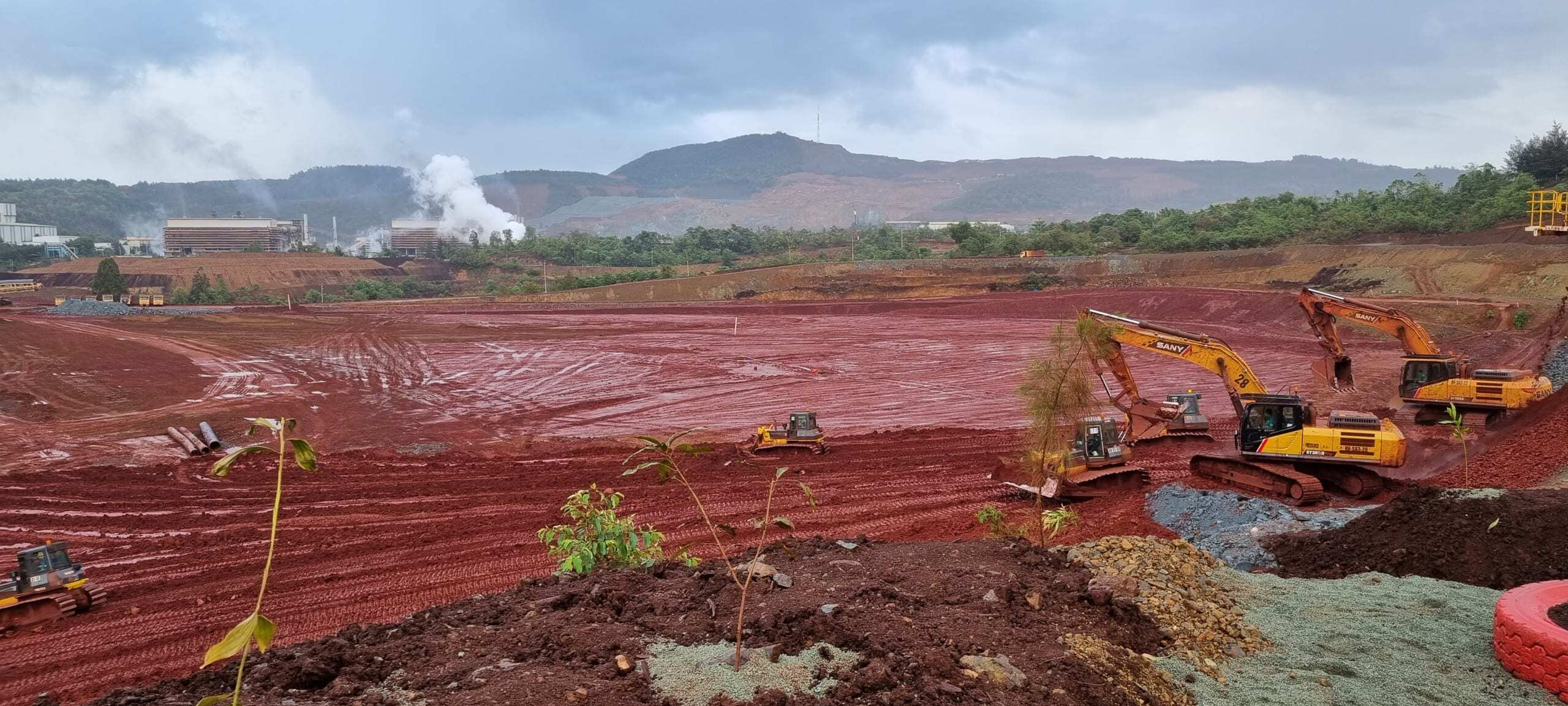
Runoff from the surrounding catchment is diverted around the TSF to reduce inflows, a must in climates with >1,000 mm/year rainfall in places. Any diversion or sedimentation pond requires maintenance to avoid unplanned inflows (tailings.info). Intake protection can include an automatic screen to continuously remove debris before it reaches decant or diversion pumps.
Seepage is managed by internal drains (chimneys, toe drains) and monitored via piezometer nests; if groundwater pressures rise near the embankment, relief wells or pressure‑relief measures follow. Captured seepage can be routed to primary treatment such as waste‑water physical separation before reuse or controlled discharge (tailings.info).
Freeboard targets and storm design
Standards generally size for at least a 100‑year, 24‑hour storm plus margin, holding the supernatant pond as far from the embankment as possible and never allowing uncontrolled overtopping (tailings.info). Small‑footprint solids settling — for example, a lamella settler — can be helpful where space is constrained in ancillary water circuits.
Emergency plans and community alerts
Operators maintain emergency response plans with triggers for evacuation or emergency pumping — such as rapid pond rise or excessive pore pressures — backed by community warning systems and clear lines of authority (tailings.info).
Trend to dewatered and dry‑stack tailings
The industry is rapidly adopting dewatered or dry‑stack tailings (DST: filtered to ~65–75% solids and placed as engineered stacks without a large pond) to eliminate slurry impoundment risk. Modern filter plants recover roughly 90–95% of process water (miningmagazine.com), with a Chile demonstration at 10,000 t/d showing makeup water of only 0.2 m³/t with DST versus ~0.7 m³/t for a conventional sand dam — a 70% reduction in fresh‑water intake and over 90% reuse (miningmagazine.com).
Safety is markedly improved: without a supernatant pond, the chance of catastrophic flow failure is virtually zero, and filtered tailings deposit as a stable, cohesive cake that is less prone to liquefaction, even in high‑seismic areas (miningmagazine.com). DST also shrinks the footprint to about half that of slurry impoundments and enables incremental grading and vegetation, with minimal consolidation or capping at closure (miningmagazine.com).
Adoption is scaling. Large “colossal” AFP‑IV filter units now top 100,000 t/d throughput, and, as FLS’s Todd Wisdom notes, complete DST systems are “technologically feasible at a large scale – and even for high tonnages, recovering 90–95% of the water” (miningmagazine.com). Major new nickel projects have specified DST — including the Twin Metals Cu–Ni project — and Indonesian nickel smelters (PT Huafei, NiPlats, etc.) are installing pressure filters and conveyors. With Indonesia effectively banning new deep‑sea tailings permits, policy is pushing smelters to dry‑stack or otherwise fully reclaim on land (independensi.com).
Implementation requires capital for filter plants and stacking systems, but when avoided dam engineering, land, water treatment, and risk are considered, DST can be cost‑competitive. In Chile, projected 38% water‑demand growth by 2021 has justified >$5/m³ seawater desalination; DST offers similar water reuse without the social/energy footprint of desal (miningmagazine.com). Where reuse quality targets are stringent, pretreatment trains often begin with ultrafiltration as a barrier to protect downstream membrane systems.
Integrated water balance and “no ponding”
Regardless of disposal type, a quantified water balance governs inputs (process returns, rain, runoff) and outputs (process reclaim, evaporation, seepage). Fourie (2003) and other reviewers point out that most historic TSF failures coincided with large water ponds — and that raising tailings density is “the most obvious step” to reduce hazard (tailings.info). Day‑to‑day operations keep decant systems active indefinitely and pond levels under hourly watch, backed by redundant power (tailings.info). Where water is routed off‑circuit, compact settlers and coagulants — for example, a PAC program — are standard building blocks in ancillary treatment.
Closure planning and Indonesian governance context
Design for closure from the outset: target near‑zero stored water, gentle stable slopes, vegetated covers, and clear pathways for long‑term water evacuation. The largest challenge flagged by Indonesian experts is uncertainty over post‑closure responsibility (prosiding.perhapi.or.id). Filtered or thickened deposits simplify that path by delivering stronger, more inert landforms. For polishing any residual waters before discharge or reuse, biological and membrane options — such as membrane bioreactors — can be incorporated in the sitewide water plan.
Practical add‑ons in water circuits
Operators often supplement the core TSF systems with targeted aids: debris control at intakes via screening, solids removal via settlers, and dosing accuracy for process chemicals. Fit‑for‑purpose modules such as a lamella settler for compact clarification or primary separation units can be integrated without expanding the TSF footprint.
Bottom line and operating targets
For nickel projects — especially in Indonesia’s tropical, seismic settings — the brief is clear: minimize water, maximize safety. That means thickening or filtering to raise solids, robust drainage and spillways, diversified monitoring, and serious consideration of dry stacking wherever feasible. Many operators now track quantitative targets such as >90% water reuse and <10% pond coverage; industry reporting shows that investments in advanced thickening and DST drive dramatic freshwater reductions and near‑elimination of catastrophic dam‑failure risk (miningmagazine.com; miningmagazine.com).
References: statista.com; prosiding.perhapi.or.id; prosiding.perhapi.or.id; prosiding.perhapi.or.id; independensi.com; klohn.com; klohn.com; klohn.com; klohn.com; klohn.com; klohn.com; klohn.com; tailings.info; tailings.info; tailings.info; tailings.info; tailings.info; tailings.info; tailings.info; miningmetalnews.com; miningmetalnews.com; miningmagazine.com; miningmagazine.com; miningmagazine.com; miningmagazine.com.