
Grinding and flotation can gulp 1.9–3.0 m³ of water per tonne of ore. Case studies show mines are clawing much of it back by recycling thickener overflow and fine‑tuning flocculant control.
Nickel ore grinding is water‑intensive, with typical concentrator circuits using on the order of 1.9–3.0 m³ water per tonne of ore processed (mdpi.com). In Indonesia, major producers have leaned into closed‑loop recirculation and monitoring, routing clarified process water back into the grinding circuit and tightening losses with leak detection and flow metering.
One result: PT Vale Indonesia reports a water‑use intensity of 106.9 m³ per tonne Ni (matte) in 2023 — down from 141.8 m³/t in 2022 — after installing flow meters and an online SWAP leak‑detection system (vale.com). The company cited an 11% year‑on‑year reduction aided by tighter controls and recycling, including reusing 385,000 m³ of process water for slag cooling (vale.com).
Operations that recycle tailings thickener overflow back to mills or cyclones — minimizing fresh water make‑up — and optimize mill and cyclone performance to avoid water losses are posting double‑digit reductions. Recirculating clarified process water from thickeners or a clarifier directly into the grinding circuit has been shown to lower freshwater demand on the order of 10–50% or more, depending on the mine’s baseline and efficiency. Indonesia’s regulation Permen LH 9/2006 limits total suspended solids (TSS) in processing discharge to 100 mg/L (123dok.com), so returning clean overflow water to the mill supports compliance while conserving water.
Grinding circuit water intensity
Even downstream, flotation circuits still consume ~2–3 m³/t of ore processed while water contains 25–35% solids, according to one study (mdpi.com). That puts a premium on reclaiming and reusing water at every stage of the plant.
Tailings thickener performance targets
The tailings thickener — a large tank that concentrates solids and produces a clarified overflow — is central to water recovery in mineral plants. Industry benchmarks indicate high recovery: high‑rate thickeners typically reclaim ~80–85% of tailings water for reuse (azomining.com).
Modern designs can do better. At South Africa’s Khumani iron‑ore mine, two large high‑rate thickeners recovered about 90% of slurry water by volume, and secondary paste thickeners on the primary underflow boosted total water reclamation to over 95% (australianmining.com.au). Deep‑cone and paste thickeners can achieve underflow solids greater than 70% (w/w, by weight) to maximize water yield (fls.com).
Incremental upgrades, outsized water gains
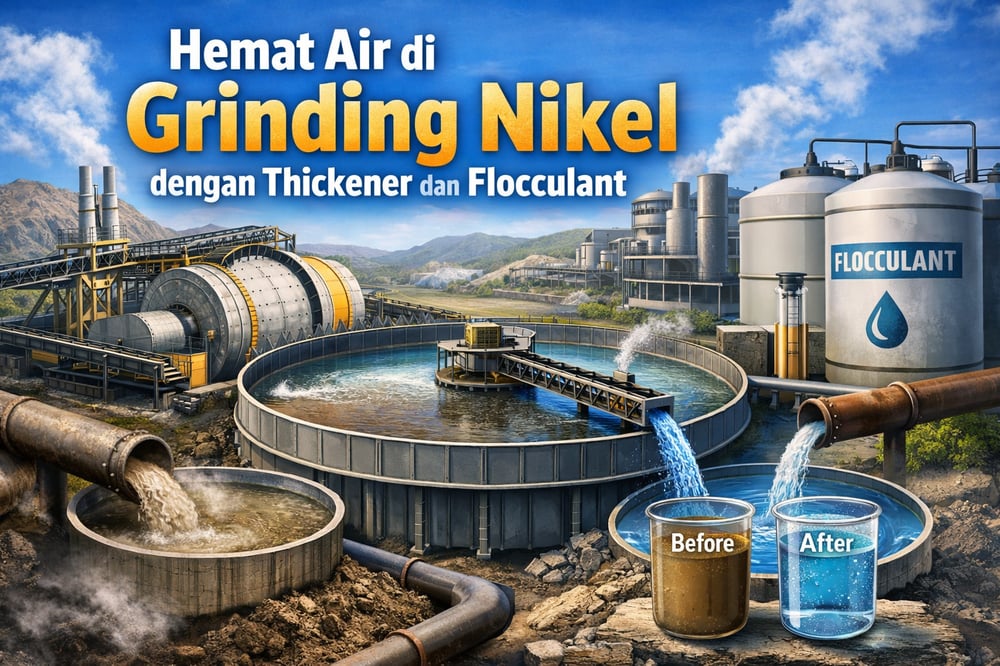
Small increases in underflow density — the solids concentration in thickener underflow — translate into sizable water savings. In one case, upgrading a third‑party thickener raised underflow solids from 61% to 65% (w/w) and reduced water reporting to tailings by 12% (fls.com). Another upgrade lifted underflow from 54% to 57%, yielding an 11% drop in tailings flow — and hence lower freshwater consumption (fls.com).
Digital control matters, too. Auto‑flocculant control (FLS AutoFloc) at one Chilean mine cut water to tails by 14% and flocculant use by 15%, delivering multi‑million‑dollar savings (fls.com). Overflow clarity improves alongside yield: one upgraded thickener saw turbidity drop from approximately 400 to less than 100 NTU (Nephelometric Turbidity Units, a standard measure of water clarity) (fls.com).
Chemical flocculants and settling physics
High‑molecular‑weight polyacrylamide copolymers (usually anionic) are the workhorse flocculants in modern mining; they bind fine particles into larger “flocs” that settle faster (research.csiro.au). Plants tune dosage to increase the zone settling velocity and produce denser underflow solids (iwaponline.com), often delivered with an accurate dosing pump to avoid swings.
Tests show that raising flocculant dose — and combining it with recycled sludge — can produce near‑neutral zeta potential (a measure of particle surface charge) and the lowest water turbidity (mdpi.com). Doubling flocculant dosage can significantly increase underflow density, though overdosing can create “fluffy” flocs that settle quickly but compact poorly (iwaponline.com). Tailored chemistries and feedwell dilution systems (e.g., FLS’s E‑DUC/P‑DUC) help minimize polymer usage while maximizing effect (fls.com). At the reagent shelf, operations rely on specialized flocculants to maintain performance while pushing for clarity and recovery.
Closed‑loop reuse and compliance
Recycling clarified process water (from thickeners or clarifiers) directly into the grinding circuit has repeatedly lowered freshwater demand by double digits, with thickener upgrades alone yielding 10–15%+ less water to tailings (fls.com; fls.com). In many plants, well‑designed thickeners routinely enable 85–95%+ of tailings water to be recycled back into grinding and processing, slashing reliance on external water supplies (azomining.com; australianmining.com.au).
In Indonesia’s nickel sector — where the TSS limit is 100 mg/L in effluent (123dok.com) — the same interventions serve both business and regulatory needs. By recovering the vast majority of process water and clarifying it for reuse (australianmining.com.au) and driving overflow turbidity to less than 100 NTU (fls.com), mines reduce withdrawals and operating costs while improving compliance.
