

Industry: Brewery | Process: Mashing
Brewing’s resource math is stark. A recent material‑ and energy‑flow study of a small U.S. brewery clocked roughly 12.8 liters of water per liter of beer (12.8 L/L) and 4.2 megajoules (MJ; unit of energy) of thermal plus 1.6 MJ of electrical energy per liter of beer (Frontiers in Sustainable Food Systems). Large, optimized breweries do far better—on the order of 3–4 L/L, as local industry reports note (Kompas).
Regulatory pressure is rising too. In Indonesia, new 2025 wastewater rules mandate real‑time effluent monitoring and stricter discharge limits for food and beverage plants—making water savings and waste reduction doubly valuable for compliance (Greenlab; Greenlab).
Preheated mash liquor with waste heat
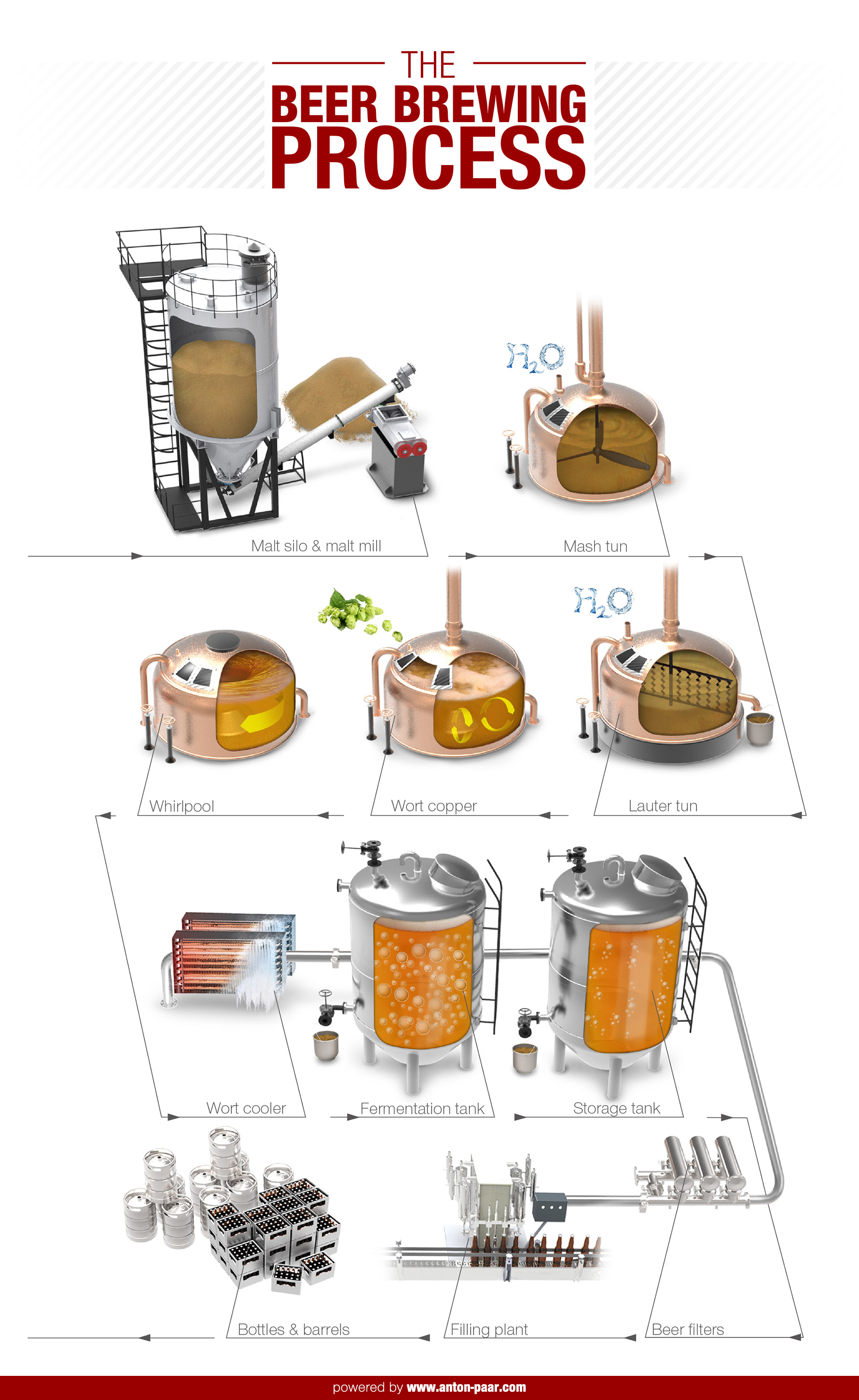
Breweries commonly pass cold brewing liquor (brewing water) through the hot wort’s plate heat‑exchanger right after boil. The cold liquor absorbs residual heat and emerges about 75–80 °C before storage in the Hot Liquor Tank (HLT; hot water storage), ready for the next mash (Frontiers in Sustainable Food Systems). To maximize reuse, brews should run on consecutive days; otherwise HLT heat bleeds away. One microbrew analysis estimated that eliminating gaps between batches (so HLT heat isn’t lost) saves about $0.29 per barrel brewed (BBL; beer barrel)—roughly $0.0025 per liter of beer—using 2018 values (Frontiers in Sustainable Food Systems).
Boil and cooling heat recovery hardware
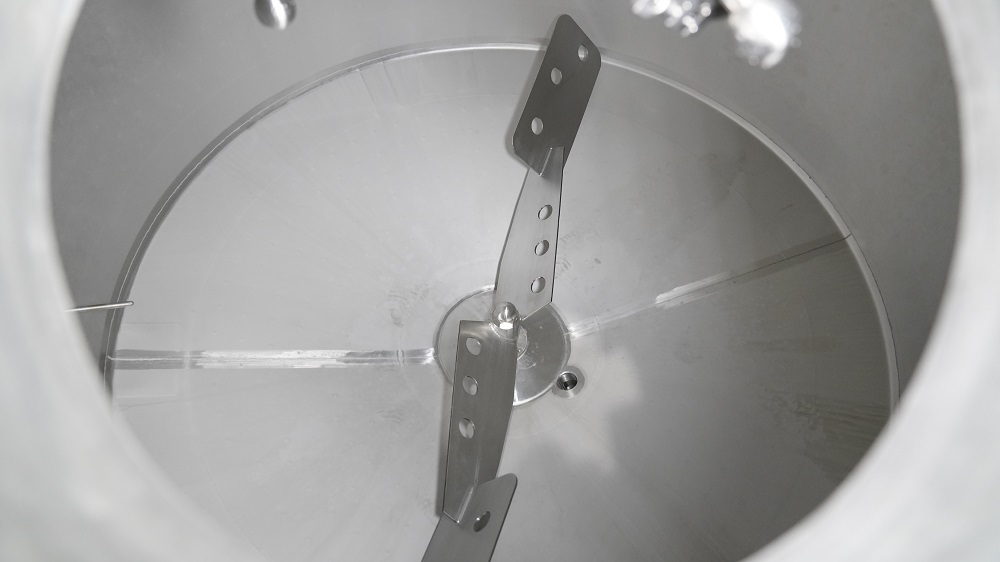
Several recovery points stack up. A boiler stack condenser on the brew kettle’s exhaust condenses steam by circulating cool water; the resulting hot water returns to the HLT (ProBrewer). Trade case studies report that by reusing condensate and heat‑exchanged water, breweries can recapture up to about 60% of the energy normally required for wort boiling—diverting that heat to preheat mash liquor or to CIP (clean‑in‑place; automated cleaning) cycles and cleaning processes (Food & Drink Business).
In practice, that looks like:
- Wort chiller → HLT loop: Running cold liquor through the plate exchanger yields hot water for the next mash (Frontiers in Sustainable Food Systems).
- Boiler stack condenser: Recover kettle exhaust heat back to the HLT (ProBrewer).
- Steam condensate reuse: Use mash‑vessel/kettle condensate to heat strike water or CIP water, replacing new steam (Food & Drink Business).
- Heat pumps and wastewater loops: Capture warm wastewater or utility heat (e.g., hot washwater, cooling CO₂ compressors, fermentation jackets) and boost it into useful hot water (Just Drinks).
Trade literature also emphasizes insulating HLTs and using stratified hot‑water storage to balance surge needs (for example, 78 °C vs 97 °C zones) (Craft Brewery Equipment). An equipment provider notes that a well‑designed recovery system “offers numerous advantages,” including significantly reduced fuel use, CO₂ emissions, and operating costs (Craft Brewery Equipment). In such hot‑water loops and storage systems, plants often lean on supporting equipment for water treatment to manage valves, controls and distribution.
The bottom line: systematic recovery from wort chilling, the brew stack and even hot glycol lines can cut thermal energy demand by tens of percent, with direct natural‑gas savings (Food & Drink Business).
Mash thickness (liquor‑to‑grist ratio)
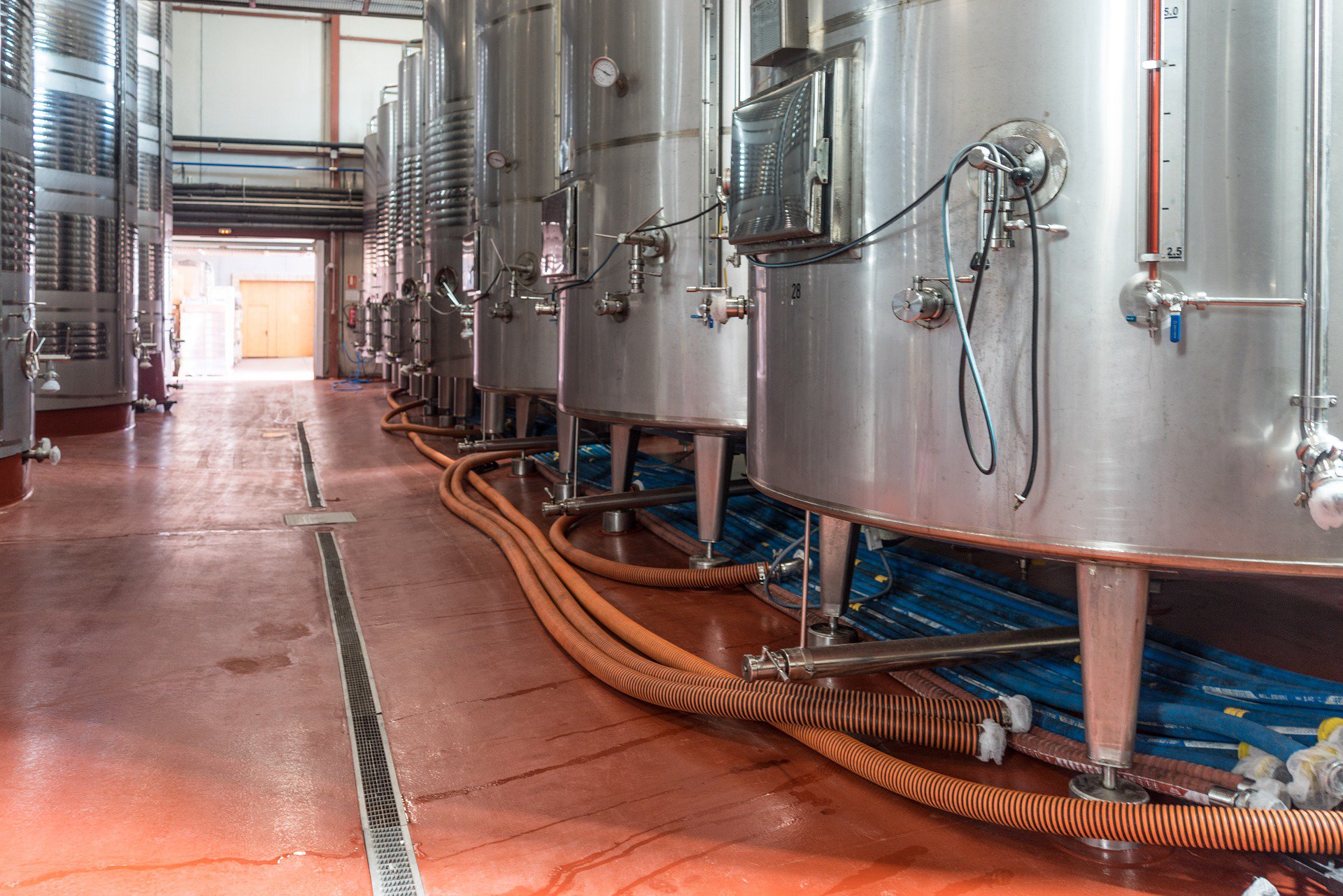
Reducing mash water—making the mash thicker—directly saves both water and heat. Liquor‑to‑grist (L:G) ratio is liters of mash liquor (brewing water) per kilogram of grist (milled grain). Research shows very thick mashes can work without quality loss. De Rouck et al. found that a critically thick mash (malt:water = 1:2.3 by weight, about 2.3 L/kg) yielded normal extract levels and attenuation, with high fermentable yield and adequate free amino nitrogen, and drove much lower water and energy use in the brewhouse (Taylor & Francis; Taylor & Francis; Taylor & Francis).
In practical terms, shifting L:G from a common 3–3.5 L/kg down toward roughly 2.3 L/kg can reduce strike‑water and sparge‑water volumes by about 30–40%—with commensurate energy savings—and the study even shortened mash rest times at each step (Taylor & Francis). Dictionary‑wise, thicker mashes reduce heating load almost linearly: heating 1 kg of water by 1 °C requires about 4.18 kJ. Thus every extra liter‑per‑kg of mash water adds around 1.5 MJ per brewing batch; trimming that improves thermal efficiency (Taylor & Francis).
Conversion parameters in dense slurries
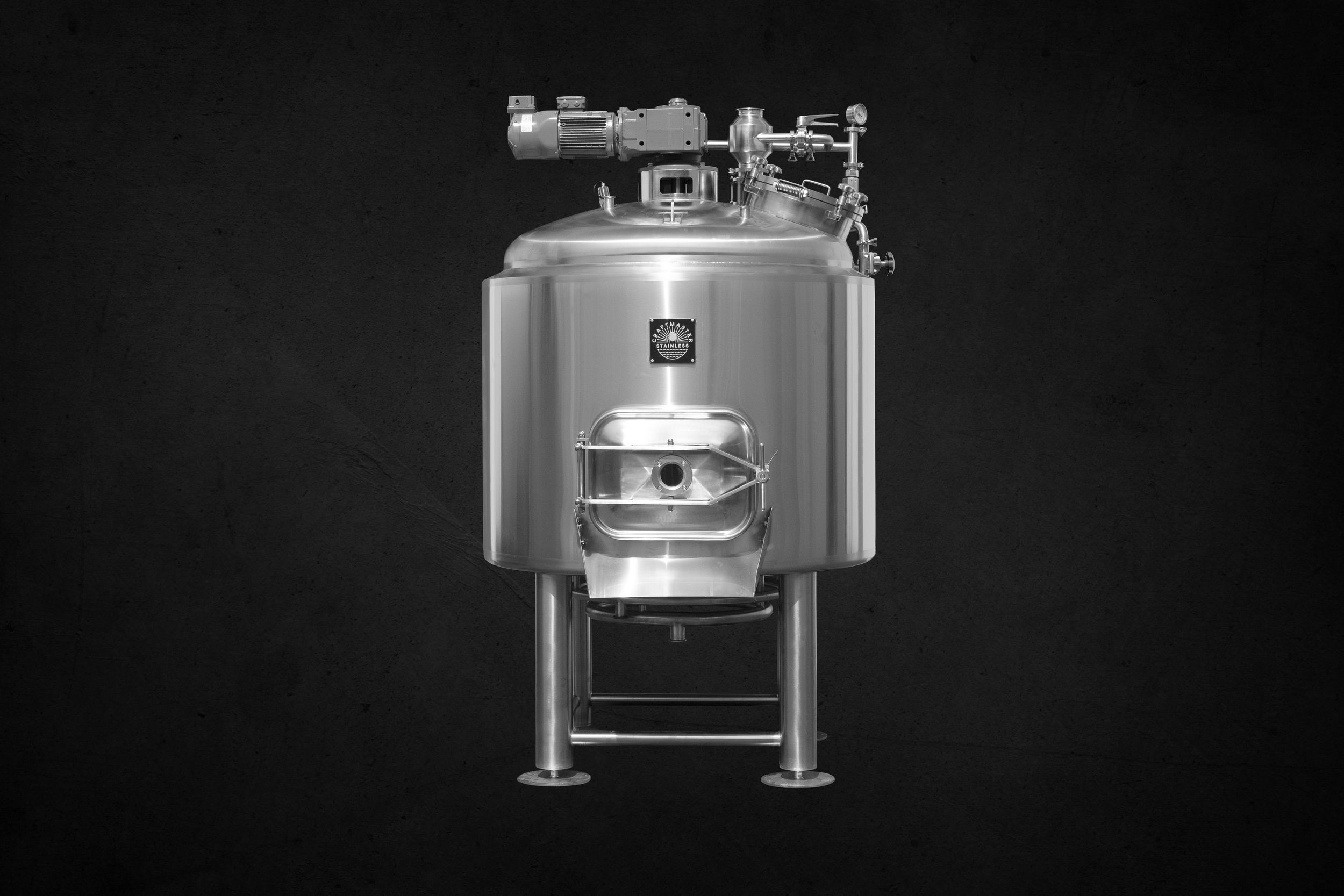
Key operational notes from the research: fine milling and a slightly higher initial mash‑in temperature (above starch gelatinization) ensure rapid conversion in low‑dilution mashes, and brewers adjust mash pH (around 5.2) to optimize enzyme performance in a denser slurry (Taylor & Francis). For pH control, food plants often rely on precise dosing; a dosing pump provides accurate chemical dosing.
Breweries balance thickness against lautering constraints: excessively thick mashes risk mash‑outs or tun plugging in some systems. Many modern brewhouses (with automated mixing/lauter sparging) safely operate down to about 2.5 L/kg or lower (Taylor & Francis). For an Indonesian brewery, selecting the minimum viable ratio—guided by lab tests—can markedly reduce both boiler gas use and water draw (Taylor & Francis).
Quantified outcomes and compliance context
Each measure delivers measurable gains. Recovered heat from wort cooling alone came to about $0.29 savings per BBL (roughly $0.0025 per liter) in one analysis (Frontiers in Sustainable Food Systems). Heat exchangers on the brew stack and hot glycol lines can reclaim up to ~60% of boil energy (Food & Drink Business). Meanwhile, reducing L:G from about 3.5 L/kg to about 2.3 L/kg can cut strike‑water needs by roughly 35%, saving a similar fraction of mash‑heating energy and sparge volume (Taylor & Francis).
Corporately, these steps lower water‑disposal costs and fuel bills. They also ease compliance with Indonesia’s tightened effluent rules for food and beverage producers (real‑time monitoring; stricter discharge limits) (Greenlab; Greenlab).
Mash efficiency playbook
In summary, breweries improve mashing efficiency by: (1) recovering heat so that mash liquor is preheated by waste streams (Frontiers in Sustainable Food Systems; ProBrewer), (2) reusing hot streams from wort cooling, steam condensate and CIP water wherever possible (Food & Drink Business; Just Drinks), and (3) using the leanest mash compatible with full enzyme conversion (Taylor & Francis). The evidence from studies and trade sources shows these steps substantially reduce both water consumed and energy spent per batch, delivering quantifiable cost savings and sustainability gains (Frontiers in Sustainable Food Systems; Frontiers in Sustainable Food Systems; Food & Drink Business; Taylor & Francis; Just Drinks; ProBrewer; Kompas; Greenlab; Greenlab).