

Industry: Semiconductor | Process: Wafer_Cleaning_&_Etching
At advanced nodes, every square centimeter of silicon soaks up water. A typical fab uses roughly 8–8.5 liters of ultra‑pure water (UPW) per cm² of wafer processed, a staggering draw that helped push global UPW consumption to about 5.5×10^8 m³ in 2022 (azonano.com).
Water scarcity and cost are forcing change. Industry roadmaps aim to cut rinsing from 7.8 L/cm² (2013) to ~4.6 L/cm² by 2028, while keeping sub‑10 nm cleanliness and yield intact (ultrafacilityportal.io). The playbook: advanced rinsing and aggressive recycling.
Megasonic and single‑wafer rinsing
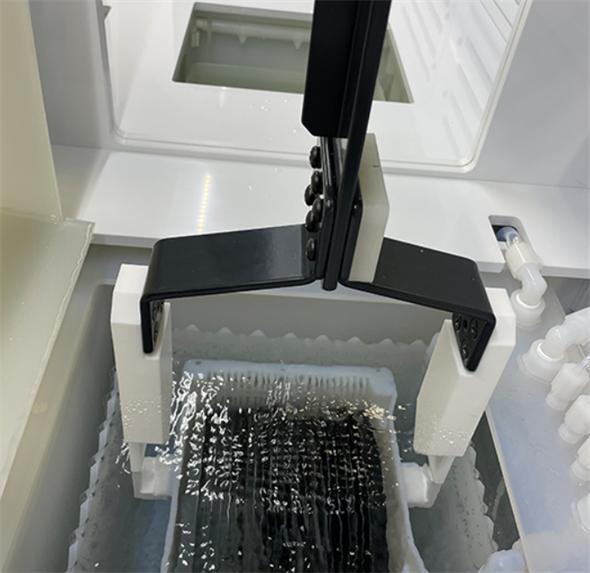
Megasonic cleaning (∼0.8–2 MHz ultrasound) uses acoustic cavitation to peel off sub‑micron particles faster than plain soak, delivering energy directly at the wafer to shorten chemical baths and rinse time (acmr.com). Next‑generation single‑wafer megasonic tools using SAPS™ or timed–bubble oscillation improve uniformity without damaging features, enabling lower rinse duration or volume per wafer (acmr.com).
Spray tools and spin‑rinse dryers (SRDs) replace bulky immersion tanks with high‑pressure UPW films that are flung off and evaporated, achieving cleanliness with far less water. Anecdotally, a conventional 300 mm batch rinse uses ~450 L over 10 minutes; shortening by just 2 minutes saves ~100 L (≈22%) (slideshare.net). An optimized SRD runs on the order of tens of liters per wafer.
Cycle time and counter‑flow tactics
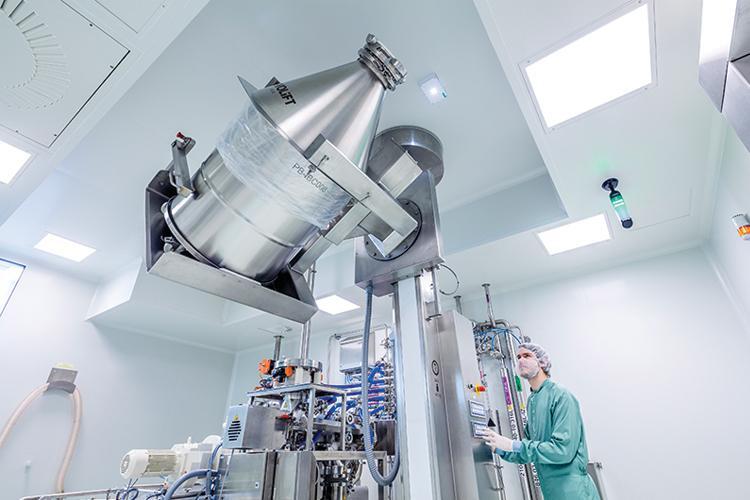
Beyond hardware, fabs tune rinse sequencing: counter‑current cascades, drift‑flow rinse manifolds, and on‑demand pulsed sprays minimize fresh‑water flow. Industry studies show shorter cycles and counter‑flow setups can cut rinse water by roughly 20–30% or more without sacrificing cleanliness (slideshare.net; ultrafacilityportal.io).
One EPRI‑led example: a standard 10‑minute DI rinse consumed ~450 L per load; cutting to 8 minutes saved ~100 L (slideshare.net). Adopting counterflow rinse tanks and trimming redundant purge volumes—validated by CFD (computational fluid dynamics) and experiments—has been shown to improve rinse efficiency and reduce water use by 20–50% (slideshare.net).
Closed‑loop rinse water recycling
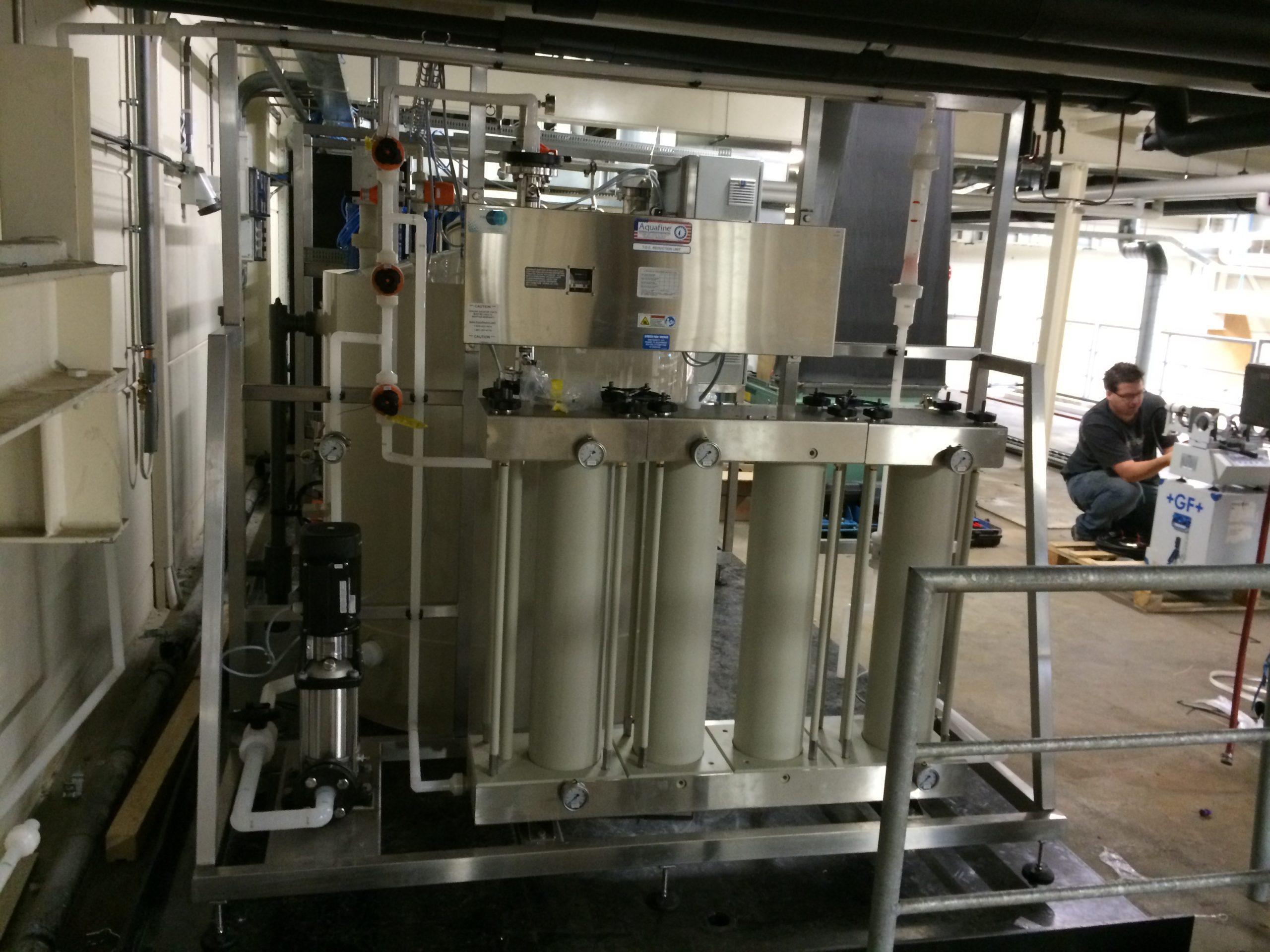
Because UPW purity thresholds are extreme, rinse effluent is treated before reuse. Typical reclaim sends clean rinses (low chemistry, low organics) through particle removal—ultrafiltration or sediment filtration—followed by polishing via reverse osmosis and ion removal. In practice, that means ultrafiltration as pretreatment can slot in ahead of RO; fabs deploy units similar to ultrafiltration and pair them with sediment/cartridge filters where needed.
The polishing step commonly relies on RO plus ion exchange (IX) and electrodeionization (EDI). In fab terms, that maps to RO trains comparable to membrane systems alongside ion exchange and continuous deionization like EDI. If the spent rinse contains no aggressive chemistry, it can be sent to non‑critical uses (e.g., cooling towers) or fed back into the UPW makeup loop after polishing. The upshot: each liter of wastewater can be purified back to near‑UPW standards (ultrafacilityportal.io).
Reclaim rates and measured outcomes
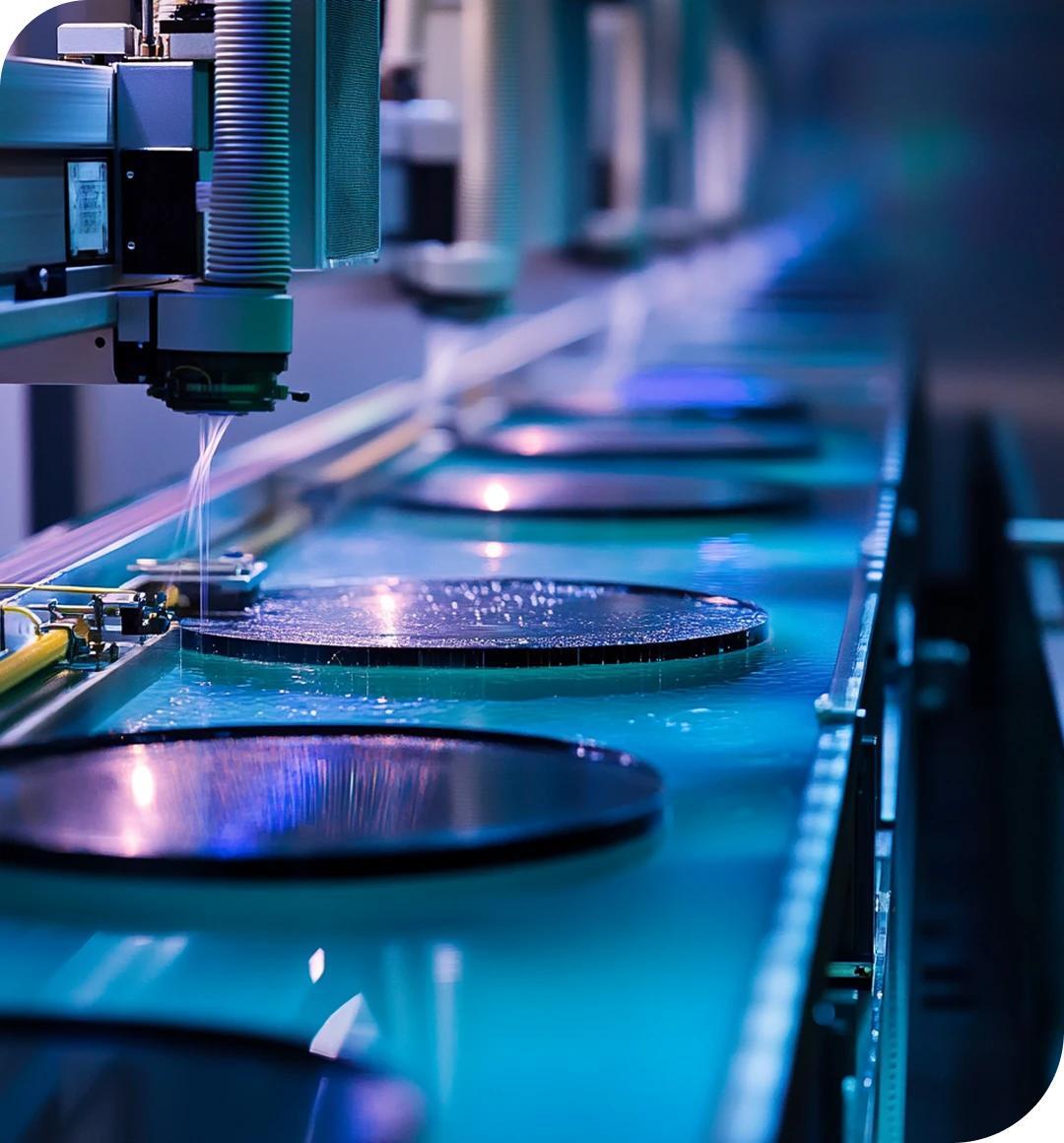
Industry reports indicate fabs recover 40–70% of process water today (some still only ≈40%), and with advanced treatment they approach ~98% reuse (spectrum.ieee.org). In one example, a fab’s RO/IX system cut fresh‑water draw from 10 Mgal/day to ~200 Kgal/day (≈98% reclamation) (spectrum.ieee.org).
Recycling trains are segregated by quality. Clean DI rinses go through RO+IX and return to the UPW loop, while dirtier streams (e.g., CMP effluent) are treated separately or routed to cooling—most fabs “re‑use all or some of their wastewater streams” and use RO/IX/DI to reach UPW quality (samcotech.com; ultrafacilityportal.io). Plants polishing post‑clean rinses report UPW demand falling by roughly half, on the order of 10^5–10^6 gallons saved per month (spectrum.ieee.org). Reuse also reduces chemical waste by limiting ionic and organic loading on the UPW plant, extending filter life and lowering operating cost (spectrum.ieee.org).
Where deionized (DI) water is regenerated on site, some facilities integrate mixed‑bed or two‑bed systems akin to a demineralizer downstream of RO to stabilize quality before EDI polishing.
Roadmap targets and regulatory push
For 300–450 mm wafers, water use per cm² is targeted to fall from ~7.8 L in 2013 to ~4.6 L by 2028, with reuse goals climbing from ~50% to ~90% (ultrafacilityportal.io). Environmental rules can mandate reuse by imposing strict effluent limits or usage fees (azonano.com).
Jurisdictions facing scarcity—such as Taiwan, Singapore, and Indonesia’s own water authorities—are increasingly demanding high recycle rates. In response, fabs have co‑funded municipal water reuse projects or installed third‑party recycling units to meet local standards (azonano.com).
Bottom line for UPW
Stacking advanced cleaning (megasonic, spray/single‑wafer, shorter cycles) with reclaim loops (UF→RO→IX/EDI) shrinks both freshwater draw and UPW production costs. Shortening a rinse step can save tens of liters per batch (slideshare.net), and polishing loops can push overall reuse to ≈90–98% (spectrum.ieee.org; ultrafacilityportal.io). In short, data‑driven rinse optimization and reuse can cut wafer‑cleaning water use in half or better—an operational and regulatory edge.
Sources: Authoritative industry reports and analyses (azonano.com; slideshare.net; spectrum.ieee.org; ultrafacilityportal.io) (azonano.com) that cite SEMI/IRDS roadmaps, Intel/SEMI case studies, and technical articles.