

Industry: Semiconductor | Process: Wastewater_Treatment
There’s nothing “trace” about the pressure on fabs to remove trace heavy metals. Copper (Cu), nickel (Ni), zinc (Zn), cadmium (Cd), and lead (Pb) from plating, chemical–mechanical polishing (CMP), and etch wastewater are toxic even at microgram‑per‑liter (µg/L) levels (for context, Pb is limited to ~6–10 µg/L in drinking water) (pmc.ncbi.nlm.nih.gov). Effluent limits for fabs often land in the mg/L to parts‑per‑billion (ppb) range, so the standard playbook starts with chemical precipitation, clarification, and filtration—then finishes with resin or adsorptive media polishing (researchgate.net) (pmc.ncbi.nlm.nih.gov).
In practice, batch neutralization and coagulants precipitate metals as hydroxides or sulfides; solids are settled in clarifiers and filtered, typically dropping total suspended solids (TSS) to ≪1 mg/L. Remaining “tailings” are polished out to meet the low mg/L or ppb numbers regulators now expect (researchgate.net) (pmc.ncbi.nlm.nih.gov).
Hydroxide precipitation (pH adjustment)
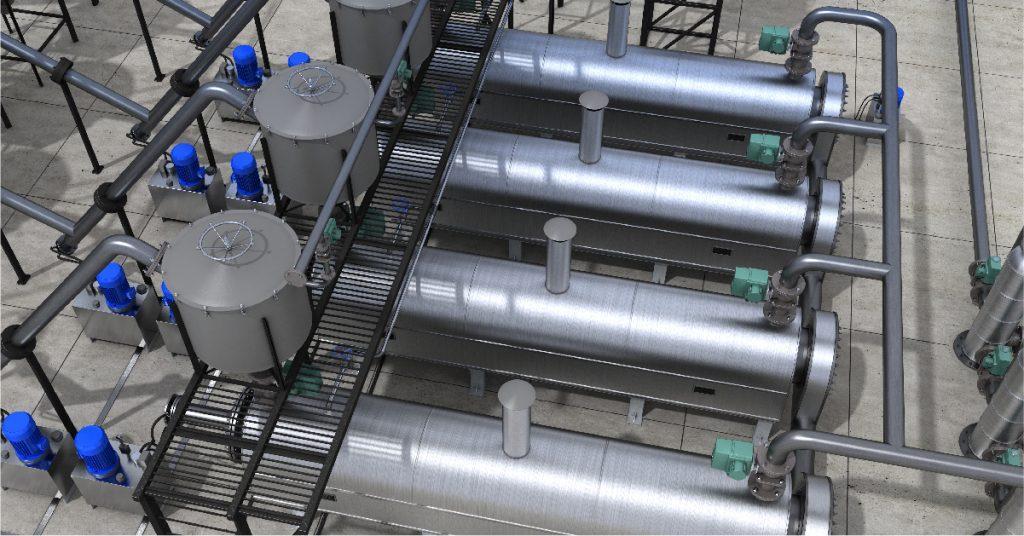
Raising pH—typically with lime or sodium hydroxide (NaOH)—converts dissolved metals to insoluble hydroxides. This is simple and low‑cost (pmc.ncbi.nlm.nih.gov), and it works best when metal loads are moderate (1–100 mg/L) (pmc.ncbi.nlm.nih.gov), with well‑designed systems often removing on the order of 90–95% of metals (pmc.ncbi.nlm.nih.gov). Plants typically meter reagents using a dedicated dosing pump to hold tight pH windows.
The drawback is sludge: hydroxide precipitation yields voluminous, wet solids—sludges often >80% water—that are hard to dewater (pmc.ncbi.nlm.nih.gov). Polyelectrolyte flocculants are commonly added to agglomerate fine hydroxide particles before settling. Even then, clarified water may carry several mg/L of metal—especially Zn or Ni if residual pH runs high—so polishing is still required. Effluent pH usually needs correction after treatment.
Sulfide precipitation (metal sulfides)
Feeding sulfide (as Na₂S, NaHS, or H₂S gas) forms highly insoluble metal sulfides. The removal step is notably complete: bench tests commonly report >99% removal of Cu, Zn, and Cd and >90% removal of As and Se (pmc.ncbi.nlm.nih.gov). Because metal–sulfide solubilities are orders of magnitude lower than hydroxides, even very dilute metals are driven out (pmc.ncbi.nlm.nih.gov).
The resulting sludge is dense with lower water content—easier to dewater—yet the particles are extremely small and can be difficult to settle (pmc.ncbi.nlm.nih.gov). Sulfide reagents are toxic/corrosive (H₂S handling hazards), and any excess sulfide must be consumed or stripped; dosing is therefore carefully controlled, often with oxidants to destroy excess sulfide (pmc.ncbi.nlm.nih.gov). One advantage: sulfide precipitation is less sensitive to complexing agents in the water than hydroxide is (pmc.ncbi.nlm.nih.gov).
Clarification and filtration stages
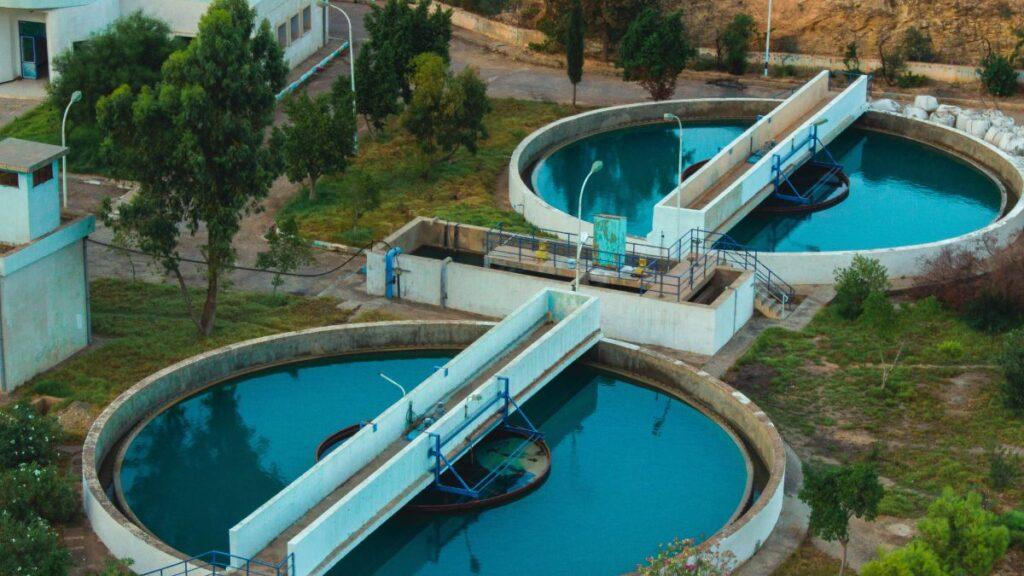
After either precipitation pathway, solids are separated in a clarifier or flotation unit, and the effluent is filtered before polishing. Many facilities route flow through a clarifier or dissolved‑air‑flotation unit such as a DAF to settle or float fine precipitates as a sludge blanket. Downstream, fine filters—often a cartridge filter—protect the polishing step once TSS is pushed to ≪1 mg/L (pmc.ncbi.nlm.nih.gov).
Either precipitation route can typically drop metals from tens of mg/L to well below 1 mg/L (pmc.ncbi.nlm.nih.gov). Example: a lab trial using Na₂S achieved >99% removal of Cu, Zn, and Cd, taking a 50 mg/L feed to <0.5 mg/L (pmc.ncbi.nlm.nih.gov).
Ion exchange resins for polishing
Specialized ion‑exchange resins—polymeric beads with functional groups such as iminodiacetate, thiol, amine, carboxylate, or sulfonate—selectively capture remaining metal ions in fixed‑bed columns. These chelating resins are highly effective for Cd²⁺, Ni²⁺, Cu²⁺, Pb²⁺ and can drive concentrations to trace levels (pmc.ncbi.nlm.nih.gov) (pmc.ncbi.nlm.nih.gov). Plants often deploy skid systems like an Ion‑Exchange unit for continuous operation, loading the beds with a selected ion‑exchange resin matched to the target metals.
Because ion exchange is regenerable, spent resin is stripped with acid or chelating eluant and reused—concentrating metals in a small volume of regenerant instead of a large sludge (pmc.ncbi.nlm.nih.gov). Typical heavy‑metal resins show exchange capacities around 0.1–0.5 meq/mL (roughly 10–50 mg metal per g resin) and operate until effluent metals approach ppb (“nigh‑zero”) levels (pmc.ncbi.nlm.nih.gov) (researchgate.net). In plating or CMP wastewater, dual‑bed ion exchange has captured >95–99% of residual Cu, with discharge goals on the order of 0.01–0.1 mg/L (10–100 µg/L) (researchgate.net). Downsides: resin cost and fouling risk—feeds must be low in particulates and competing ions. Column service rates range from a few bed volumes per hour to continuous counter‑current setups, with breakthrough tracked by online analyzers.
Adsorptive media for trace capture
Adsorption—binding metals onto high‑surface‑area solids—offers a flexible polish. Candidates include activated carbon, iron‑ or manganese‑oxide granules, zeolites, and tailored nanomaterials; newer carbons impregnated with sulfur or amino ligands bind Hg, Pb, and Cd strongly, while nanoporous silicas or MOFs can target Cu²⁺ and Ni²⁺. Reviews cite >90% removal efficiency for adsorption in practice (mdpi.com). One example: a waste‑fiber‑based poly(amidoxime) adsorbent captured >95% of Cu and Pb from plating wastewater (residual <0.1 mg/L) (researchgate.net). Media are used in fixed beds and then regenerated or replaced; with proper design, ppb‑range outcomes are achievable. A common choice for this duty is activated carbon.
Performance trade‑offs and outcomes
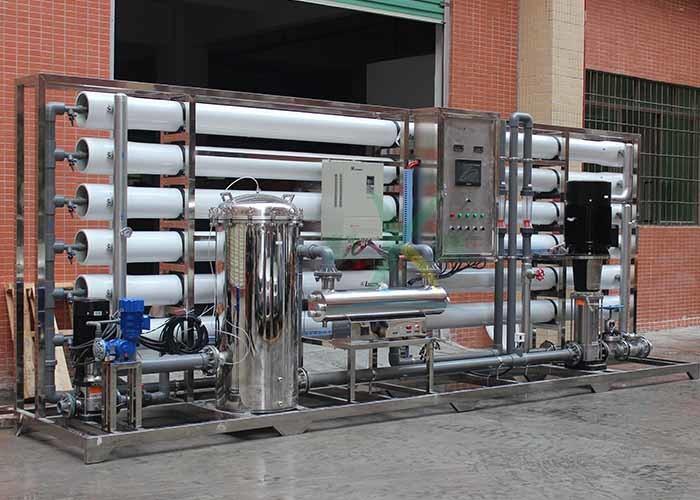
Removal efficiency: sulfide precipitation generally yields higher bulk removal than hydroxide. Bench data show Na₂S can remove >99% of Cu/Zn/Cd versus hydroxides typically ~90–98% (pmc.ncbi.nlm.nih.gov). After clarifier/filtration, many streams hold ≤1–5 mg/L residual metals. Ion‑exchange or adsorbent polishing then cuts another order of magnitude, into low µg/L or even ppb levels (researchgate.net) (pmc.ncbi.nlm.nih.gov).
Sludge vs. waste volume: hydroxide precipitation creates bulky sludge (large water volume to dispose) (pmc.ncbi.nlm.nih.gov), whereas sulfide sludges are denser with better dehydration characteristics (pmc.ncbi.nlm.nih.gov). All precipitates are managed as hazardous waste. Ion exchange generates a small volume of acidic regenerant holding the metals; adsorbents minimize sludge by shifting waste to spent media.
Operational factors: chemical precipitation is simple and uses inexpensive reagents (lime, NaOH, Na₂S) but is less controllable at trace levels and sensitive to water chemistry (e.g., hardness, chelators). Ion‑exchange/adsorption carry higher capital and media costs but deliver precise outlet control and enable metal recovery. Typical ion‑exchange column operations span a few bed volumes per hour up to continuous counter‑current modes; breakthrough is monitored online.
Meeting semiconductor effluent targets
Fabs frequently aim for <0.5–1 mg/L for Cu, Ni, Zn and <0.1 mg/L for Cd/Pb. For context, WHO drinking‑water limits are ~6–10 µg/L for Pb and ~3000 µg/L for Cu (pmc.ncbi.nlm.nih.gov). The combined strategy—precipitation plus resin/adsorbent polishing—reliably brings effluent into compliance. A representative pathway: start at 20 mg/L Cu; hydroxide precipitation removes ~95% to 1 mg/L; a polishing resin removes another 99% to 0.01 mg/L (10 µg/L) (pmc.ncbi.nlm.nih.gov) (researchgate.net).
The comparative calculus in one table
Table 2 in Babel et al. (2020) summarizes the trade‑offs: hydroxide precipitation is “easy and broad” but yields large wet sludge, whereas sulfide gives “less sludge, easier dehydration” but creates tiny precipitates (pmc.ncbi.nlm.nih.gov) (pmc.ncbi.nlm.nih.gov).
Bottom line
Chemical precipitation—hydroxide or sulfide—delivers the bulk metal removal but usually needs secondary clarification/filtration and a final polish. Sulfide outperforms hydroxide for high removal rates and produces more concentrated sludge (pmc.ncbi.nlm.nih.gov), while hydroxide is simpler but creates bulkier waste (pmc.ncbi.nlm.nih.gov). To meet tight discharge standards, fabs routinely follow with polishing—specialized ion‑exchange resins or adsorptive media—that can remove >90–99% of the residual load and are regenerable, aligning with regulatory and corporate demands (researchgate.net) (pmc.ncbi.nlm.nih.gov).
Sources: peer‑reviewed and industry reviews on heavy‑metal wastewater treatment (e.g., Vidu et al. 2020 on precipitation and ion exchange, Punia et al. 2022 on effluent targets), with removal percentages, treatment outcomes, and standards referenced inline: pmc.ncbi.nlm.nih.gov; researchgate.net; mdpi.com.