

Article
WWTP in Hospital
In Indonesia, wastewater management in hospitals is about health and also about compliance with the law. A Wastewater Treatment Plant (WWTP) in a hospital treats medical and non-medical waste before it is discharged into the environment. These systems help prevent pollution and protect public health and the environment. Concern for the environment is growing. A WWTP reduces the risk of contamination and also improves efficiency in resource usage.
 .
The Importance of WWTP in Hospitals
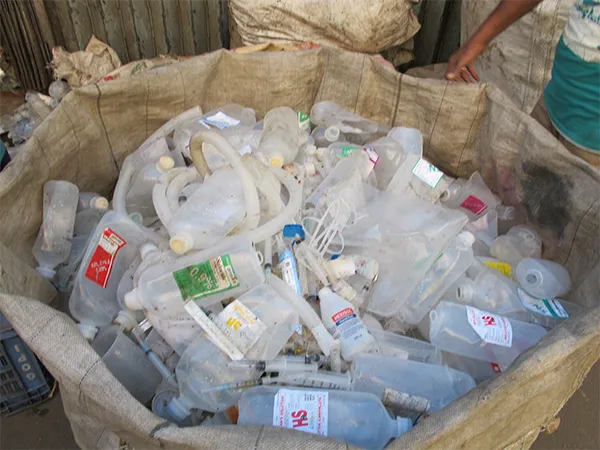
Every hospital generates waste that can be harmful if it is not managed properly. Medical waste includes everything from used syringes to chemicals from laboratories. It can be fatal to the environment if it is not handled carefully. In Indonesia, strict regulations say hospitals need an adequate WWTP to reduce the negative impact of waste on the environment. An effective WWTP does more than meet legal compliance. It protects the health of patients and staff and improves the hospital’s reputation. A well-run WWTP also contributes to environmental sustainability, reduces energy consumption and optimises water usage.
The process also supports hospitals to have an effective WWTP in place to reduce the negative impact of waste on the environment.
This process also supports hospitals to have an effective WWTP in place to reduce the negative impact of waste on the environment.
This process also supports hospitals in reaching global sustainability goals and strengthens an environmentally sound health system. Also, an efficient WWTP can lower long-term operating costs. It reduces waste disposal costs and lowers the risk of financial penalties for breaking environmental regulations.
Main Components of WWTP System in Hospital
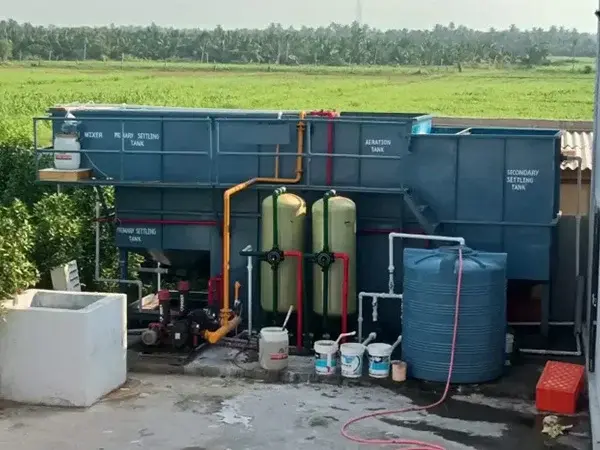
Hospital WWTP systems treat effluent in steps through three main stages: primary, secondary and tertiary. Each stage uses different technologies to treat contaminants to a different level of cleanliness.
For source segregation, equalization, sludge control, monitoring and the design evidence you need before choosing equipment, read the detailed hospital WWTP components and controls guide.
- Primary Treatment Stage:
- At this stage, the main objective is to separate large particles and solids from the waste. This is done through:
- **Physical Screening:**Filtering out large particles that are easy to filter out.
- **Sedimentation:**Uses gravity to settle heavier particles to the bottom of the tank.
- At this stage, the main objective is to separate large particles and solids from the waste. This is done through:
- Secondary Treatment Stage:
- This stage is more complex and focuses on the biological decomposition of organic waste:
- **Sludge Active Processing:**Uses bacteria and other microorganisms that work to break down dissolved or suspended organic matter.
- **Aeration:**Introduces oxygen into the system to support microbiological activity.
- **Secondary Clarification:**Separates biomass from the treated water.
- This stage is more complex and focuses on the biological decomposition of organic waste:
- Tertiary Treatment Step:
- At this stage the plant removes the very fine contaminants that are left. Therefore the water is cleaner and safer for discharge or reuse:
- **Membrane Filtration:**Uses a membrane to filter out fine particles and microorganisms.
- **Ozonisation:**Uses ozone as a powerful disinfectant to chemically break down contaminants.
- **Active Carbon Adsorption:**Absorbs remaining organic and non-organic contaminants.
- At this stage the plant removes the very fine contaminants that are left. Therefore the water is cleaner and safer for discharge or reuse:
If these three stages work well, a WWTP in a hospital can produce wastewater that meets environmental standards. This supports sustainability and conservation of water resources. It also keeps the hospital compliant with the regulations that apply and improves its operational efficiency.
Challenges in Hospital Waste Management
Managing hospital waste is not easy. The challenges include high operational costs, the need to meet changing legal standards, and the difficulty of treating hazardous waste safely. Hospitals need to look for ways to overcome these challenges. This includes investment in the latest technology and training for employees.
Also, the volume of medical waste goes up, especially during pandemics and natural disasters. This puts a strain on existing waste treatment systems. Another issue is that staff do not always know enough about effective waste management and are not trained well enough. Therefore waste is sometimes handled below standard.
We need to address this issue.
We need to address these issues.
The Future of Hospital Waste Management
Hospital WWTPs are an important part of our healthcare system. Every hospital needs to comply with current standards. It also needs to keep investing in better sewage treatment systems. Continued education and system updates help hospitals serve the health needs of the community without harming the environment.
Beta Pramesti Asia offers many sewage treatment equipment and systems, from filtration systems to integrated sewage treatment technologies. These help your facility meet environmental standards and improve operational efficiency.