

Industry: Brewery | Process: Lautering_&_Wort_Boiling
Water makes up as much as 97% of beer by volume, and its chemistry moves flavor, clarity, and stability in outsized ways (Bru’n Water). In lautering — the rinse that pulls sugars from the grain bed (sparging) — high pH and high temperature can strip tannins (phenolic husk compounds), turning wort astringent and hazy (Horiba) (Braukaiser).
The response is pragmatic: monitor and rein in sparge pH and temperature. Breweries aim to keep the grain-bed and run‑off below a widely cited threshold of pH ~6.0, and to cap sparge temperatures near 75–77 °C (just under 170°F), to avoid escalating tannin extraction (Horiba) (BYO).
Sparge pH thresholds and tannin solubility
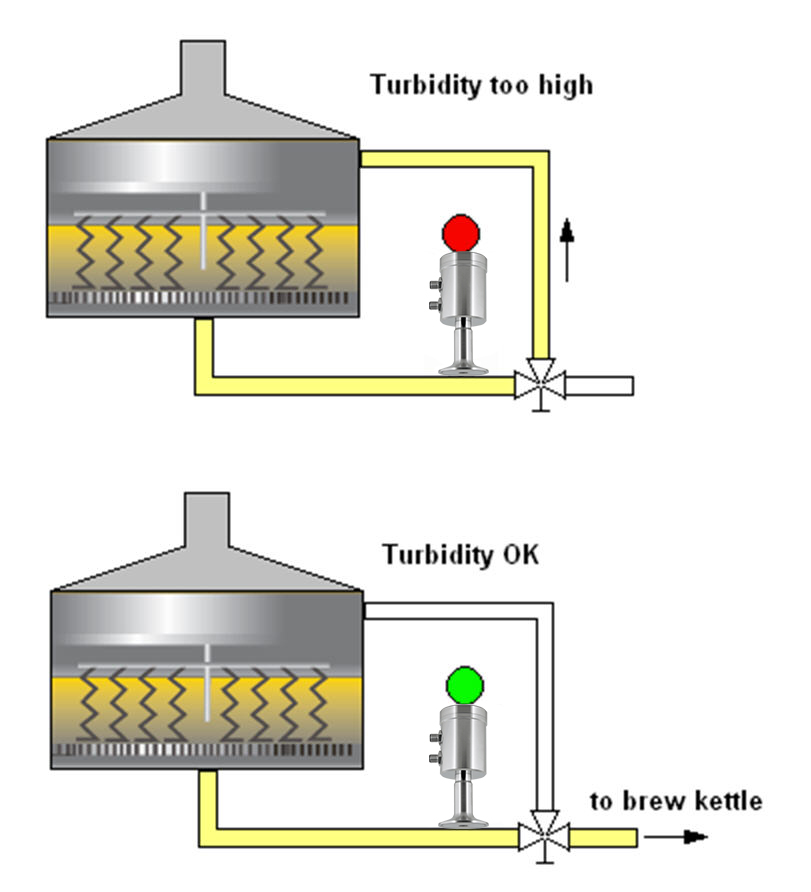
All‑grain operations keep runoff and grain‑bed pH below about 6.0 (room‑temperature equivalent) because above pH ~5.8–6.0, tannins become notably more soluble; as weak acids, they deprotonate at higher pH and extract more readily in hot water (Horiba) (Braukaiser). In practice, brewers target end‑sparge pH around 5.5–5.8, with guidelines pointing to a 6.0 threshold (some cite 5.8) where extraction rises sharply (BYO) (Braukaiser).
The math behind the margin matters: pH is logarithmic, so a one‑unit drop is a tenfold increase in acidity; dropping wort from pH 6.0 to 5.0 makes it 10× more acidic (Yokogawa). Even modest acidification can therefore dampen tannin solubility. Conversely, failing to acidify a high‑alkalinity sparge wash can push mash pH above 6.0 as carbonate/bicarbonate buffering overwhelms the mash, with the rinse dominating mash pH and driving haze and bitterness (Braukaiser).
Sparge temperature control (75–77 °C)
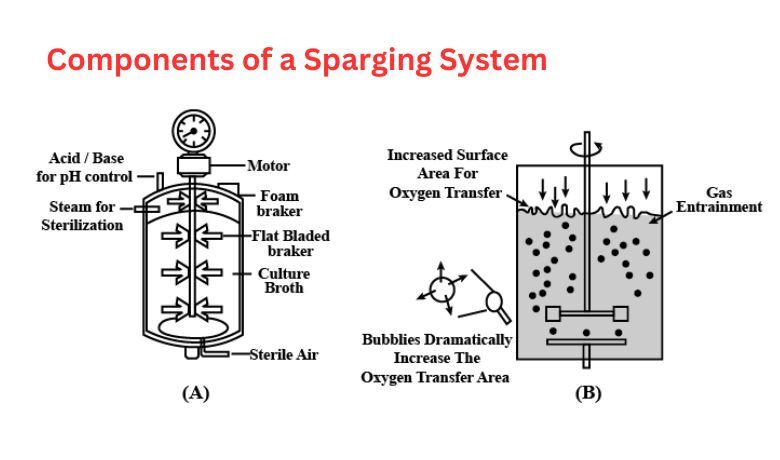
Temperature accelerates extraction kinetics. As temperature rises, most malt compounds — including husk tannins — extract faster, so sparge streams are typically held just under 170°F (≈77°C) to tamp down pickup (Braukaiser) (BYO). The operating norm in lautering is 75–77 °C, avoiding higher temperatures that approach boiling and accelerate husk‑derived phenolics (Braukaiser) (BYO).
Alkalinity and buffering (mg/L as CaCO3)
.jpg)
Alkalinity — the carbonate/bicarbonate buffering capacity of water — is reported as mg/L CaCO₃ and describes how strongly water resists acidification (Horiba). High alkalinity (e.g., >50–100 mg/L as CaCO₃) can hold mash/sparge pH too high; Horiba notes carbonate/bicarbonate buffers “may raise the pH of the mash to unacceptable levels, if available in large amounts” and many water profiles recommend carbonates ≪50 ppm when targeting mash pH <5.6 (Horiba) (Horiba).
Local variability is significant. A Java survey logged total alkalinity ranging roughly from 6 to 112 mg/L CaCO₃ in household water, with ~100 mg/L not uncommon in groundwater — levels that can substantially raise mash pH (Riviera Publishing). Brewers use mineral calculations such as “residual alkalinity” to predict mash pH from hardness and alkalinity (Bru’n Water) (Braukaiser). If starting alkalinity is high, extra acid is required to counter buffering; Horiba advises keeping calcium 50–150 ppm and carbonates ≪50 ppm to avoid unwanted pH rise (Horiba) (Horiba). Uncontrolled alkalinity not only lifts pH but correlates with harshness and dull flavor; proper adjustment (by acid or carbonate removal) underpins consistent enzyme activity and flavor.
Acidifying sparge liquor (food‑grade acids)

Brewers neutralize excess alkalinity with food‑grade acidulants. The standard choices are lactic acid at 80–88% or phosphoric acid at 85–90%, both recognized as safe food ingredients — lactic acid (E270) and phosphoric acid (E338) — with “ADI not specified” at brewing levels, per JECFA (Joint FAO/WHO Expert Committee on Food Additives) (JECFA on lactic acid) (JECFA on phosphoric acid). For example, phosphoric acid (INS 338) is a standard acidulant (JECFA), and lactic acid is an FDA‑approved flavoring/acidifier with no intake limit (JECFA). In Indonesia, both are widely used in food processing and certified halal.
Operationally, acid is added gradually to the heated sparge liquor with active pH monitoring (meter or strips) to avoid overshoot; typically only a few milliliters per liter are needed to shift pH by a few tenths. The goal is mid‑5s (≈5.5–5.8) in the mash and upper‑5s (≈5.8–6.0) in late runnings, keeping overall run‑off below pH 6.0. Accurate chemical dosing supports these small additions (dosing pump). Phosphoric acid is essentially flavor‑neutral at these levels, while lactic acid imparts only a very mild sour note; brewers may also use 2–5% acidulated malt to achieve similar effects via its lactic coating (Brulosophy). The key outcome is neutralizing sparge‑water buffering so diluted mash pH stays low enough to prevent tannin release (Braukaiser) (Horiba).
Monitoring and outcomes in lautering
Breweries verify control by testing mash and run‑off pH during sparging; continuous probes or spot checks confirm pH ≤6.0. Consistently low sparge pH reduces polyphenols, cuts haze, and avoids off‑flavors. A parallel from tea extraction: very alkaline water produced dark, murky, highly astringent tea, while low‑alkalinity water yielded a clear, low‑astringency cup — a vivid analogy for wort behavior (Accidentalis). Sensory data align with brewing practice: appropriately acidified sparges avoid the “harsh, puckering mouthfeel” linked to excess phenolics (Braukaiser).
Stabilized sparge pH also supports wort clarity and enzymatic efficiency, reducing grain‑kettle time spent on unwanted coagulates. Industry guides cite post‑sparge wort pH of ≈5.2–5.5 for stability and hop utilization, setting up a finished beer pH in the 4.2–4.5 range for clarity and shelf stability (Horiba).
Indonesian regulatory context
Indonesia’s Permenkes (Ministry of Health) sets potable water pH between roughly 6.5 and 8.5; brewing should start with water that meets this standard (Riviera Publishing). Adjusting chemistry during brewing — including sparge acidification into the 5’s — is part of the process, and finished beer is acidified by yeast. All additives (acids, salts) must be food‑grade and align with food‑safety rules (e.g., BPOM approvals) and halal certification. In short, Indonesian brewers ensure raw water passes drinking‑water tests, then apply standard brewing adjustments (Riviera Publishing).
Bottom‑line control points
Across references, the through line is clear: hold grain‑bed/run‑off pH below ~6.0, keep sparge water near 75–77 °C, and use measured additions of food‑grade lactic or phosphoric acid to neutralize alkalinity. The result is clearer wort and better‑tasting beer (Horiba) (BYO) (Braukaiser).