

Industry: Nickel_Mining | Process: Refining
Indonesia dominates global nickel production, accounting for over 50% of supply in 2023 (eastasiaforum.org). After an ore export ban in 2020, the country built out 40 RKEF (rotary‑kiln electric‑furnace) smelters and 4 HPAL (high‑pressure acid leach) plants as of 2024 (eastasiaforum.org), lifting processed product capacity to ~22.9 million tonnes per year (eastasiaforum.org).
This surge makes quality control non‑negotiable. The newly‑listed LME (London Metal Exchange) “DX‑zwdx” nickel brand from Indonesia specifies Class I purity at ≥99.80% Ni (nickel.com). Lower‑purity Class II ferronickel (Ni<99%) and mixed hydroxide precipitate (MHP) streams still require tight control of Ni–Fe ratios and coproducts. The task: monitor, prevent, and certify against contamination—continuously.
Representative sampling protocols (ore and concentrate)
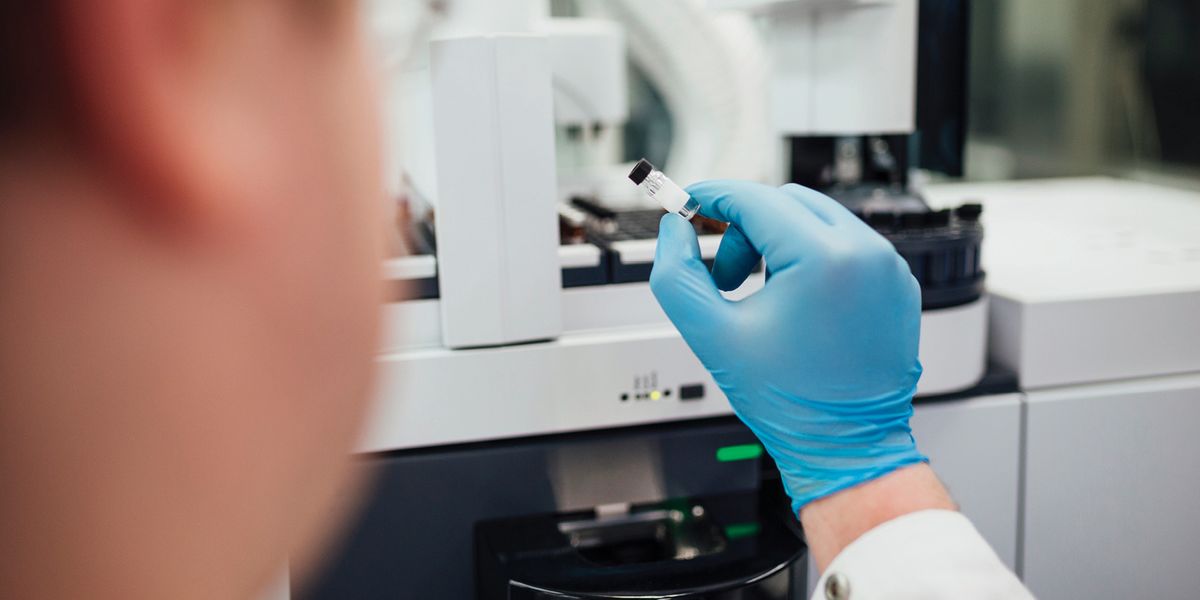
It starts with the feed. Standard protocols such as ISO 17726 for mineral concentrates require large, randomized grabs or channel samples to counter ore heterogeneity. Samples are split, pulverized to sub‑75 μm, and analyzed. Rapid field assays use XRF (X‑ray fluorescence) handheld or bench‑top devices for instant multi‑element quantitation—typically ±1–2% accuracy—for grade control (thermofisher.com). Lab assays on acid‑digested splits by ICP‑OES/MS (inductively coupled plasma optical emission spectrometry/mass spectrometry) or AAS (atomic absorption spectrometry) deliver precise concentrations.
For example, a 1% Ni oxide digest can be analyzed for ppm‑level impurities by ICP‑OES (azom.com). Assays check typical laterite head grades (often 1–2% Ni for limonites; up to 2–3% in saprolites) and track deleterious elements (Cr, Mg, Ca) that can carry into downstream processing. Certified reference materials, analytical blanks, and QA/QC alongside ASTM/ISO methods—including ASTM E2823/E2594 for nickel alloys via ICP—anchor accuracy (newsroom.astm.org).
RKEF and smelting assay control
In RKEF and smelting, the ore becomes nickel pig iron or matte. Periodic samples of furnace tap or ladle product and slag are collected and routed to in‑line analyzers and labs. Spark‑OES (optical emission spectrometry) and XRF deliver fast alloy compositions—major elements (Ni, Fe, C, S) and minor (Si, Mn, Cr, Al)—with rapid feedback to adjust flux ratios and temperature (globalcommoditiesholdings.com).
As a reference, a ferronickel typical assay might read Ni ~15–20%, Fe ~55–65%, Si ~5–6%, Al/Mg ~2–3% each, with C and P in low ppm. Slag samples are acid‑dissolved and analyzed by ICP‑OES/AAS for residual Ni, Fe, and refractory elements; high Ni in slag flags losses. With recovery goals exceeding 90%, smelters aim for slag Ni below ~0.5%. Where matte is produced, analysis (ICP or OES) confirms ~75–80% Ni and acceptable S, Cu levels. Continuous carbon and oxygen probes stabilize carburization, while elemental analysis keeps Ni/Fe ratios on spec for steelmaking.
Indonesian RKEF operations report >90% Ni recovery on saprolites (mdpi.com). Routine plant audits—blind splits and round‑robins—hold assay bias to <2%.
HPAL and solution purification QC
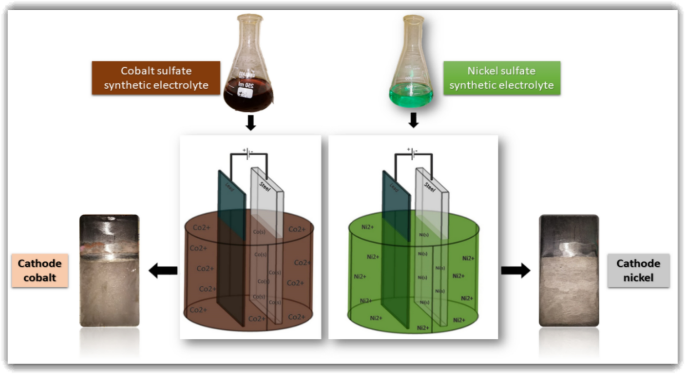
HPAL and solution circuits hinge on acid strength, leach temperature/pressure, oxidation‑reduction potential (Eh), and precipitation chemistry. Pregnant leach solutions are sampled and analyzed by ICP‑OES/MS for Ni, Co, Fe, Al, Mn, and more; Ni often runs 25–50 g/L, while Fe can be ~10–20 g/L before removal. On‑line pH and Eh sensors guide neutralization. After iron precipitation, filtrate is tested to ensure Fe < 0.02 g/L (globalcommoditiesholdings.com).
In mixed hydroxide precipitation, MHP (mixed hydroxide precipitate) samples are dried and analyzed (ICP‑OES) for Ni, Co, Mn; battery‑grade material targets ~20–30% Ni with specific Co/Ni ratios. Moisture is checked by loss‑on‑ignition (heating to drive off volatiles), typically <6%. Residual chlorides from acid are monitored by ion chromatography. Where solvent extraction or resin purification is used, organic liquor concentrations are assayed to verify loading and stripping efficiency; ICP or AAS keeps metal losses below ~0.1%.
As EV demand grows (expected ~15% of global Ni by 2025, mdpi.com), hydromet QC tightens further. Modern plants run SPC (statistical process control) charts of Ni yields, achieving >98% Ni extraction in optimized circuits.
Utilities and dosing matter. Pretreatment trains often include ultrafiltration to protect downstream unit operations from particulates. Acid addition control depends on precise metering, a role served by an industrial dosing pump. Where resin purification is specified, a dedicated ion‑exchange system aligns with the resin steps described above.
Electrolytic refining and cathode assurance
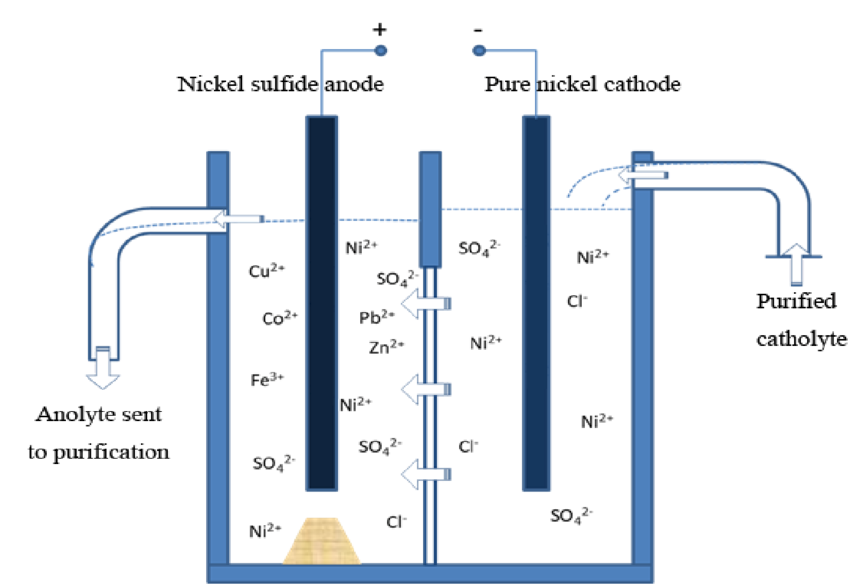
In electrolysis (cathodes or plating‑grade metal) and chemical conversion (e.g., NiSO₄), electrolyte chemistry is sampled routinely. AAS or ICP‑MS (mass spectrometry) measures Ni and trace impurities like Cu, Co, Zn at single‑ppm or better; in a nickel sulfate electrowinning bath, Cu must be <0.03% to avoid co‑deposition. Titrimetric methods such as EDTA (complexometric) titration provide quick checks of Ni+Co content.
Finished cathodes—plated sheets or cast bars—are assayed by spark‑OES on shavings to verify Ni ≥99.8% and trace elements (Cu, Co, Fe, S) within spec (globalcommoditiesholdings.com). ASTM B39 and international standards define thresholds including Ni ≥99.80%, Co ≤0.15%, Fe ≤0.02%, C ≤0.03%, S ≤0.01%, and all other listed impurities ≤0.005% (globalcommoditiesholdings.com). Each production batch receives a Certificate of Analysis (COA). Random checks for hydrogen embrittlement and mechanical integrity are also used.
Electrolyte purity depends on water quality. Deionized make‑up water is standard in plating baths, and utility teams often specify a demineralizer or continuous EDI unit for ultra‑pure water production. Particulate control at cell entries is commonly handled with a cartridge filter, often housed in corrosion‑resistant 316L stainless steel housings for industrial chemical service.
Analytical instrumentation suite and validation
Across ore, slag, solutions, and metal, refineries rely on a toolkit (thermofisher.com; newsroom.astm.org): XRF for solids (fast, multi‑element, portable or on‑line); spark‑OES for quick alloy assays; ICP‑OES/MS as the laboratory workhorse for trace‑to‑major elements in digested solids and liquids; AAS for single‑element ultra‑trace; classical titration for routine Ni checks; and ion chromatography for anions (Cl⁻, SO₄²⁻) in leach or electrolyte streams.
Each method is validated with calibration standards and reference materials. PerkinElmer’s Avio ICP‑OES has been demonstrated to measure Ni impurities at ppm levels consistent with LME contract rules (azom.com).
Contamination controls and housekeeping
Segregation is policy. High‑purity nickel streams (electrolyte, electrowon Ni) remain isolated from lower‑grade or alloy flows via dedicated lines, pumps, and vessels. To keep utilities aligned with purity goals, plants specify water purification in categories such as RO/NF/UF membrane systems. Reagents must be clean, and deionized water is enforced to avoid introducing cations (Ca, Na, K) that can carry into the product.
Equipment materials—stainless steel or inert‑lined tanks and pipes—minimize metal leaching. Filters and centrifuges remove particulates before plating or crystallization. In high‑purity operations such as NiSO₄ crystallization, air management and filtration keep dust out of open tanks. Dust collection systems (baghouses, electrostatic precipitators) capture fugitive Ni fines so they cannot redeposit (sucofindo.co.id). ESDM (Indonesia’s energy and mineral regulator) and EPA regulations also require monitoring of stack emissions and wastewater; compliance avoids inadvertent product loss or contamination (sucofindo.co.id).
Laboratories run blanks and duplicates, and participate in inter‑laboratory comparisons; chain‑of‑custody is maintained for samples, with GLP (good laboratory practice) audit trails. Even “trace” cobalt must be watched: Class I nickel sheets typically limit Co to ≤0.15% (globalcommoditiesholdings.com).
Certification standards and market access
Final products are certified against ASTM (USA), GB/T (China), ISO, or LME contract rules. Refined nickel cathodes or briquettes conform to ASTM B39: Ni ≥99.80%, Co ≤0.15%, Cu ≤0.02%, Fe ≤0.02%, S ≤0.01%, and all other listed impurities ≤0.005% (globalcommoditiesholdings.com). After analysis, a Mill Test Certificate (MTC) is issued.
Governments are tightening oversight. In April 2025, India’s Ministry of Mines issued a Refined Nickel Quality Control Order requiring BIS (Bureau of Indian Standards) certification per IS 2782; the order mandates testing for purity and an ISI mark (diligencecertification.com; diligencecertification.com). Producers align to LME Good Delivery standards; an Indonesian brand’s LME listing used certified analyses to confirm ≥99.8% Ni (nickel.com).
Exporters typically provide laboratory analysis reports from accredited facilities for customs. Internally, refiners conduct pre‑shipment audits—e.g., taking “middle of bar” samples from shipped Ni cathodes for check assays. Certified laboratories follow ISO/IEC 17025 protocols. Off‑spec products are reprocessed or downgraded before sale. Over the last decade, this QC vigilance helped Indonesian refined nickel move freely on world markets, where low‑grade or uncertified loads would be rejected.
Data trends and performance outcomes
Indonesia’s nickel ore production tripled from ~51 million tonnes in 2020 to ~175 million tonnes in 2023 (eastasiaforum.org), feeding a fleet of 44 smelters (eastasiaforum.org). The glut pressured nickel prices, but elevated product quality. Today, Indonesia exports refined ferronickel, matte, MHP, and even Class I nickel metal (nickel.com; mdpi.com).
Mixed Ni–Co hydroxide precipitate exports to China surged from 0 to 830,000 tonnes between 2021 and 2023 (nickel.com). Historical nickel pig iron exports rose from 0.6 Mt to 7.9 Mt (2018–2023), with most processed through modern furnaces meeting stainless‑steel feed specs (nickel.com).
QC discipline shows up in the numbers: many smelters report nickel recoveries >92% (vs. ~80% in early plants), slag Ni <0.5%, and tightly held Ni/Fe ratios. In electrolytic refineries, current efficiencies >90% and purities >99.9% are routine. High‑quality nickel trims downstream costs (e.g., less rework in battery cathode plants) and commands higher prices.
In summary, a refinery’s QC guide knits together rigorous sampling plans, multi‑technique analysis (XRF, OES, ICP, AAS, titration, ion chromatography), contamination controls, and formal certification steps—aligned to ASTM/ISO/LME standards and national regulations such as Indonesia’s AMDAL and India’s BIS Quality Control Order (diligencecertification.com). The framework underpins Indonesia’s nickel ascendancy and sustains market access.