

Industry: Brewery | Process: Milling
Brewhouse yield—the percent of potential extract recovered as fermentable wort—often stalls in the mid‑70s. One small‑scale study pegged it at 69.7–76.0% of potential extract (www.mdpi.com). On a 1000 kg grist, that’s roughly 697–760 kg of fermentables.
At that scale, a 1% error in grist weight—just 10 kg—can translate to ~0.7–0.8% loss in yield. Conversely, industry experience shows the payoff from precision: one craft brewer reported brewhouse efficiency rising to >80% by installing accurate flow meters and controls (www.flows.com). The trend is clear: sensor‑driven brewing and IoT (Internet of Things; networked sensors and controls) are accelerating to lock in consistency (www.mdpi.com; www.brewops.com).
Grist scale calibration steps
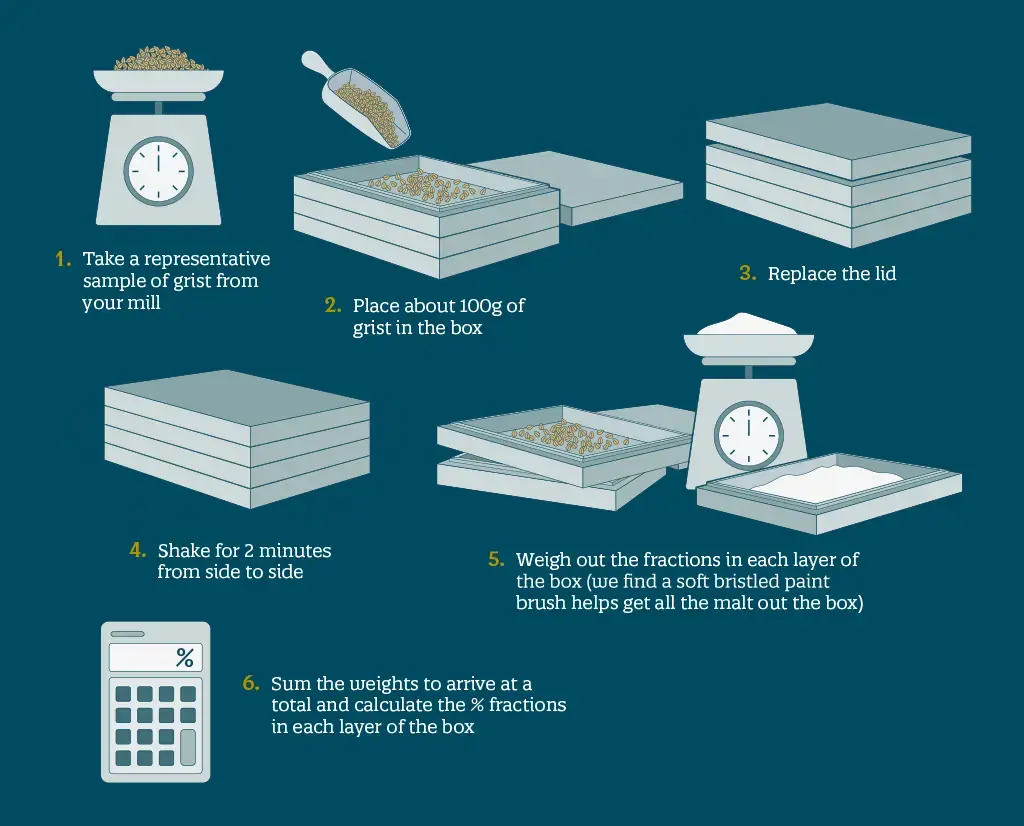
Step 1 – Zero and span check. Clear the deck and verify true zero. Correct any offset per the manufacturer. Apply traceable calibration weights (e.g., 50 kg/100 kg near a ~1000 kg span), compare indicated vs. known, and adjust gain and offset to within typical tolerances of ±0.1–0.5% of full scale. Example: a 100 kg certified weight reading 100.2 kg shows +0.2 kg (0.2%), possibly acceptable; larger deviations demand adjustment. Re‑weigh to verify, then document calibration date, technician, and weight traceability.
Step 2 – Multi‑point and linearity test. Single‑point checks miss nonlinearity. Use 25%, 50%, 75%, and 100% of full scale, record readings, and plot the curve. Practitioners use standard grade weights or kits per ISO/IEC 17025 (e.g., classes M1 or F1). Repeat on a schedule (e.g., weekly or monthly), after moving/service/impacts, aligned with ISO 9001 or GMP‑style routines.
Step 3 – Verification against production loads. Weigh a typical grist (e.g., 500–1000 kg), then cross‑check by splitting into smaller known fractions (e.g., 100 kg sacks) and summing. Log batch weights and maintain a control chart; shifts of ±0.5% without recipe changes flag drift. In some jurisdictions, large scales may require legal verification; maintain documentation per local regulation (e.g., Indonesian National Standard, SNI, or ISO/IEC 17025 traceability).
Example outcome: After calibration, aim for repeatability of ±0.1–0.2 kg on a 1000 kg load (0.01–0.02%) and systematic error <0.5%. Even tightening accuracy from 0.5% to 0.1% at high throughput stabilizes extraction by ~0.4%. On a large batch, a 0.5% weight error can equal ~30 kg of extract—roughly 360 liters of wort (!).
Hydrator mixing verification
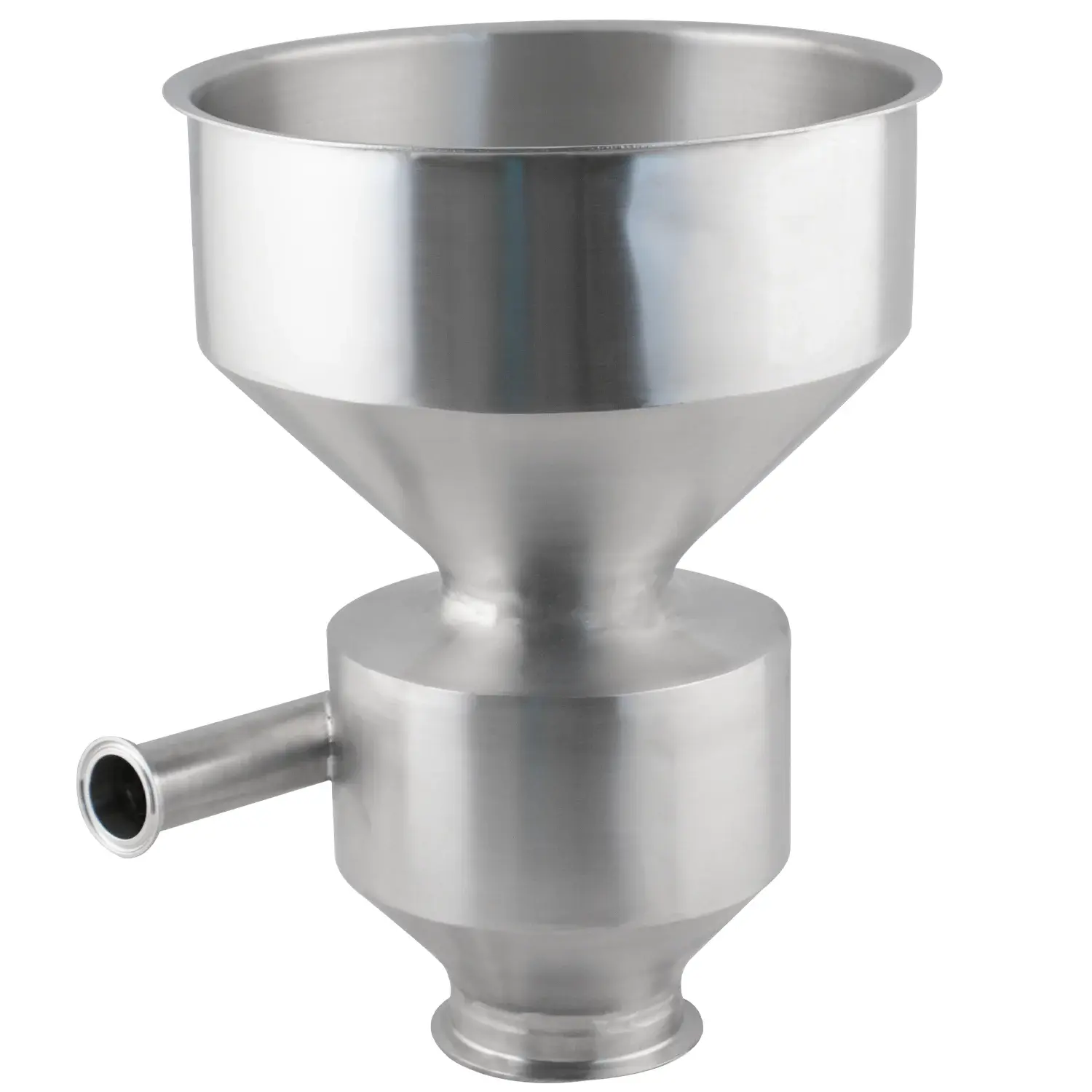
A grist hydrator (a compact vessel that pre‑mixes milled grain with strike water—the hot water used to mash in) aims to wet each kernel uniformly and eliminate dough balls. Its verification is both mechanical and analytical. A primer on the device: “Grist Hydrator is often used… to pre‑mix milled grain and water,” notes a brewery equipment overview (www.brewerybeerequipment.com).
Step 1 – Water pump and flow calibration. Run the pump through the hydrator at operating temperature/pressure for 1 minute into a container on a calibrated scale; measure mass/volume. Tune pump drive/valves so the water‑to‑grist ratio meets target (e.g., 2.8 L/kg). One brewer locked sparge at exactly 4.22 gallons per minute to get 19 gal over 45 minutes (www.flows.com). For hydrators, the same principle ensures the programmed volume (e.g., 10,000 L) is delivered; flow meters or gravimetric checks verify it.
Step 2 – Grain feed consistency. Confirm a steady discharge from the screw conveyor/feeder by timing a known mass to verify a constant rate; pulsation or “slugging” creates dry surges. Adjust conveyor speed or use a variable‑speed drive as needed. Cross‑check the total mass fed vs. the grain scale report for the batch.
Step 3 – Mixing uniformity checks. During a test run, sample slurry at different times/ports. Assess moisture content or residual extract. Indicators of uniform hydration include absence of “dry” solids and homogenous sugar concentration by densitometer or handheld refractometer. A centrifuge can isolate liquid to confirm wetting. Adjust agitator speed, water nozzle placement, or add pre‑mix recirculation until uniformity is achieved; aim for <5% difference in moisture or dissolved solids between samples.
Step 4 – Operational verification. In production, compare initial mash gravity (specific gravity or °Plato; °Plato ≈ % w/w sugar) to predicted. Example: 800 kg grain at 80% efficiency mashed in 2000 L water should yield ~1.050 (12.5°P) first wort. Repeat runs under the same recipe should land within ±0.5°P. Significant deviations point to scale or flow errors. Maintain a control chart of batch gravities or pH as indirect indicators of conversion consistency, echoed by real‑time mash monitoring discussions (spectramatics.com).
Measurable outcomes: A verified hydrator reduces stuck mashes and improves extraction. Brewers have observed +2–5% brewhouse efficiency when dough‑balls are eliminated and conversion is optimized. One case study noted monitoring gelatinization increased extract yield by about 3% (spectramatics.com). Consistency matters: small fluctuations can become noticeable to the “five senses” (www.mdpi.com).
Flow meters and inline sensors
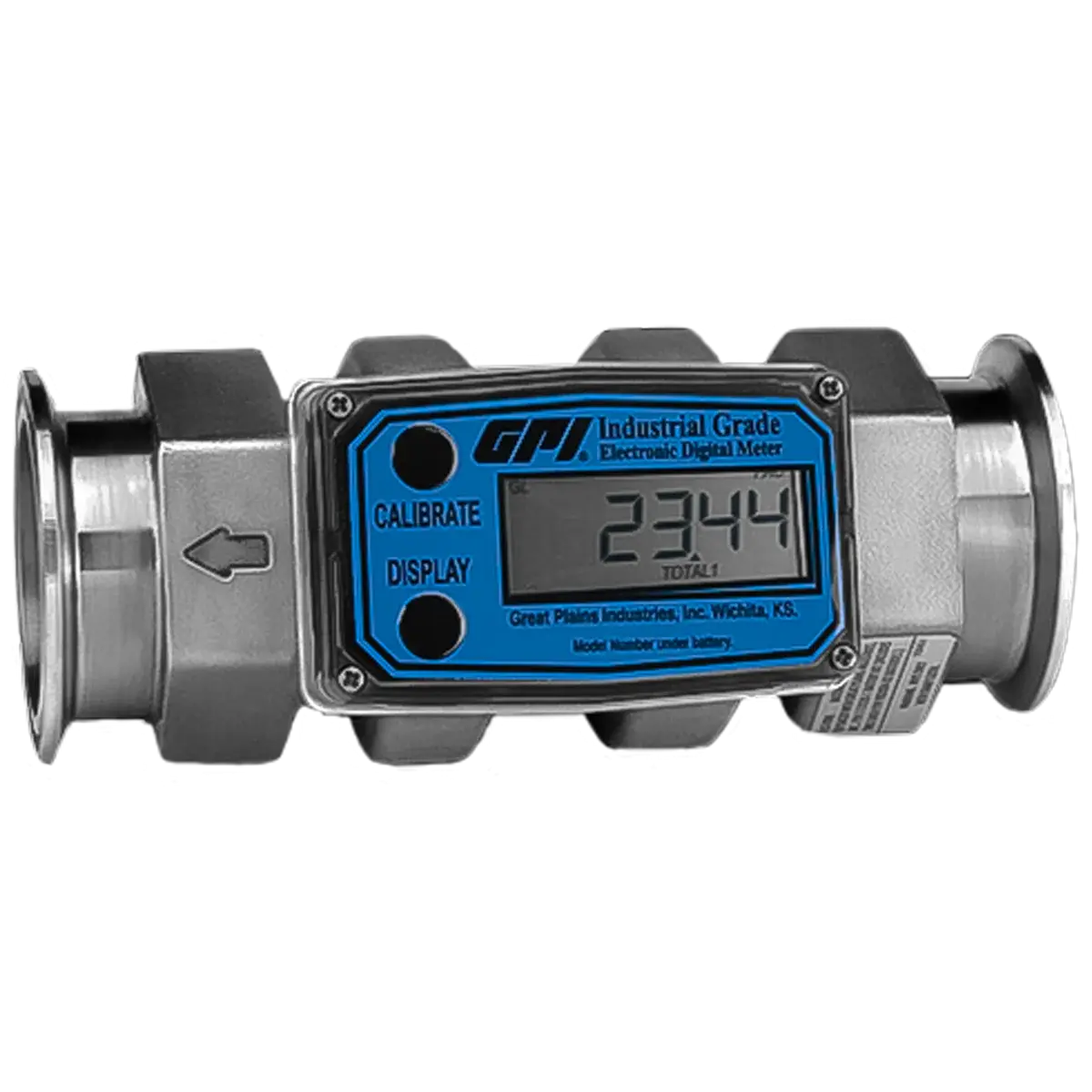
Instrumentation completes the loop. Flow meters quantify water and wort; sensors (temperature, level, turbidity, pH, conductivity, pressure) create real‑time feedback for closed‑loop control.
Flow meters on water lines. Place calibrated meters on strike, sparge, and CIP (clean‑in‑place) lines. Electromagnetic “mag” meters (for conductive liquids), Coriolis meters (mass flow plus density), and turbine meters are common. Calibrate by gravimetric/volumetric comparisons; e.g., divert 1000 gal through a meter and weigh it (≈3785 kg). Expect ±0.5–1% accuracy, documented by certificate. During sparge, keep flows on spec—such as the 4.22 gal/min example (www.flows.com)—with alarms or valve trims for deviations. Totalizers help track liters per kg grain across batches; a 200 L/hr target reading 210 L/hr flags calibration or equipment checks.
Flow meters on wort/CIP circuits. Meters on mash‑to‑lauter and lauter‑to‑kettle confirm full recovery. A Coriolis under a fermenter can reconcile kettle‑to‑fermenter transfer. On kettles and heat exchangers, CIP throughput metering verifies caustic volume at concentration, detects leaks via unexpected drops, and ensures complete transfers.
Temperature sensors. High‑precision RTDs (resistance temperature detectors; ±0.1 °C) in mash tun, hot liquor tank, and exchanger are calibrated in ice/calibration baths (NIST‑traceable references), with cross‑checks by secondary thermometers. Stable mash temperature underpins enzyme activity and conversion (www.pumpsandsystems.com). Log setpoint vs. actual; alarm on >±0.5 °C.
Level sensors and weighing. Capacitive or tuning‑fork switches in mash/lauter prevent overflows and running dry; an overflow sensor can halt grist feed or pumpout. Application notes underline how these “reliably prevent overflow and the pumps from running dry,” even with changing foam during boil (www.anderson-negele.com). Load‑cell weighing on silos and vessels provides inventory and cross‑checks batch mass; “Weighing Systems” are cited for real‑time mass (www.anderson-negele.com).
Turbidity and clarity. Optical turbidity meters (calibrated with formazin standards) in lauter/whirlpool automate the shift from cloudy to bright wort. Notes describe how they “guarantee consistent wort quality” and shorten lautering (www.anderson-negele.com).
pH and conductivity. In‑process pH probes (two‑point calibration at pH 4 and 7, daily) indicate mash consistency and conversion; drift can flag poor mixing or water addition error. Conductivity sensor calibration underpins CIP chemical control; correct titrated caustic correlates with cleaning efficacy.
Coriolis density for °Plato. A Coriolis meter simultaneously measures mass flow and density; “A Coriolis flowmeter provides an accurate density and temperature measurement, both of which are needed to determine the degrees Plato,” enabling inline gravity without lab delays (www.automation.com). Because 1°Plato ≈ 1% w/w sugar, weak or strong mashes are detected immediately, allowing on‑the‑fly adjustments rather than waiting 30 minutes for lab results (www.automation.com; www.automation.com). Reported benefits include “reduces waste from bad batches” and labor savings (www.automation.com).
Diagnostics, alarms, and control
Modern meters self‑diagnose. Coriolis devices detect entrained air—often from pump cavitation—and alarm accordingly (www.automation.com). Differential pressure across the mash bed flags channeling or blockages. All instruments should feed a SCADA (supervisory control and data acquisition) or PLC (programmable logic controller) so out‑of‑spec signals trigger alerts. Trend water flows, batch weights, pH, gravity, and vessel mass: a spike in mash‑tun weight (incomplete drain) or a gravity drift traces back to hydrator or scale settings.
End‑to‑end, the sensor stack standardizes execution. Level instrumentation “reliably prevent[s] overflow and the pumps from running dry” (www.anderson-negele.com), while lauter tun flow and turbidity “guarantee consistent wort quality” and minimize lautering time (www.anderson-negele.com). Broader reviews forecast a “very fast increase” in IoT use and soon “massive” adoption at all production levels (www.mdpi.com).
Measurable outcomes and takeaways
Regular calibration of scales and meters pays back: traceable weights for scales; gravimetric/volumetric checks for flow. A quick in‑situ test is to weigh 1 L of water through a meter at operating temperature (1 L = 1 kg at 4 °C; adjust for actual mash temperature density). Hydrator verification means metering both streams to target and proving mixing via sampling. Document every calibration and trend the results.
The throughline, echoed in brewing analytics and case studies, is that measurement accuracy plus real‑time feedback turns wort into a reproducible product (www.mdpi.com; www.mdpi.com), with on‑the‑floor examples showing how precise mag meters and controls improve accuracy and consistency (www.flows.com; www.automation.com). The result is fewer surprises, steadier gravities, and incremental gains that matter at scale.
References
Giannetti et al., “Internet of Beer: … Smart Technologies from Mash to Pint.” Foods 9, 950 (2020) (www.mdpi.com).
Kolbatz & Schroeder, “Precision of a Small Brew House…” Beverages 5(4), 67 (2019) (www.mdpi.com; www.mdpi.com).
Flow.com (F. Chavez, Crossed Arrows Brewery), “Brewery Uses Mag Meter…” (2021) (www.flows.com).
Booth (Endress+Hauser), “Using Flowmeter Measurements to Improve Quality.” Automation.com (Feb 2021) (www.automation.com; www.automation.com; www.automation.com).
Anderson‑Negele, Sensor Technology for the Brewing Process (application note) (www.anderson-negele.com; www.anderson-negele.com; www.anderson-negele.com).
Tiantai Brewery Equipment Blog, “Which kind of grist hydrator…” (Jul 2021) (www.brewerybeerequipment.com).
Spectramatics, “Real‑Time Mash Monitoring…” (2023) (spectramatics.com).
BrewOps, “Brewing in the Digital Age: The Impact of IoT…” (Feb 2024) (www.brewops.com).