

Industry: Aquaculture | Process: Wastewater_Treatment
Recirculating aquaculture systems (RAS, closed-loop fish culture facilities) generate more sludge than most operators realize. One survey found total suspended solids (TSS, fine particles carried in water) production of 10–30% of the feed input on a dry-weight basis, with BOD:TSS ≈0.1–0.2, nitrogen ≈4–6% of TSS and phosphorus ≈0.2–2% (onlinelibrary.wiley.com). Those sludges are nutrient‑rich but extremely dilute, often measuring under 0.1–1% total solids (TS, the dry fraction) in RAS filter backwash (alumichem.com).
Clarifying this waste is critical for reducing volume and cost. While rural dry climates may land‑apply sludge directly, most cases require on‑site stabilization (lagoons or digesters) and sludge thickening/dewatering before disposal (onlinelibrary.wiley.com). The stakes are high: sludge disposal often exceeds 50% of wastewater plant O&M costs (sciencedirect.com), making thickening, dewatering and any needed stabilization the key economic levers. Higher dry solids (DS) directly cut hauling and handling costs (sciencedirect.com)—with field data showing volume reductions on the order of 88% after dewatering (mivalt.cz).
That starts upstream. Farms increasingly add primary barriers such as wastewater physical separation and automated screening to intercept debris before thickening; many specify an automatic screen to continuously remove >1 mm solids in front of the sludge line.
Thickening equipment design targets
Thickening concentrates sludge before dewatering or digestion. Common units include gravity thickeners (tank clarifiers), rotary drum thickeners, and dissolved air flotation (DAF) thickeners. The design goal is modest—raising TS to about 4–10%. A continuous drum thickener, for example, can increase RAS filter‑backwash (≈0.1% solids) to about 5–10% TS (alumichem.com).
Traditional gravity thickeners and gravity belt thickeners are designed for 4–8% TS, often assuming polymer conditioning, with Ontario guidelines citing gravity thickening of mixed primary + waste‑activated sludge (WAS) to 5–8% TS and raw primary to 8–10% TS (ontario.ca). Achieving these concentrations requires adequate retention (rise) time and surface area; typical surface loading rates are on the order of 20–25 m³/m²·day, similar to primary clarifiers. For footprint‑sensitive builds, engineers often combine a clarifier with lamella media; a compact lamella settler reduces footprint by up to 80% compared to conventional clarifiers.
Polymers or coagulants are usually added at the thickener feed to destabilize colloids. Gravity thickeners with polymer can reach higher TS and solids capture (>90%) than without, and belt or drum thickeners with flocculant commonly achieve >95% solids capture at ~4–8% TS (ontario.ca). Some plants implement thickening via a compact DAF skid to lift lighter flocs ahead of mechanical dewatering.
In practice, RAS sludge is often thickened in a rotating drum clarifier: drip‑cooled feed with flocculant enters the drum, water drains through a tangential screen, and concentrated sludge discharges along a helical blade, yielding ~5–10% solids on the sludge side (alumichem.com). That cut alone reduces sludge volume about 5–10× from raw feed values. Where conventional tanks are preferred, a modern clarifier provides the gravity thickening basin with 0.5–4 hour detention time before the press room.
Dewatering technologies and energy
Mechanical dewatering delivers the next step change in volume reduction. Key technologies include centrifuges (decanter or basket), screw (volute) presses, belt/filter presses, and vacuum/belt filter units. Performance varies widely by sludge type and, critically, by conditioning.
Screw press: a compact, enclosed unit where flocculated sludge is conveyed through perforated screws/drums to compress the cake. Modern screw presses typically produce ~18–20% solids from raw sludge (e.g., raising 2% → 18% TS in an example) with very low energy—roughly 20 Wh per kg dry solids (on par with belt presses). Industry data report a screw press requires ~1/10 the energy of a traditional centrifuge, with near “maintenance‑free” operation (life ~10–15k hours without overhaul) (mivalt.cz; mivalt.cz).
Centrifuge (solid‑bowl decanter): generally produces a slightly drier cake than a press. Ontario data show 12–15% solids for WAS with polymer (ontario.ca), and example calculations report increasing 2% feed to 20% cake (vs 18% for screw press) (mivalt.cz). Centrifuges excel in compact footprint and high throughput, and can better dewater greasy sludges, but typically draw more power and require more maintenance: ~200 Wh/kg DS dry in many cases (modern high‑G designs ~60–80 Wh/kg)—over 3× that of a screw press—with expensive periodic rebuilds (often annually) due to wear (mivalt.cz).
Belt/filter press: two horizontal belts with filter media massage sludge through rollers; high‑pressure filter presses operate in batch. Belt presses yield cake solids comparable to screw presses—~10–15% solids for WAS (up to ~25% with primary sludge)—while filter presses can reach 30–50% solids but are larger, costlier, and batch. Vacuum filters yield ~8–25% solids depending on feed and sludge type (ontario.ca; ontario.ca).
Across systems, Ontario’s manual notes solids capture is usually 85–95% with proper conditioning (ontario.ca). Energy splits matter: belt presses can consume only ~20% of a centrifuge’s energy (magytec.com.au), screw presses are very low (~20 Wh/kg) (mivalt.cz), whereas high‑speed centrifuges and vacuum filters require the most power. In practical terms, a screw press is “plug‑and‑play” with polymer and yields a cake comparable to centrifuges, but with far lower energy and noise (mivalt.cz; mivalt.cz), while centrifuges demand tighter control (e.g., polymer mixing) and carry higher upkeep (mivalt.cz; magytec.com.au).
Polymer conditioning and dosing
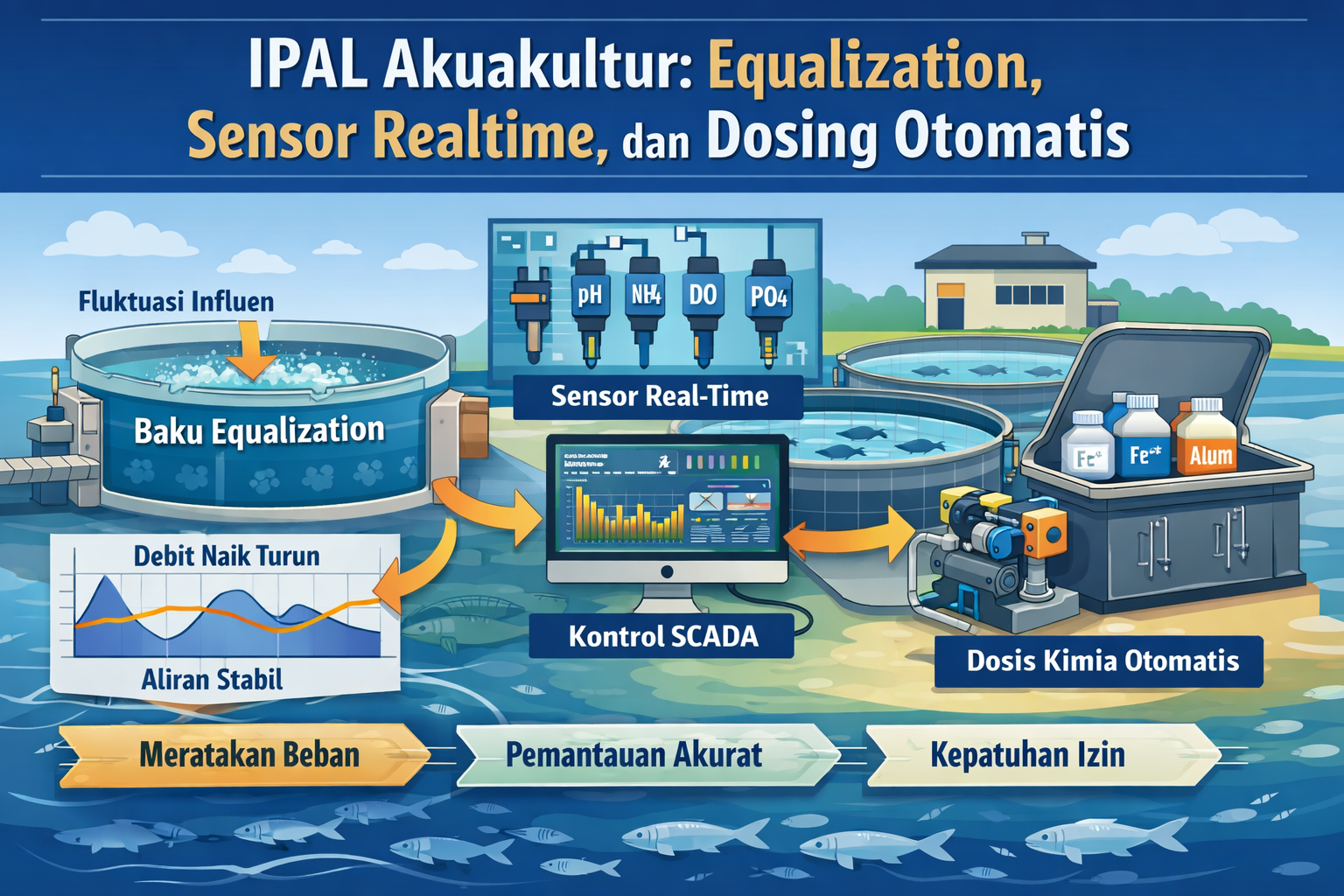
Chemical conditioning is essential. Coagulants (such as alum or ferric chloride) and high‑molecular‑weight polyelectrolyte flocculants are added to destabilize colloids and form filterable flocs. Typically, a cationic polyacrylamide (PAM) is dosed in a mixer ahead of thickening/dewatering, often via an accurate dosing pump. Optimal dosages vary but are on the order of 1–5 kg polymer per dry tonne of sludge. Proper polymer flocculation can raise cake solids by several percentage points and improve centrate clarity.
With polymer, centrifuges routinely achieve ~12–15% solids on WAS (ontario.ca), whereas without polymer they stagnate near 5–8%. Likewise, belt/drum thickeners use polymer to hit their 4–8% TS targets (ontario.ca). The polymerized cake is more porous and compact, aiding gravity drainage and press dewatering. Note: overdosing or wrong polymer charge can restabilize sludge, so jar tests are needed for each sludge (sciencedirect.com). Plants typically pair tested chemistry—commercial coagulants and site‑tuned flocculants—with static mixers just before the thickener.
Disposal and reuse pathways
After dewatering to ~15–30% solids, stabilized sludge still requires a final destination. Land application is attractive because aquaculture sludge is rich in nitrogen and phosphorus (e.g., TKN ~4–6% of TS) (onlinelibrary.wiley.com). In dry, rural areas, direct application of composted or dried sludge to fields at agronomic rates can be feasible (onlinelibrary.wiley.com), but regulations on heavy metals, pathogens, or organics (e.g., EU 86/278/EEC or national standards) apply, and odors and ammonia loss argue for composting or aging. Municipal landfills often require ≥15% solids in sludge for dumping, and similar thresholds frequently apply to land application (Ontario notes >15% solids for landfilling of sludge‑only operations to support soil cover) (ontario.ca).
Anaerobic digestion and biogas recovery are increasingly favored. Recent LCA work in Norway indicates anaerobic treatment of RAS sludge—alone or co‑digested with municipal sludge—significantly lowers environmental impact compared to discharging it (aquahoy.com). Biogas yields depend on organics, but fish waste is readily degradable; digestate nutrient liquor (centrate) can be used to grow plants or microalgae, locking N/P in biomass (aquahoy.com). For packaged solutions, operators look to anaerobic and aerobic digestion systems integrated with their press room.
Composting and vermiculture also feature in sludge portfolios. Mixing sludge with carbon‑rich waste (wood chips, manure) can stabilize organics and produce a soil amendment; biofloc or pond sludge has been trialed for vermiculture and solid compost fertilizer. Properly stabilized compost eliminates pathogens and concentrates nutrients.
Incineration is rare for small aquaculture, but dried sludge (≥50% solids) can be co‑fired in biomass boilers or incinerators. High dryness (≥30–50% TS) is needed for self‑sustaining combustion. Incineration eliminates pathogens and cuts volume by ~90%, though it requires gas cleaning for nitrogen/phosphorus oxides.
As a lowest‑value option, dewatered sludge can be landfilled with ordinary waste, typically at ≥15% solids (ontario.ca), with the trade‑off of disposal fees and lost nutrients.
Emerging circular practices
Operators are gravitating toward “zero discharge” and circular approaches: integrating sludge digestion with aquaponics (algae or plant growth) to recover nutrients, and pushing for higher solids capture and beneficial reuse under stricter effluent standards. One Norwegian RAS producing 5,000 t/yr salmon found that diverting 100% of sludge to a biogas plant, instead of dumping, greatly cut eutrophication impacts (aquahoy.com).
In Indonesia, while specific sludge regulations for aquaculture are limited, wastewater and biosolids rules (e.g., Government Reg. 82/2001 and related memos) effectively require treatment of solids and often encourage land application only if free of pathogens/metals. The trend is clear: engineered solutions—thickeners + dewatering + stabilization—are replacing ad‑hoc pond dumping.
Design summary and cost drivers
The practical sequence is consistent across facilities: start with very dilute aquaculture sludge, thicken to a few percent solids (e.g., 5–10% TS by drum/DAF), then dewater by press or centrifuge to ~15–30% TS—often with a coagulant/polymer stage at each step. This pathway reduces sludge volume by ~85–90% (mivalt.cz). Small farms tend to favor low‑maintenance, low‑energy screw presses; larger plants may justify centrifuges or hybrids. Polymers are essential to achieve filterable flocs—without them, solids capture would fall below 80%. For compact brownfield upgrades, a tube settler retrofit ahead of dewatering can increase clarifier capacity by 3–4× with minimal civil works.
Final selection should be data‑driven: pilot tests to set polymer dose and equipment sizing, and life‑cycle cost comparisons (energy, maintenance, disposal fees) to pick the optimal combination of thickener, dewatering unit, and sludge reuse pathway (mivalt.cz; sciencedirect.com).
Sources and technical anchors
Key design and performance data are drawn from Ontario’s Sludge Design Guidelines (ontario.ca; ontario.ca; ontario.ca) and classic aquaculture sludge composition work (Chen et al., 1997) on TSS production and disposal pathways (onlinelibrary.wiley.com; onlinelibrary.wiley.com). Industry comparisons of screw presses and centrifuges inform energy and maintenance trade‑offs (mivalt.cz; mivalt.cz), while a sludge‑conditioning review highlights polymer/flocculation benefits for dewatering (sciencedirect.com). Practical RAS case studies demonstrate combined anaerobic/microalgae reuse lowering impacts (aquahoy.com). For packaged thickening, flotation, and clarification steps, farms often standardize on proven modules such as a clarifier followed by DAF to meet a consistent press feed.