

Industry: Brewery | Process: Mashing
Infusion or decoction: for breweries, the choice sets the rhythm of temperature control. A classic infusion mash holds the entire grain bill near a constant saccharification rest — about 65–68 °C — in a single vessel, either isothermal or via gentle steps using hot water or direct heating (microbrewerysystem.com). Decoction, by contrast, repeatedly pulls a portion of mash, boils it, and returns it to lift the main mash to the next rest — a process that adds cooked/malty melanoidins and darker color but layers on heat/cool cycles and energy demand (microbrewerysystem.com; microbrewerysystem.com).
Today, both approaches run on automation: steam‑jacketed or electric‑heated mash tuns tied to digital controllers. On many 15 BBL (beer barrels) systems, internal steam coils or jackets — direct injection steam or indirect hot water — with PID (proportional‑integral‑derivative) control can drive the mash up to about 77–78 °C (170 °F) as required (yolongbrewtech.com; microbrewerysystem.com). Recipes are programmed to ramp and hold rests — 35 °C for 20 minutes, then 52 °C, then 65 °C, and so on — with precise timing (microbrewerysystem.com).
Mash strategy: infusion versus decoction
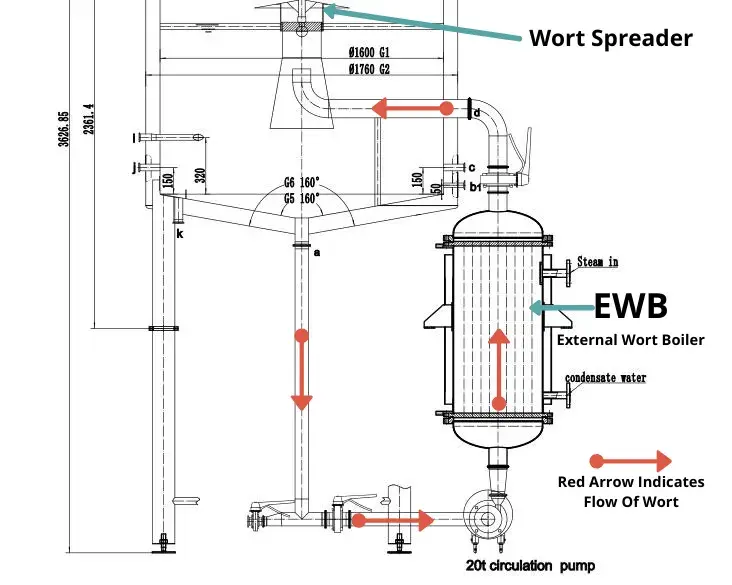
Infusion mashing (single or step‑infusion) keeps the mash in one vessel with a near‑uniform temperature profile, typically targeting fast conversion at a single rest or through defined steps (microbrewerysystem.com). Decoction mashing removes a portion, boils it, and blends back to hit the next target — a move that deepens malt character via melanoidins while making temperature control inherently more complex and energy‑intensive (microbrewerysystem.com; microbrewerysystem.com). That’s why decoction often stays with traditional styles like lagers and German wheat beers in plants that accept longer cycle times to achieve those traits (microbrewerysystem.com).
Either way, instrumentation is the new muscle. PT100 RTDs (resistance temperature detectors) or thermocouples feed PLCs (programmable logic controllers) or microcontrollers to hold rests to within about 0.1 °C; open‑source controllers such as BrewPi Spark 3 can cycle heaters to ±0.1 °C accuracy (mdpi.com; yolongbrewtech.com).
Steam jackets and electric elements
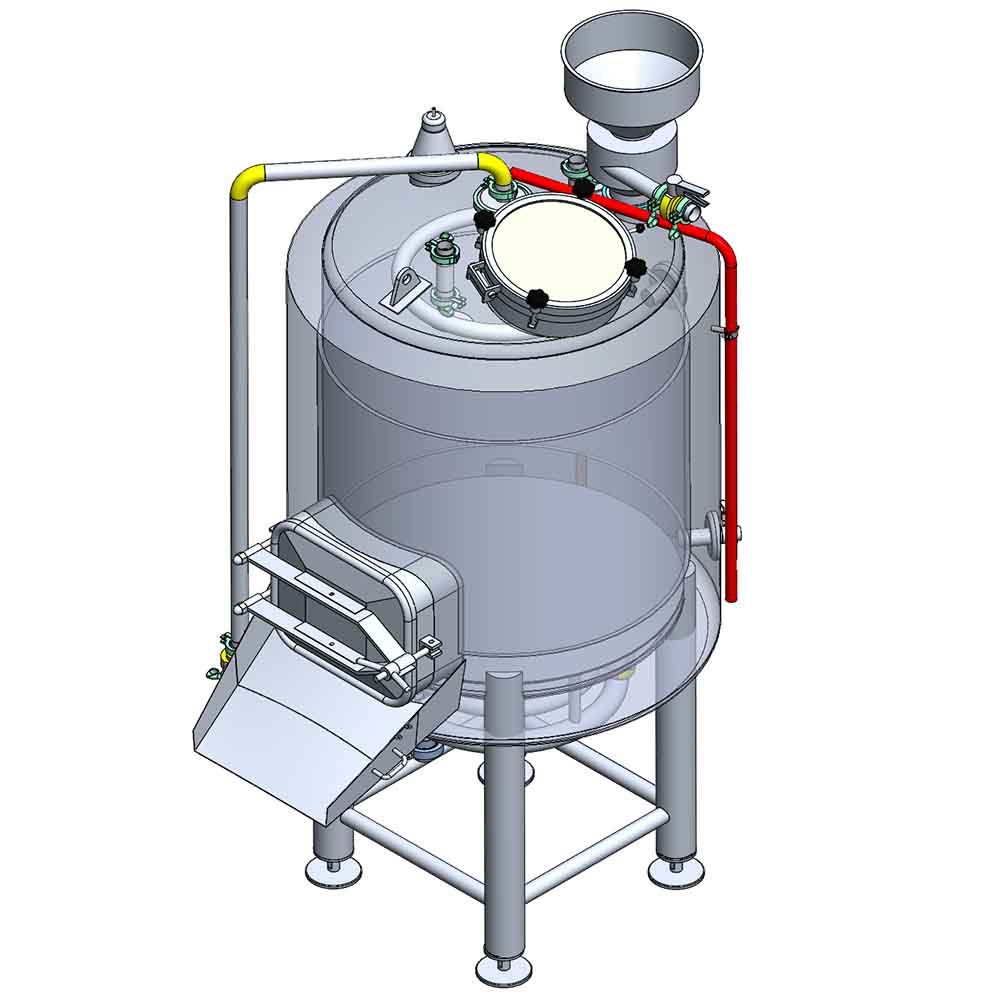
Steam‑jacketed mash tuns spread heat across the vessel surface and respond almost instantly; cutting steam nearly stops heat input, limiting overshoot — unlike electric or gas elements that keep radiating after power‑off (byo.com). A pressurized steam jacket can push a tun from 65 °C to 72 °C in minutes. But they demand good mixing: if agitation stops, mash at the hot wall can boil while the core lags cool (byo.com).
Electric systems — common in smaller rigs — use immersion or under‑tank elements for gentler, uniform heating but slower ramps. Many 20–100 hL (hectoliter) craft mash tuns combine electric jackets with recirculation to smooth steps as controllers modulate power. While absolute data are scarce, general engineering principles indicate sub‑0.5 °C ramp precision is routine, with slower rises (for example, a 15 BBL mash heating about 0.5–1 °C per minute on a 100 kW electric jacket).
Heater type still matters at scale. Large breweries favor steam jackets or internal steam coils for power density and control; a jet‑injected steam coil can add heat rapidly via steam’s latent heat. Premier Systems’ data indicate mash tuns often use “direct steam” or “indirect steam” heating (e.g., external steam‑heated hot water recirculated), where direct steam demands careful mixing to prevent scorching and indirect designs (HERMS — heat exchange recirculating mash system) recirculate the mash through a steam‑heated plate exchanger for gentle heating (yolongbrewtech.com). By 2024, over half of new craft brewhouses had at least PLC/HMI (human‑machine interface) on the mash tun (yolongbrewtech.com).
Step control and sensor feedback
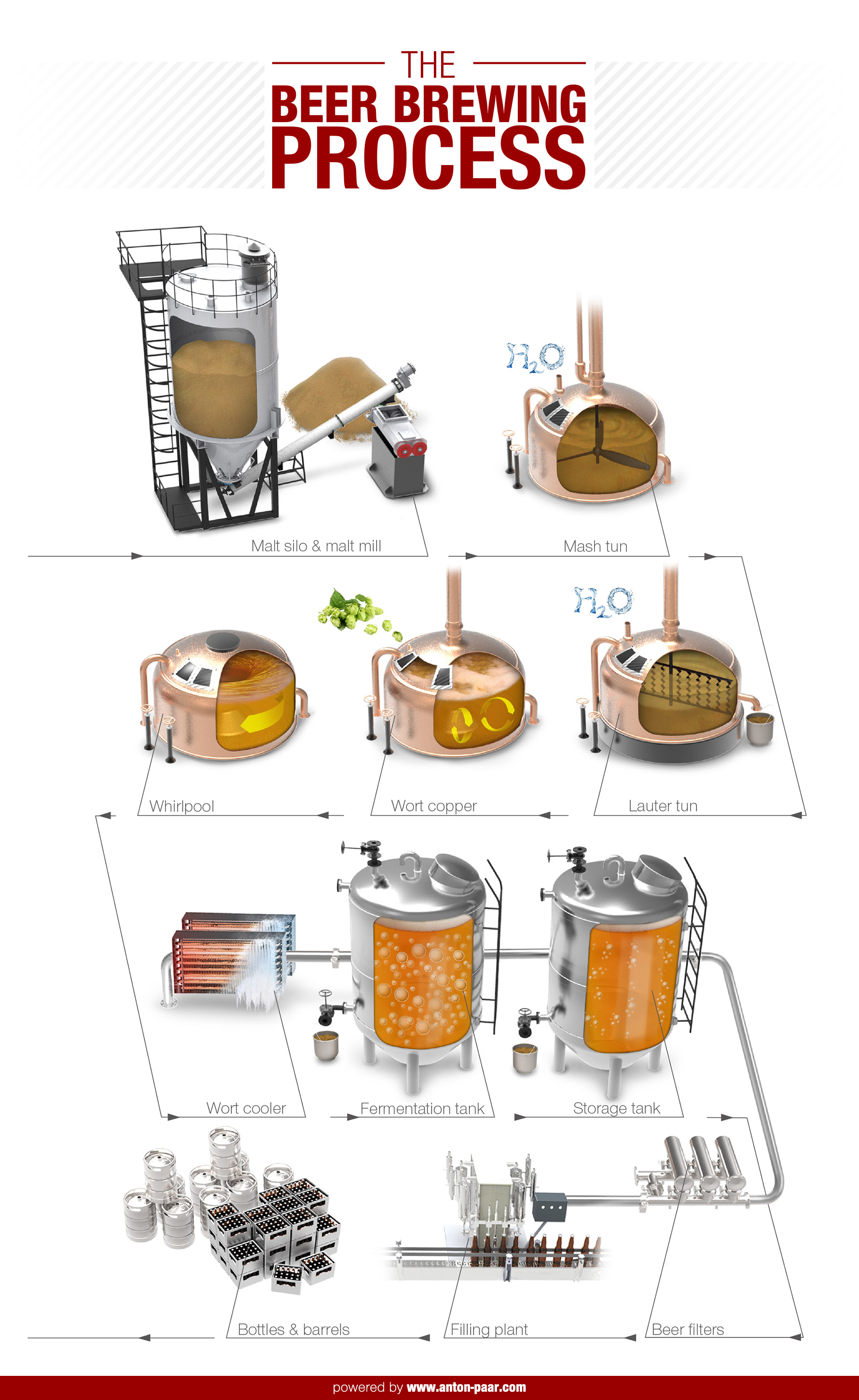
In direct‑heating mode, a PLC ramps to each setpoint — 35 °C for 20 minutes, then 52 °C, then 65 °C — and holds within ±0.1–0.5 °C using a PID loop (microbrewerysystem.com). Proprietary and open‑source controllers (Brewmaxx, Brewtarget, etc.) support such profiles; some permit remote monitoring/smartphone control.
In infusion mode, the tun is insulated at an intermediate temperature and hot liquor additions make the step. Volumes are pre‑calculated from mash/water heat capacities, then dispensed by pumps and valves through flow meters. One example: add water at 73 °C to raise a 5 hL mash from 65 °C to 72 °C; the PLC pulls exactly that volume from the HLT (hot liquor tank) at the programmed temperature and executes the step (microbrewerysystem.com). Operators account for thermal lag by setting targets slightly lower to avoid overshoot (microbrewerysystem.com).
Decoction automation choreography
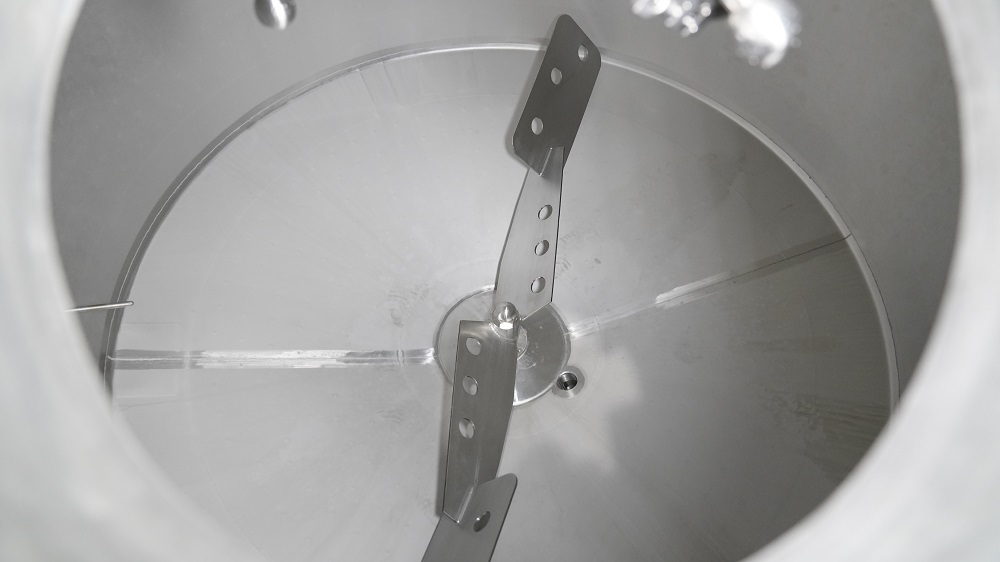
Automated decoction mashing coordinates multiple boiling steps across vessels under PLC control. The controller pumps a calculated fraction of mash to a kettle, heats it to about 100 °C or higher, and returns it to lift the main mash to the next rest; gear pumps and valves meter volumes and times per recipe (microbrewerysystem.com). In one plant example, software ran three decoction stages to raise the mash from about 50 °C to 65 °C to 72 °C (microbrewerysystem.com). Manufacturers stress “precise temperature control” because multiple heat‑ups/cool‑downs must be exact to avoid off‑targets or scorching (microbrewerysystem.com).
The trade‑off is cycle time and energy: boiling portions of mash adds time and power consumption. Still, modern sequences — for example, “pump 2 hL to kettle (MV1 open), heat to 100 °C (steam on to boil), pump back to hit 65 °C rest,” repeat — make even triple decoctions repeatable batch‑to‑batch, with temperature curves logged for verification.
Mixing for uniform temperature
Good mixing is non‑negotiable. “Mash mixers are used to move the mash around for uniform heat transfer from the jacket to all of the mash,” notes one brewing engineer (byo.com). Rake agitators use low‑shear paddles to drive radial and vertical flow so every portion contacts heated surfaces (byo.com). If the agitator stops, near‑wall mash can boil while the core stays cooler — a recipe for uneven conversion (byo.com).
Recirculation systems — RIMS (recirculating infusion mash system) or HERMS — pull wort from the bottom through a heat exchanger and redeposit on top, effectively turning the tun into a continuously stirred tank. In a 50‑L continuous mash/filter unit with “directed circulation of extractant flows,” researchers reported 33% lower turbidity and 6.5% less polyphenol than a static mash, producing clearer wort with fewer solids and less astringency (researchgate.net).
Extraction yields and consistency
Mash mixers “have a very real effect on extract yield” in practice (byo.com). One brewery producing 15°P beers reported about 94% of theoretical yield using a mash mixer followed by a lauter tun; modern three‑vessel systems routinely achieve “in excess of 92% of laboratory (theoretical) yield” (byo.com; byo.com). By contrast, simple infusion systems — especially in small setups — often struggle to reach 80–85% efficiency.
Uniform temperature also protects enzymes: cooler pockets convert slowly; overheated spots can denature α‑amylase. Some breweries validate mixing by dye‑CIP (clean‑in‑place) tests using riboflavin to ensure no cold zones. The trend toward “riboflavin‑validated CIP coverage” rose from 22% of sites in 2022 to 31% in 2024 (yolongbrewtech.com), underscoring the emphasis on even coverage — a principle equally critical during mashing.
Adoption and efficiency metrics
Automation is now mainstream: industry data show that by 2024 about 55% of craft brewhouses had PLC/HMI control, up from 46% in 2022 (yolongbrewtech.com). These systems let teams program multi‑step mashes exactly, removing guesswork in water additions and heater timing.
The operational upside extends beyond the mash tun. Breweries with modern mash systems report lower water use — around 5.2 hL_water per hL_beer with automation versus about 6.2 without — and 15–20% kWh/hL energy savings when layering heat recovery and smart controls (yolongbrewtech.com; yolongbrewtech.com).
Bottom line: whether it’s an infusion rest at 65–68 °C (microbrewerysystem.com) or a decoction boil and blend at 100 °C (microbrewerysystem.com), precise heating with steam or electric elements, governed by PLC/PID control and backed by continuous mixing, is how breweries now hit complex mash profiles with repeatability. The payoffs — consistent temperatures, yields often exceeding 92% of lab theoretical, clearer wort, and measurable water/energy savings — are increasingly part of the business case for upgrading (byo.com; yolongbrewtech.com).