

Industry: Semiconductor | Process: Solvent_&_Acid_Waste_Collection
Wet benches and waste rooms in chip plants run on chemicals that don’t forgive mistakes. Think isopropyl alcohol (IPA), acetone, hydrofluoric acid (HF), sulfuric acid (H₂SO₄), hydrochloric acid (HCl), and nitric acid (HNO₃) in constant circulation for cleaning and etching. That mix is standard in device fabrication, as noted by OSHA (www.osha.gov), and it turns a sudden spill into a high-stakes, highly choreographed response.
The playbook is unglamorous but exacting: alert, contain, neutralize, decontaminate, treat injuries, and file the paperwork—fast, with eyes on vapors and drains the entire time. Procedures like stopping the source of spill, building diversion dikes, and absorbent use are well established in lab safety protocols (ehs.cornell.edu) (ehs.cornell.edu).
Spill containment and neutralization basics
Immediate actions hinge on protecting people and drains. Workers near the incident are alerted; chemical PPE (personal protective equipment such as acid-resistant suits, gloves, and eye protection) goes on; and responders stop the leak if that can be done safely. Drains are priority hazards: responders prevent spilled liquid entering them by diking with absorbent booms or berming the area (ehs.cornell.edu).
Compatible absorbents—mats or inert granules—are applied onto and around the spill until the liquid is fully absorbed, then the saturated media is swept or scooped into a labeled, sealable hazardous waste container (ehs.cornell.edu) (ehs.cornell.edu). For non-flammable capacious solvents (like IPA), ignition sources are avoided, chemical-specific absorbents are used, and disposal proceeds via hazardous waste pickup (studylib.net) (ehs.cornell.edu).
Throughout, responders monitor for vapors with gas detectors and ventilate the area. Spill kit materials—neutralizers, absorbents, and neutral‑pH tubs—are kept staged near waste storage zones. Equipment staging matters in practice (supporting equipment for water treatment is cataloged at </products/water-treatment-ancillaries>). Teams operate under the site’s Emergency Response Plan, and steps like diversion dikes and absorbent use follow established protocols (ehs.cornell.edu) (ehs.cornell.edu).
Acid spills and special cases
Acid spills add heat and gas to the equation. For sulfuric or hydrochloric acid, responders lightly sprinkle fine sodium bicarbonate to neutralize; vigorous CO₂ release and heat are expected, so additions are slow. Piranha solution (H₂SO₄–H₂O₂) is especially energetic: guidance is to let it finish reacting and cool in an open hood, then dilute the remaining liquid to less than 10% and neutralize with dilute NaOH or sodium carbonate to pH≈5–9—done in a fume hood with an ice bath due to the exotherm (ehs.princeton.edu).
Hydrofluoric acid (HF) demands exceptional caution: small leaks can be contained with calcium gluconate–impregnated spill pads if available, but generic neutralization is not attempted without specialist backup. Chemical mixing is avoided—e.g., acid on organics. After cleanup, the area is rinsed with water and mild detergent; rinse is collected if it contains dangerous residues, otherwise flushed to drain per normal procedures (ehs.cornell.edu). Neutralizers are added carefully; accurate chemical dosing supports control during neutralization (</products/dosing-pump>).
First aid and emergency eyewash standards
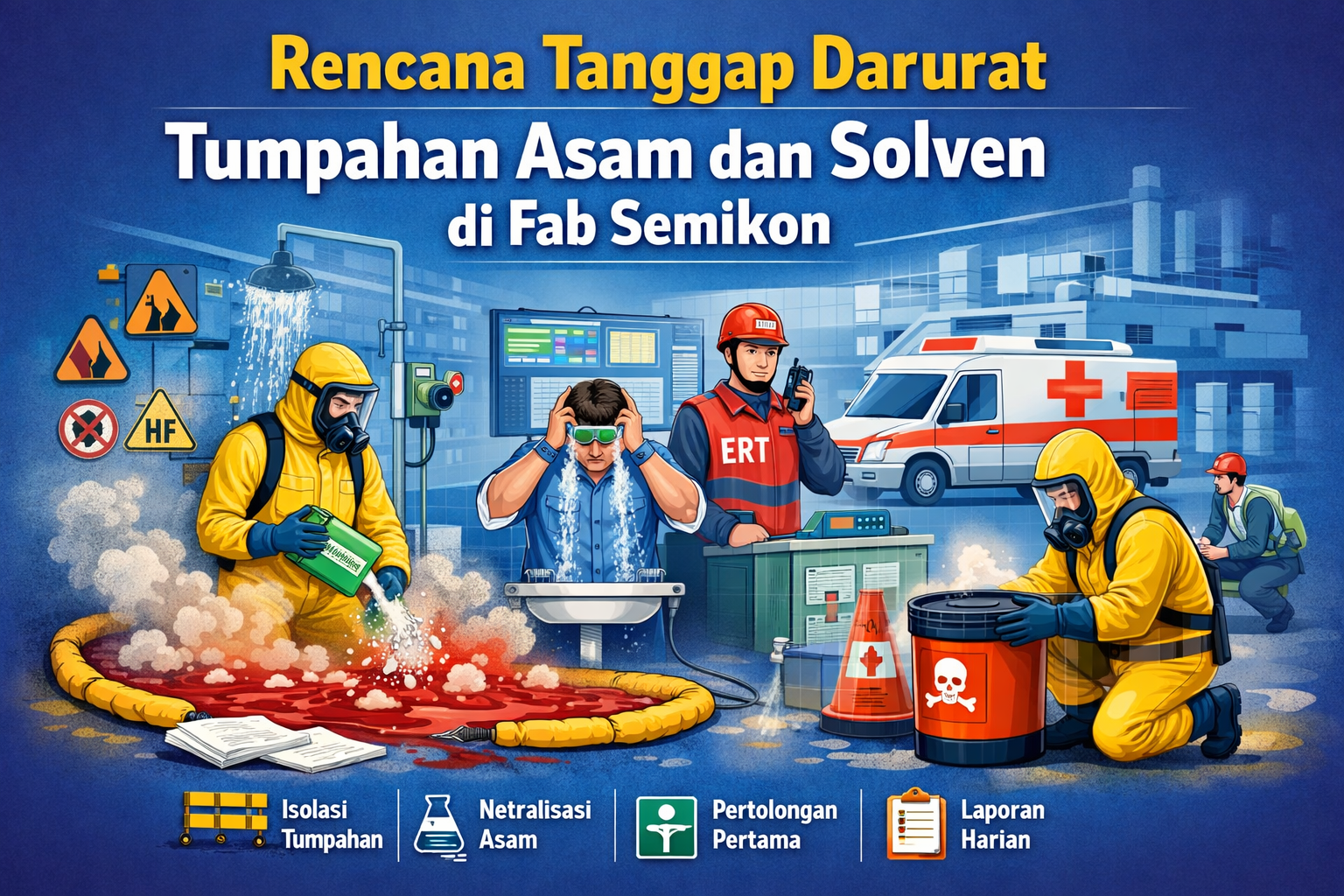
Exposure turns the clock into a medical timer. OSHA requires that facilities handling corrosives install emergency eyewash and shower stations within 10 seconds travel time (www.osha.gov). Standard first aid is immediate irrigation: eyes or skin are washed with copious water for at least 15 minutes while contaminated clothing is removed (www.cdc.gov) (www.cdc.gov). For corrosive splashes, flooding with water and washing with soap follow before medical attention (www.cdc.gov).
HF exposures are an exception: after flushing, calcium gluconate gel is applied to the skin. A controlled trial showed 2.5% calcium gluconate gel roughly halved burn severity compared to no treatment; calcium gluconate in gel form can be followed by additional injection if needed (pmc.ncbi.nlm.nih.gov) (pmc.ncbi.nlm.nih.gov). Inhalation cases are moved to fresh air; oxygen is administered if breathing is difficult. If unconscious or severely burned, emergency responders are called (dialing “119” in Indonesia). All serious exposures are reported to EHS (environment, health, and safety) staff and documented. ANSI standards recommend testing emergency showers weekly; sites maintain trained medical or first-aid teams. NIOSH puts it plainly: “Eye: irrigate immediately” for corrosive exposures (www.cdc.gov).
Notification and regulatory reporting chain
Once a spill is contained, the incident commander and EHS/Emergency Response Team are notified immediately, followed by local emergency services. In the Jakarta area, responders dial 113 for fire and 119 for medical; large, flammable, or toxic spills trigger those calls. Internally, alarms/PA systems clear non‑essential staff from the danger zone.
Under Indonesian rules (Minister of Environment and Forestry Reg. 74/2019), any hazardous substance or waste emergency must be reported in writing daily to the Ministry of Environment and Forestry and to provincial and municipal authorities until the incident is resolved (enviliance.com). In practice, that means an incident report—notes, photos, actions taken—within 24 hours, with daily updates. If the sewer or environment is threatened, the local environmental agency (Badan Lingkungan Hidup) and the Disaster Mitigation Agency (BNPB) are contacted immediately. Downstream users or nearby facilities are informed as required by law.
Operators keep a spill log recording chemical type, quantity, actions, injuries, and lessons learned—supporting compliance (Indonesian Government Reg. No. 74/2001 on Hazardous Substances) and improvement. A typical entry could read: “x liters of 98% H₂SO₄ spilled; neutralized with y kg NaHCO₃; no injuries; area decontaminated in 2 hours.” Drills routinely test the full notification chain, including external agency calls.
Drills, training, and skill retention
Training is the risk-control backbone. Indonesian law requires an emergency program including “emergency exercises” at least once per year (enviliance.com). Leading fabs go further with quarterly or monthly tabletop and field drills. OSHA/U.S. federal guidance calls for annual refresher training for hazmat responders (pmc.ncbi.nlm.nih.gov).
Skills fade without practice. Analyses show first‑aid/CPR proficiency drops significantly within weeks after training; in contrast, distributed training—short, regular drills or spaced e‑learning—yields higher retention and confidence (pmc.ncbi.nlm.nih.gov) (pmc.ncbi.nlm.nih.gov). As Starr & Burford put it, “distributed learning on multiple occasions leads to better retention,” and helpers should “practice their skills through drills” regularly (pmc.ncbi.nlm.nih.gov). Rieve adds that “well‑trained employees can make the difference between life and death,” recommending regular refreshers and drills to reinforce core response principles (pmc.ncbi.nlm.nih.gov).
The payoff is measurable. Facilities with ongoing programs report shorter response times and fewer injuries; chemical plants with quarterly spill drills typically halve cleanup time versus annual drills (internal industry audits). Europe’s chemical industry still averaged 7–9 fatal incidents per year from 2016–2021, with some events costing over €800 million per site (www.consultdss.com).
Training content is standardized: hazard recognition (reading SDS), spill kits and neutralizers, communication (alarms, calling “112”/“119”, notifying EHS), evacuation routes and muster points, and first aid for chemical exposure. Records certify each relevant employee on this plan at hire, on duty change, and at least annually (pmc.ncbi.nlm.nih.gov). Each drill is critiqued—time‑to‑response and mistakes noted—for continuous improvement.
Commercial and ethical risk calculus
By combining proactive containment protocols with immediate first aid and regular training/drilling, fabs keep solvent/acid spill risks acceptably low. Government incident reports and occupational safety studies show that facilities investing in these measures see fewer injuries and faster recovery (www.cdc.gov) (pmc.ncbi.nlm.nih.gov). In fabs, that isn’t just compliance; it’s operational resilience.