

Industry: Fertilizer_(Ammonia_&_Urea) | Process: Wastewater_Treatment_(Ammonia_&_Urea_Removal)
In fertilizer plants, the first cut is not the last. Even after primary ammonia stripping, high-nitrogen effluent — rich in ammonium (NH₄⁺–N) and soluble urea — typically emerges carbon-starved, which makes biological polishing a delicate balancing act. Local rules add urgency: typical Indonesian standards (Kepmen LH 51/1995) require ammonia as NH₃–N below 15 mg/L in fertilizer effluent (id.scribd.com).
That means nearly complete nitrification (ammonia to nitrate) and a reliable denitrification step (nitrate to N₂) before discharge. After chemical stripping, residual NH₄–N can still sit in the tens of mg/L; a high‑MLSS pilot of conventional activated sludge (MLSS ≈ 8 g/L; mixed liquor suspended solids) at influent NH₄–N ≈ 35 mg/L hit ~94% ammonium removal but only 72% total nitrogen (TN) removal (sustainenvironres.biomedcentral.com). For fertilizer operators, the polishing choice now often sits between conventional activated sludge, MBBR (moving bed biofilm reactors), and MBR (membrane bioreactors).
At stake are grade‑A nitrification, dependable TN removal, and a realistic footprint. In practice, biological nutrient removal (BNR) polishing must finish the job that stripping started — a use case squarely targeted by nutrient removal systems designed to take N and P to single‑digit mg/L.
Post‑stripping nitrogen profile and targets
BNR polishing in this niche revolves around two steps. Nitrification is driven by ammonia‑oxidizing and nitrite‑oxidizing bacteria (AOB/NOB), and denitrification follows under anoxic conditions with a carbon source. After stripping, wastewater is often low in biodegradable COD (chemical oxygen demand), so achieving low TN typically calls for external carbon dosing. CAS (conventional activated sludge) with long sludge age can achieve ~90–95% nitrification, but TN removal usually lags without added carbon; the high‑MLSS CAS trial above is a case in point: ~94% NH₄–N removal versus only 72% TN removal (sustainenvironres.biomedcentral.com).
Conventional activated sludge parameters and limits
In a typical CAS BNR train — an aerobic tank for AOB/NOB followed by an anoxic zone with internal recycle and, if needed, methanol — long SRT (sludge retention time; often ≥10–20 days) and DO (dissolved oxygen ≈ 2–3 mg/L) sustain nitrifiers. Reported ammonia removal efficiencies are 85–95%; one study logged 94% NH₄–N removal (45 → 2.7 mg/L) at 8 g/L MLSS (sustainenvironres.biomedcentral.com).
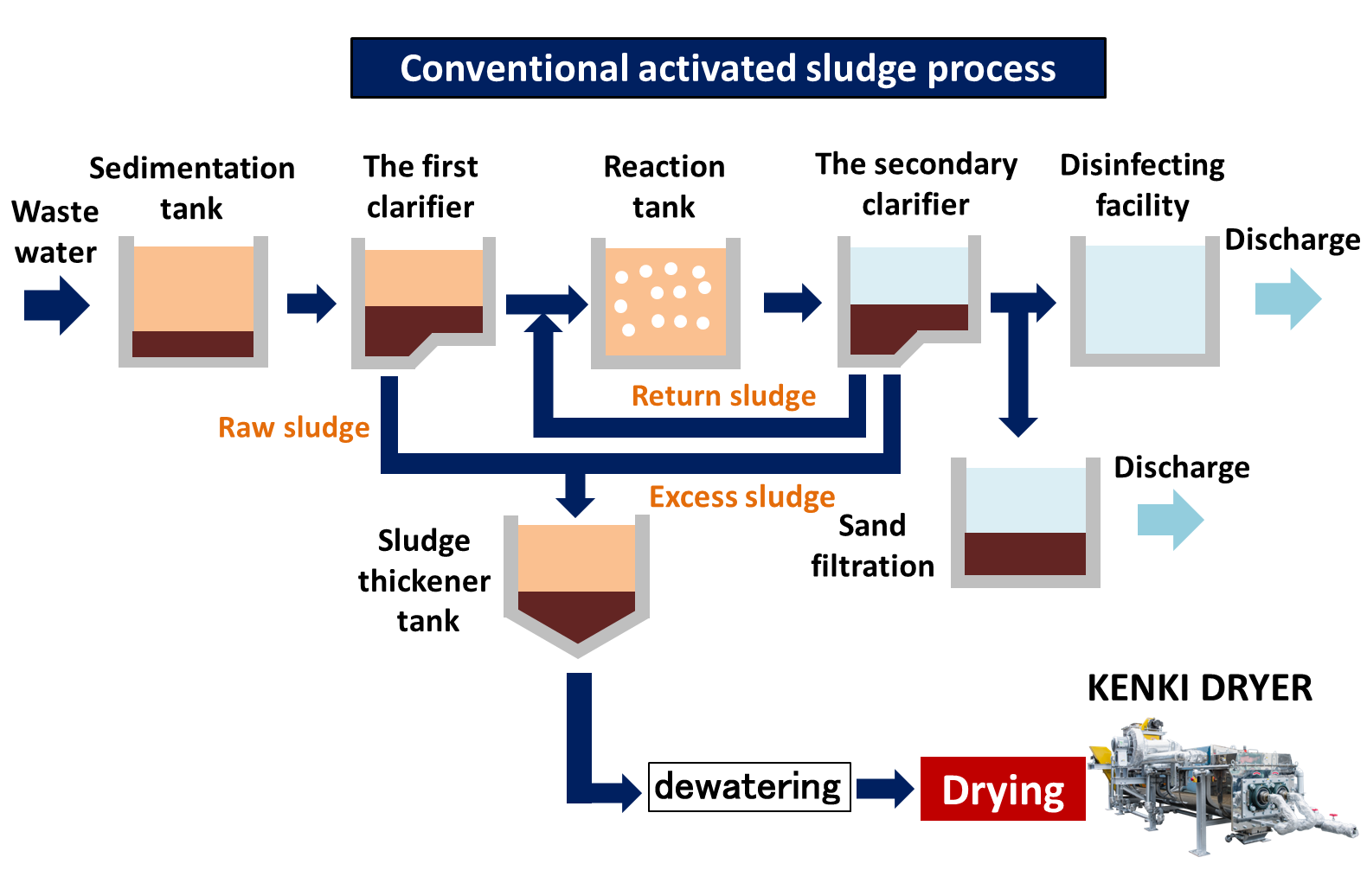
But trade‑offs are real. CAS produces large volumes of waste sludge — on the order of 0.5–1.0 kg sludge per kg COD removed — and needs sizeable secondary clarifiers. In a dairy effluent comparison, CAS produced the most sludge and “offered the worst treatment capability” of the systems tested (mdpi.com). Energy costs are also high thanks to aeration and RAS (return activated sludge) pumping. Without sufficient carbon, TN removal often sits below 80%, making methanol or side‑stream processes necessary. For facilities standardizing on activated sludge, these realities often translate into larger basins and bigger clarifiers — exactly the niche served by activated sludge systems and secondary clarifiers — and careful carbon addition with an accurate chemical dosing pump.
Moving bed biofilm reactors: attached growth advantage
MBBR systems use thousands of plastic carriers to retain biofilm, decoupling SRT from HRT (hydraulic retention time). The upshot is higher nitrifying biomass per reactor volume and more stable nitrification under load changes. Multiple studies show MBBR and IFAS (integrated fixed‑film activated sludge) match or exceed CAS in nitrogen removal while producing less sludge: a systematic comparison found the MBBR produced the least biomass of three systems (CAS, MBBR, sequencing batch MBBR), with CAS producing the highest sludge (mdpi.com).
A pilot MBBR/IFAS treating dairy wastewater achieved more than 85% TN removal and more than 95% COD removal across loads; the sequencing batch MBBR (SBMBBR) removed more than 85% of TN (and more than 95% COD) at moderate loads, and even the continuous MBBR matched SBR COD removal at a high load of 5.4 gCOD/L·d (grams of COD per liter per day) (mdpi.com) (mdpi.com). Mechanistically, carriers create aerobic–anoxic microzones that enable SND (simultaneous nitrification/denitrification): oxygen gradients in deeper biofilm layers support denitrification if soluble COD is present. Tek et al. report that MBBR/IFAS systems “can develop nutrient removal in different operating conditions” and that the attached biomass drives TN removal (mdpi.com) (mdpi.com).
Practically, MBBRs typically achieve on the order of 80–90% TN removal for fertilizer‑like wastewaters if designed with dedicated anoxic sections or recycled flows. Higher biomass density on carriers means higher nitrification rates per unit volume: nitrifier populations on carriers are on the order of 10⁵–10⁶ cells per mg biomass (versus 10⁴–10⁵ in CAS), so ammonia loading per volume can be 20–50% higher for the same nitrification efficiency. Run as a polishing step, MBBR reactors are compact — no large secondary clarifiers — and produce minimal excess sludge (mdpi.com), a profile aligned with packaged moving bed bioreactors used to upgrade or downsize legacy layouts.
One IFAS case operating at very high SRT yielded effluent BOD ≈ 3 mg/L, COD ≈ 12 mg/L, and TSS ≈ 8 mg/L while nitrifying almost all ammonia — but nitrate built to ≈ 45 mg/L due to complete NH₄→NO₃ conversion (mdpi.com). The takeaway mirrors the design brief: MBBRs readily satisfy nitrification; full N removal still requires an anoxic denitrification stage. Industry reviews note MBBR is widely applied to upgrade CAS plants for stricter nutrient limits by adding carriers to existing basins (sciencedirect.com).
Membrane bioreactors: high MLSS, high polish
MBRs pair an aeration tank with membrane filtration, retaining very high MLSS (up to ~15–20 g/L) and delivering near‑complete solids separation. The result is exceptional organic removal and nitrification: numerous studies report >90–95% BOD/COD removal with MBRs. One pilot saw both a conventional MBR and a hybrid fixed‑bed MBR achieve >95% BOD, COD, and TSS removal under all tested loads; all NH₄–N was effectively oxidized (nitrified) in the aerobic tank at SRTs >75 days (pmc.ncbi.nlm.nih.gov). In general, high SRT and MLSS in an MBR foster nitrifiers and allow very low NH₄–N effluent (often <1–2 mg/L).
Denitrification, however, is not automatic in fully aerobic, submerged MBRs. Without an anoxic zone or external carbon, nitrate tends to accumulate. In the same pilot, TN removal was only 12–27% in a conventional (aerobic) MBR, versus 25–49% when a fixed biofilm carrier was added (pmc.ncbi.nlm.nih.gov). High‑efficiency denitrification in MBRs thus requires staged anoxic design, internal recycles, or carbon dosing. On the plus side, MBR permeate quality is uniformly high and pathogen‑free, and nitrification remains stable under heavy loading; adding a fixed bed can halve membrane fouling rates (pmc.ncbi.nlm.nih.gov). These attributes map closely to packaged membrane bioreactors where reuse‑quality effluent is the priority.
Compared to CAS, MBRs eliminate secondary clarifiers and can operate at higher loading (shorter HRT) for the same nitrification performance, albeit at higher energy for aeration plus membrane suction. One study noted 90–95% COD removal in 4 hours HRT at 15–80 days SRT with full nitrification (pmc.ncbi.nlm.nih.gov). Capital and operating costs are higher; in a fertilizer plant scenario, an MBR trains uniform high‑quality effluent but typically requires additional denitrification design.
Side‑by‑side nitrification and denitrification
Nitrification: All three technologies can fully oxidize residual ammonia given sufficient SRT. CAS requires long SRT (≥10 days) and DO ≈ 2–3 mg/L; MBBR achieves the same in a smaller volume by retaining more biomass; MBR makes very long effective SRT routine. Reported ammonia removal is ~90–95% for settled CAS — for example, 94% at MLSS 8 g/L (sustainenvironres.biomedcentral.com) — and comparable for MBBR and MBR. In practice, MBBR’s DO gradients can yield slight simultaneous denitrification in the aerobic tank, nudging overall TN removal higher.
Denitrification: CAS typically uses an anoxic basin with internal recycle and often requires an external carbon source for N‑rich, C‑poor effluents; TN removals vary ~50–80% depending on C/N and recycle. MBBR systems with carriers in anoxic zones or SND typically achieve higher TN removal: an SBMBBR pilot averaged more than 85% TN removal across loads (mdpi.com), surpassing contemporaneous CAS performance (mdpi.com). MBRs without special adaptation often show limited denitrification; TN removal around ~15–50% was reported under the cited study conditions (pmc.ncbi.nlm.nih.gov). Where carbon addition is needed, process engineers typically meter methanol via an accurate dosing pump.
Footprint, sludge, and operating signals
Sludge production: MBBR and MBR can substantially reduce waste sludge versus CAS. In one comparison treating the same wastewater, activated sludge produced the most sludge while MBBR produced the least (mdpi.com). Sludge yields can be up to 2–3× higher in CAS than MBBR. High MLSS in MBR also lowers sludge yield per unit N removed; less sludge reduces disposal costs, one reason attached‑growth and membrane systems are increasingly considered for polishing.
Footprint and energy: MBBR units are more compact than CAS (no large settlers; carriers provide volume). MBR reactors are even more compact (no separate clarifier) but require membrane modules. All else equal, an MBR can be roughly half the footprint of CAS, with MBBR about 30–50% smaller footprint reported in practice (mdpi.com) (mdpi.com). MBR energy use is typically highest (aeration + membrane vacuum), MBBR moderate (aeration only), and CAS lowest per unit volume — but CAS needs larger volumes. Where nutrient limits are tightening without room to expand, IFAS/MBBR retrofits — often implemented as MBBR carrier upgrades in existing aeration basins — are common (sciencedirect.com).
Cost considerations: CAS typically has the lowest capital cost but the highest sludge‑handling OPEX. MBBR capital is moderate (carriers, blowers) and OPEX lower (reduced sludge, simpler hydraulics). MBR CAPEX is highest (membranes and controls) and OPEX higher energy, but it yields reclaim‑quality, pathogen‑free water. The choice aligns with the discharge or reuse target that nutrient removal trains are engineered to meet.
Key data points that anchor decisions
Across the literature cited here: nitrification routinely exceeds 90% for all three systems, but TN removal diverges — more than 85% in MBBR/IFAS, ~50–70% in CAS, and ~25–50% in MBR without an anoxic stage (mdpi.com) (pmc.ncbi.nlm.nih.gov) (sustainenvironres.biomedcentral.com). In the IFAS enhancement cited, effluent BOD was ~3 mg/L and COD ~12 mg/L (i.e., >98% removal) with NO₃–N ~45 mg/L — a classic sign of complete nitrification with subsequent nitrate accumulation (mdpi.com).
Decision framework for fertilizer plants
CAS can meet nitrification and denitrification with long retention times, but at the expense of high sludge yield and footprint. MBBR offers a high‑performance middle ground — robust nitrification, high TN removal, lower sludge, moderate cost — and is widely applied to retrofit existing basins. MBR delivers the most consistently high effluent quality and resilience but at higher cost and with dedicated denitrification design. Each option’s metrics — N removal percentage, sludge volumes, footprint, energy — should be weighed against local regulations (e.g., NH₃–N ≤ 15 mg/L; id.scribd.com) and reuse goals. In practice, these selections map to specific packaged solutions, from activated‑sludge BNR and MBBR/IFAS retrofits to full‑flow MBR polishing.
Peer‑reviewed studies and regulatory data were used throughout. For example, experimental data show MBBR‑based systems achieving TN removal ≳85% (mdpi.com) while conventional CAS lagged, and MBR systems achieving >95% organic removal but only ~12–49% TN removal without anoxic zones (pmc.ncbi.nlm.nih.gov). Indonesian effluent standards and local case studies were also consulted (id.scribd.com) (sustainenvironres.biomedcentral.com).