

Article
Inside the lauter tun: how milling, mash curves, and rakes unlock faster runoffs and 98.7% extract
Industry: Brewery | Process: Lautering_&_Wort_Boiling
The lauter tun is the vessel that separates sweet wort from the spent grain. It lives and dies by physics and cell-wall chemistry. If you crack the endosperm too fine, the bed gums up. If you skip a 45 °C rest, viscosity spikes. If you rake at the wrong time, channels form and sugars stay behind.
Across studies and manufacturer data, the playbook is consistent: protect husks, control β‑glucans, and manage differential pressure (ΔP, the pressure drop across the grain bed). That mix is delivering ~10% productivity gains and up to 98.7% extract yield in modern systems (GEA).
Here is what the data says. It also shows how brewhouses are troubleshooting toward lauter runs in the 70–110 minute window for a 60 bbl mash, with first‑runoff turbidity below 250 NTU (NTU: Nephelometric Turbidity Units).
Grain milling and husk integrity
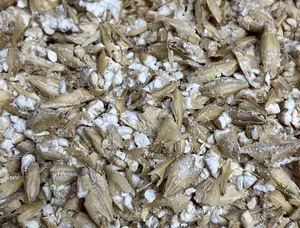
Proper milling is the first line of defense. The aim is to crack the starchy endosperm and leave the husks mostly intact, so they act as a natural filter bed. Too many fines clog the bed and cause channeling. Wort takes the “path[s] of least resistance,” so some regions are not rinsed (MoreBeer).
In practice, a two‑roller mill gap around 0.5–0.6 mm usually works well. One study found a 0.55 mm gap on a 2‑roller mill produced a grist “comparable to a commercial six‑roller mill,” maximizing husk integrity (GRDC). Brewhouses tune gaps to get about 4–6 pieces per kernel (petals) and to avoid pulverized husk. Measurements confirm it. Malts that keep the husk intact give faster runoff and higher extract.
When malts are under‑modified — with high zygotic β‑glucans — lautering slows or stalls; an Australian brewing report identified such malts as a main cause of poor lautering (GRDC) (GRDC).
Mash temperature profile and viscosity control
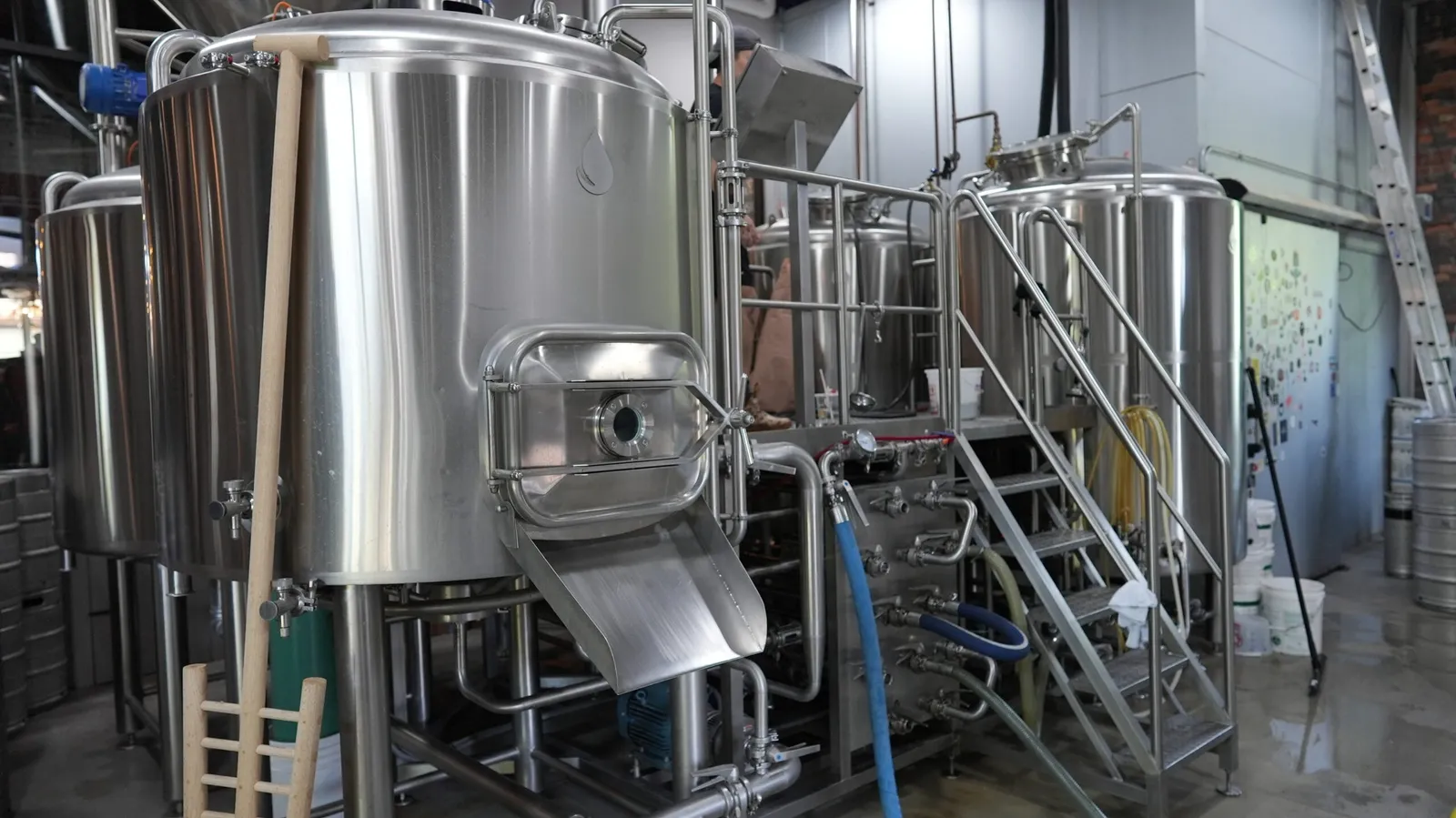
The mash schedule controls enzyme activity and wort viscosity. β‑glucans are cell‑wall polysaccharides that tend to form gummy gels. They gelatinize around 50–60 °C unless they are degraded first. A rest at a lower temperature, around 40–45 °C, activates malt β‑1,3‑1,4‑glucanases (β‑glucanase: enzymes that break down β‑glucans). These enzymes peak at about 40–45 °C and cut viscosity (Crisp Malt). If you skip this rest, the filter bed can choke.
Proteinases/proteases (optimum ~50–55 °C) act on cell walls. Then amylases finish starch conversion (β‑amylase ~62–67 °C, α‑amylase ~71–72 °C) (Crisp Malt). A classic step mash is common to lower viscosity, for instance 45 °C → 50 °C → 65 °C → 75 °C, with ~15–20 minutes at 45 °C and a mash‑out near 75–78 °C.
The link is quantifiable. One study correlated wort β‑glucan with filtration time (r>0.97) and viscosity (r>0.95) (MDPI). Reducing β‑glucan content directly speeds lautering. Modern maltsters usually deliver well‑modified malt. However, when β‑glucan runs high, the mash must compensate. Michiels et al. (2023) summarize that enzymes degrading β‑glucan and arabinoxylan “are widely used in the brewing industry to improve wort and beer filtration” (Journal of the Institute of Brewing).
pH and mash thickness matter. A pH of 5.2–5.6 and 2.5–3.5 L water per kg grain favor enzyme action. If the mash is too dilute, lauter time gets longer. If it is too thick, the bed can compact.
Lauter tun design and grain‑bed management
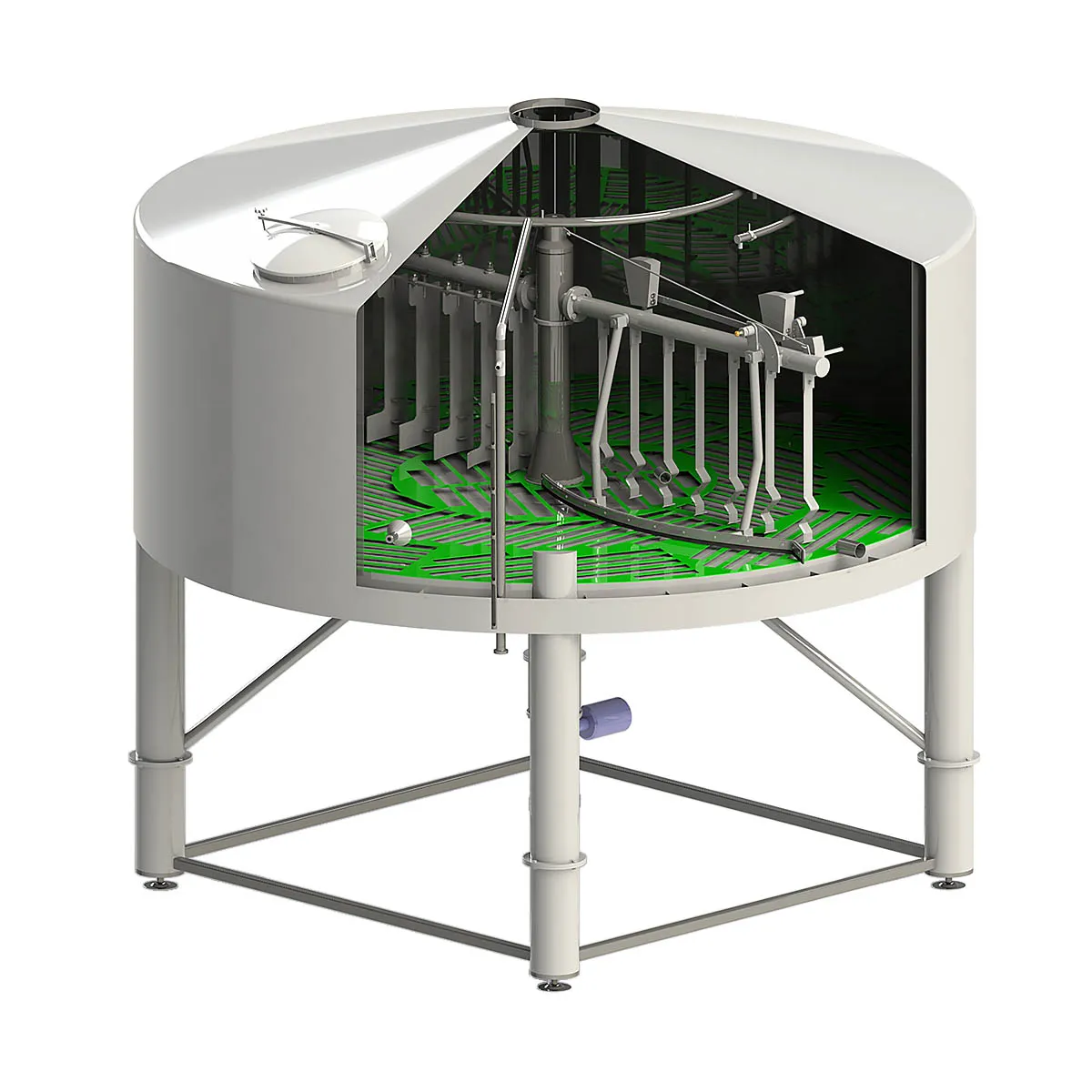
Darcy’s law (a filtration principle linking flow, pressure drop, and permeability) frames the mechanics. Equipment variables include bed depth, false‑bottom design, and raking. Larger‑diameter tuns tend to run shallower beds, usually ~250–380 mm, to balance clarity and flow. False‑bottoms with ≥10–12% open slot area are common. Some systems raise this to ~15–18% to speed runoff. A plenum gap (clearance under the false bottom) around 10–20 mm promotes even flow.
Rakes or agitators prevent compaction. According to GEA’s latest design, a rake that lowers late in lautering can maintain “low resistance in the grain bed and prevent channel formation” (GEA). Runoff should start gradually. A sudden high ΔP (ΔP >0.3 bar) compacts grains. Keep ΔP at ~0.1–0.2 bar and open valves slowly. Then the bed stays “supersaturated” and mobile (MoreBeer).
The effect of active raking is documented: modern systems with advanced rakes report a ~10% productivity gain and ~98.7% extract yield (GEA) (GEA). Earlier, stagnant rakes could allow 2–3% wort loss to a stuck bed; GEA’s testing eliminated such losses (GEA).
Processing aids: enzymes and rice hulls
Exogenous enzymes are a safety valve when adjuncts or seasonality push gums higher. Commercial blends usually carry endo‑β‑1,4‑xylanase and β‑1,3‑1,4‑glucanase activities, and can be pitched to the mash. These hydrolyze cell‑wall polysaccharides and reduce wort viscosity. Trials show a higher enzyme dose decreases high‑molecular‑weight β‑glucan and arabinoxylan, and speeds lautering (Journal of the Institute of Brewing). A β‑glucanase rest at ~45 °C for 15–20 minutes plus a commercial enzyme dose can restore runout in “high‑β‑glucan” malt. Sun et al. (2023) found a mash schedule that worked well with an α‑amylase:β‑glucanase:protease ratio of 1:2:1 at 44 °C for 38 minutes (MDPI). Accurate chemical dosing (dosing pump) supports consistency when adding such blends.
Rice hulls add structure without extract. Industry practice adds about 2–5% by weight when more than 15–20% of the mash is huskless grains. They “prevent stuck sparges without affecting flavor” (YoLong Brewtech). Field reports include a brewer who added 3% hulls and saw lautering time drop 18%. Stuck-mash incidents fell to zero over multiple brews (YoLong Brewtech).
Troubleshooting benchmarks and actions
Targets help frame decisions. For a 60 bbl mash, a lauter time of 70–110 minutes and first-runoff turbidity below 250 NTU are desirable. ΔP across the bed should stay at about 0.1–0.2 bar. Extraction yield is a key output. Well-optimized systems now report at least 98% of potential extract (cf. below 95% in older Lahautering) (GEA, 5 brews per day) (GEA). Modern craft breweries set numeric NTU goals.
- Slow or stuck runoff: Check the filtration particle size. A crush that is too fine makes more flour. Check the ratio and the mash temperature. Consider a β‑glucan rest or adding β‑glucanase. Add 2–5% rice hulls for high‑adjunct grists (YoLong Brewtech). Check the tun design: make sure the inlet and outlet paths are clear, and recirculate (vorlauf, the step of returning turbid runoff to the mash bed until it runs clear) until the runoff is clear.
- Low yield/extraction: Check the mash conversion (iodine test). Make sure there is enough recirculation and sparging. Channeling leaves sugars behind. Keeping an inch of wort over the bed (“supersaturation”) helps equalize the flow (MoreBeer). Gentle raking during the sparge can flush zones that are poorly wetted. Raising the mash‑out temperature a little can lower the viscosity and release more sugar.
- High turbidity/clarity issues: First‑wort turbidity above 300 NTU points to bed breakage. Review the crush, because fines drive turbidity. A coarser grind or a longer recirculation improves clarity. Too much β‑glucan or polyphenol can suspend solids. Enzyme treatments (β‑glucanase, cellulose, polyphenol oxidase) and protein‑rest pH control (5.2–5.4) reduce haze.
- Pressure anomalies: If ΔP spikes, slow the flow immediately. Compaction is likely. Do not force the flow. Throttle the runoff and/or rake to relieve the bed. Keep the outlet valves fully open before sparging to avoid suction.
Data‑driven optimization
Runoffs improve when decisions are tied to data (flow rates, ΔP and turbidity) and to small, cumulative changes: tighter mill calibration, stepped mashes, and judicious enzymes/hulls. In one case study a fixed mash schedule was replaced with a held β‑glucan rest and a minor mill adjustment. The runoff was 22% faster and efficiency went up by 3 points. Retrofitting a conventional tun with optimized rake timing and valve control cut the lauter time to ~70 minutes and lifted extract to ~98.7% (GEA).
Automation is trending, from rake control to turbidity sensing. However, the fundamentals remain: protect husks, lower β‑glucan, and manage ΔP. Relevant Indonesian standards, for example SNI for beer, focus on ingredients and safety rather than process specifics. Therefore local brewers rely on international best practices as above.
Sources underpinning these guidelines include peer‑reviewed and technical references: procedural investigations of lautering (ResearchGate), enzyme impacts on filtration (Journal of the Institute of Brewing), equipment data from GEA (GEA) (GEA) (GEA), correlations between β‑glucan and filtration performance (MDPI), mash‑enzyme temperature optima (Crisp Malt), milling impacts and under‑modification risks (GRDC) (GRDC), practical lautering tactics (MoreBeer), and adjunct‑era aids like rice hulls (YoLong Brewtech).