

Article
Nickel mills are thirsty: Tailings thickeners and smarter floccs are starting to change that
Industry: Nickel_Mining | Process: Ore_Crushing_&_Grinding
Nickel ore grinding uses a lot of water. A typical concentrator circuit uses about 1.9–3.0 m³ of water per tonne of ore processed (mdpi.com). In Indonesia, major producers have moved to closed‑loop recirculation and monitoring. They route clarified process water back into the grinding circuit. They also cut losses with leak detection and flow metering.
PT Vale Indonesia reports a water‑use intensity of 106.9 m³ per tonne Ni (matte) in 2023. That is down from 141.8 m³/t in 2022. The company installed flow meters and an online SWAP leak‑detection system (vale.com). It cited an 11% year‑on‑year reduction, helped by tighter controls and recycling. This includes reusing 385,000 m³ of process water for slag cooling (vale.com).
Some operations recycle tailings thickener overflow back to mills or cyclones. This keeps fresh water make‑up low. They also optimize mill and cyclone performance to avoid water losses. These operations report double‑digit reductions. Recirculating clarified process water from thickeners or a clarifier directly into the grinding circuit has been shown to lower freshwater demand by about 10–50% or more. The figure depends on the mine’s baseline and efficiency. Indonesia’s regulation Permen LH 9/2006 limits total suspended solids (TSS) in processing discharge to 100 mg/L (123dok.com). Therefore returning clean overflow water to the mill supports compliance and conserves water.
Grinding circuit water intensity
Even downstream, flotation circuits still use about 2–3 m³/t of ore processed, and the water contains 25–35% solids, according to one study (mdpi.com). Therefore it pays to reclaim and reuse water at every stage of the plant.
Tailings thickener performance targets
The tailings thickener is a large tank that concentrates solids and produces a clarified overflow. It is central to water recovery in mineral plants. Industry benchmarks show high recovery: high‑rate thickeners usually reclaim about 80–85% of tailings water for reuse (azomining.com).
Modern designs can do better. At South Africa’s Khumani iron‑ore mine, two large high‑rate thickeners recovered about 90% of slurry water by volume. Secondary paste thickeners on the primary underflow raised total water reclamation to over 95% (australianmining.com.au). Deep‑cone and paste thickeners can reach underflow solids greater than 70% (w/w, by weight) to get the most water out (fls.com).
Incremental upgrades, outsized water gains
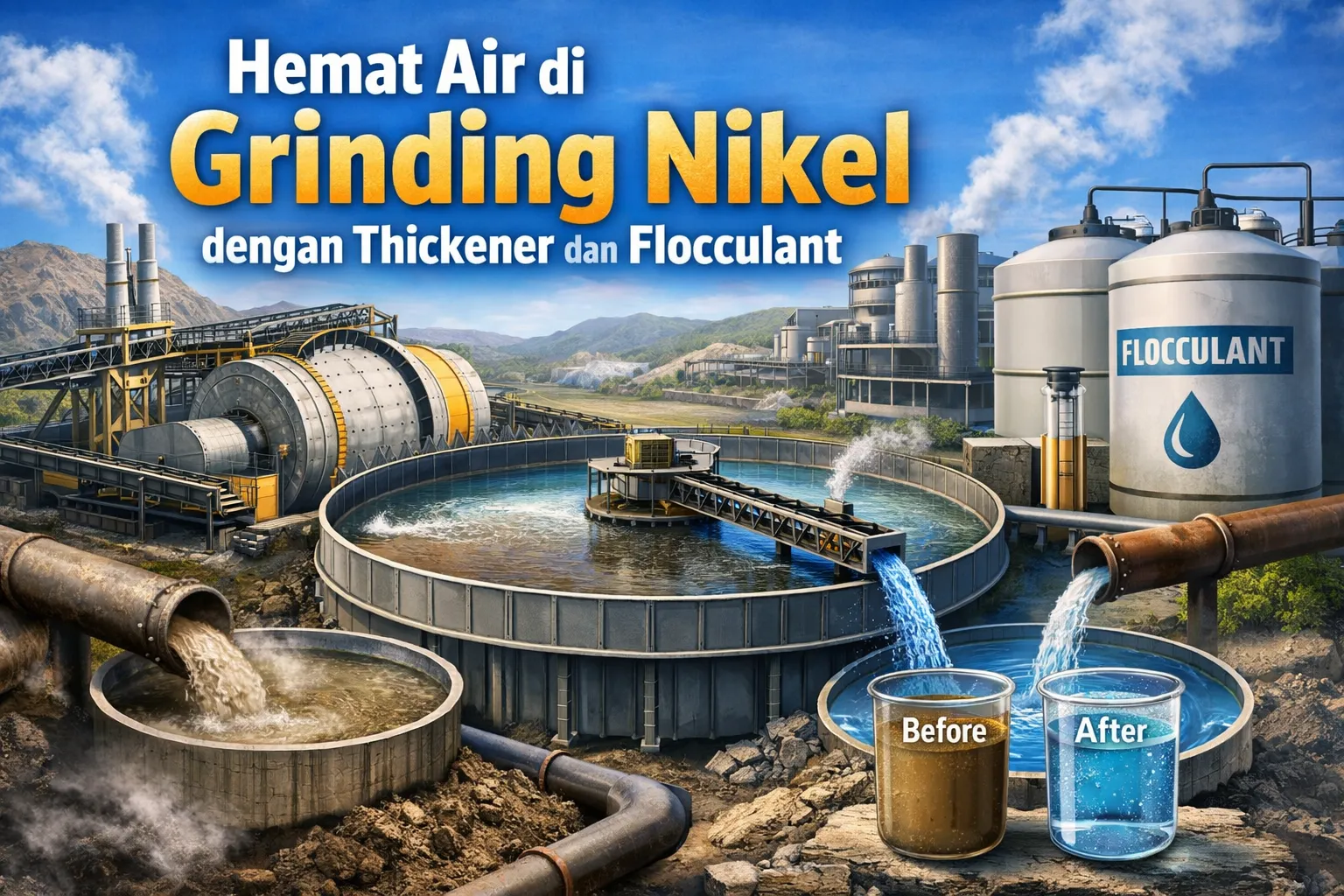
Small increases in underflow density, which is the solids concentration in thickener underflow, give sizable water savings. In one case, upgrading a third‑party thickener raised underflow solids from 61% to 65% (w/w) and cut water reporting to tailings by 12% (fls.com). Another upgrade lifted underflow from 54% to 57% and gave an 11% drop in tailings flow. Therefore the plant uses less freshwater (fls.com).
Digital control matters, too. Auto-flocculant control (FLS AutoFloc) at one Chilean mine cut water to tails by 14% and flocculant use by 15%. That gave multi-million-dollar savings (fls.com). Overflow clarity improves along with yield. One upgraded thickener saw turbidity drop from about 400 to less than 100 NTU (Nephelometric Turbidity Units, a standard measure of water clarity) (fls.com).
Chemical flocculants and settling physics
High‑molecular‑weight polyacrylamide copolymers (usually anionic) are the workhorse flocculants in modern mining; they bind fine particles into larger “flocs” that settle faster (research.csiro.au). Plants tune dosage to increase the zone settling velocity and produce denser underflow solids (iwaponline.com), often delivered with an accurate dosing pump to avoid swings.
Tests show that raising the flocculant dose and combining it with recycled sludge can produce near‑neutral zeta potential (a measure of particle surface charge) and the lowest water turbidity (mdpi.com). Doubling the flocculant dose can increase underflow density a lot. However, overdosing can create “fluffy” flocs that settle quickly but compact poorly (iwaponline.com). The right chemistry for each feed and feedwell dilution systems (for example FLS’s E‑DUC/P‑DUC) help cut polymer use and still get the full effect (fls.com). At the reagent shelf, operations rely on specialized flocculants to keep performance while pushing for clarity and recovery.
Closed‑loop reuse and compliance
Recycling clarified process water (from thickeners or clarifiers) directly into the grinding circuit has repeatedly lowered freshwater demand by double digits, with thickener upgrades alone yielding 10–15%+ less water to tailings (fls.com; fls.com). In many plants, well‑designed thickeners routinely enable 85–95%+ of tailings water to be recycled back into grinding and processing, slashing reliance on external water supplies (azomining.com; australianmining.com.au).
In Indonesia’s nickel sector — where the TSS limit is 100 mg/L in effluent (123dok.com) — the same interventions serve both business and regulatory needs. By recovering the vast majority of process water and clarifying it for reuse (australianmining.com.au) and driving overflow turbidity to less than 100 NTU (fls.com), mines reduce withdrawals and operating costs while improving compliance.