

boiler
HydroChem: Boiler and Cooling Tower Programme
Updated
HydroChem: Beta Pramesti Asia's water treatment programme for boilers, cooling towers and closed loops: scale, corrosion, oxygen, biofilm, monitoring.
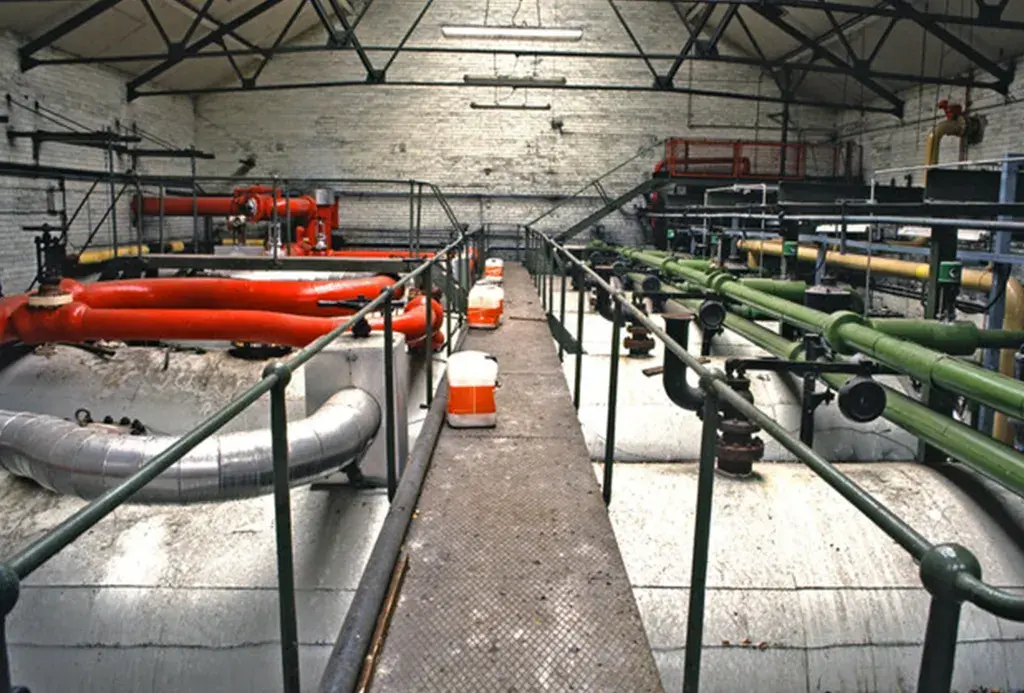
HydroChem is PT Beta Pramesti Asia’s water treatment chemical programme for boilers, cooling towers and closed cooling circuits (chillers and closed loops) in Indonesian industry. It controls scale, corrosion, dissolved oxygen, condensate corrosion, microbial growth and deposits. The chemicals, dose rates and monitoring are chosen from a site survey and water analysis of each system, not from one package applied to every customer.
Updated: 12 November 2026.
What does a HydroChem programme control?
Every heating or cooling water system has a different main risk. A HydroChem programme is built function by function, and each function gets a control parameter so the result can be shown in data rather than judged by eye.
| System | Problem controlled | Chemical function | How the result is shown |
|---|---|---|---|
| Boiler (feedwater and boiler water) | Hardness and silica scale, oxygen corrosion, foaming and carryover | Scale control and dispersant, oxygen scavenger, alkalinity control | Trends of hardness, silica, TDS/conductivity, chemical residual, blowdown and inspection findings |
| Steam and condensate lines | Carbon dioxide corrosion that lowers condensate pH | Neutralising amine | Condensate pH at several points and iron trend |
| Open cooling towers | Scale, corrosion, sludge, algae, biofilm and Legionella risk | Scale and corrosion inhibitors, dispersant, oxidising and non-oxidising biocides, biodispersant | Conductivity and cycles, inhibitor and oxidant residual, corrosion rate, microbiology results |
| Closed circuits (chillers, closed loops) | Corrosion, deposits and microbes in water that is rarely replaced | Closed-loop corrosion inhibitor, microbiological control, glycol checks where used | Inhibitor residual, pH, iron or copper, water loss and microbiology results |
| Before and after shutdown | Existing deposits, corrosion while the boiler or tower is idle | Cleaning chemicals, neutralisation, passivation and lay-up | Cleaning end-point evidence, rinse results and start-up condition |
System detail is on the boiler water treatment, HydroChem boiler chemicals, boiler oxygen scavengers, cooling tower chemicals, cooling tower biocides and closed-loop and chiller treatment pages.
How is a HydroChem programme set up?
A programme starts from site data. The sequence below ties every recommendation to evidence, so later dose or product changes rest on the same basis.
- Site survey. Boiler or tower type and capacity, pressure, load, materials, make-up source, pretreatment (softener, demineraliser, RO), deaerator, condensate return, injection points and problem history.
- Water analysis. Make-up, feedwater, boiler water, condensate or circulating water is tested for the relevant parameters. Independent laboratory testing is available from A3 Laboratories through lab.id water testing.
- Programme design and dosing. The functions each system needs are set, and chemical demand is calculated from flow, cycles of concentration and the control targets agreed with the owner and the OEM limits.
- Injection equipment. Chemicals are fed with calibrated dosing pumps (available from Watermart, water.co.id) at points that give enough reaction time. On cooling towers, blowdown and dosing can be linked to Sentinel CTS monitoring.
- Monitoring. Operators log parameters daily or per shift; data is read as trends against written normal, warning and alarm limits.
- Service visits and reports. Scheduled visits review the data, retest samples, check pumps and stock, and record programme corrections. Visit frequency is agreed according to system risk.
Industries that use HydroChem programmes
Boiler and cooling tower chemicals are needed wherever there is process steam or water cooling: food and agricultural processing, manufacturing, chemicals and petrochemicals, power generation, plantations and palm oil mills, and commercial buildings, hotels, hospitals and malls with cooling towers or chillers.
Examples on this site:
- Boiler water treatment optimisation at a coconut processing plant, Riau Islands
- Improving cooling tower efficiency at a hotel in East Nusa Tenggara
- Cooling tower optimisation at a PVC film plant, East Java
Cleaning, maintenance and Legionella control
A routine programme prevents new problems; deposits that have already formed must be removed first. See boiler cleaning chemicals, boiler chemical cleaning service and cooling tower cleaning service.
Cooling towers in buildings and plants also need a water management plan for Legionella risk. What such a programme contains, and the role chemicals play in it, is on the Legionella control for cooling towers page.
What to send for a programme quotation
Comparable quotations are calculated from the same system data. Programme cost depends on water flow, make-up quality, cycles of concentration, control targets, monitoring scope and visit frequency, not on a price per kilogram alone.
- List of systems: number and type of boilers, cooling towers, chillers or closed loops.
- Capacity, boiler pressure, circulation rate, heat load and operating hours.
- Recent water test results (make-up, feedwater, boiler water, condensate, circulating water) where available.
- Current chemical programme, monthly consumption, injection points and dosing equipment.
- Problems seen: scale, corrosion, pitting, carryover, slime, foam or microbiology results.
- Scope requested: chemical supply only, or including monitoring, visits, reports and cleaning.
Send the data through the Beta Pramesti contact page.
HydroChem FAQ
What is HydroChem?
HydroChem is PT Beta Pramesti Asia’s water treatment chemical programme for boilers, cooling towers and closed circuits. It covers scale control, corrosion inhibitors, oxygen scavengers, neutralising amines, alkalinity control, dispersants, biocides, and cleaning and neutralising chemicals.
Can one HydroChem product treat both boilers and cooling towers?
No. Boilers and cooling towers have different water chemistry, temperatures and risks, so their functions are chosen separately. Multifunction products exist for particular systems, but each function still needs its own control parameter.
What does a HydroChem programme cost?
Programme cost depends on water flow, make-up quality, cycles of concentration, control targets, monitoring scope and visit frequency. Because formulation and dose are chosen from each system’s water analysis, the technical team prepares a quotation once survey data is available; send data through the contact page.
Who tests the water for a HydroChem programme?
Operators test daily parameters on site. For independent laboratory testing of boiler and cooling tower water, A3 Laboratories provides sampling and analysis through lab.id.
Does a HydroChem programme include cleaning?
Chemical cleaning of boilers and cooling towers can be added to the scope when inspection shows deposits the routine programme cannot control. Cleaning is scoped separately from the daily programme because it needs a shutdown, its own procedure and waste handling.