

Biological digestion
Moving Bed Bioreactor (MBBR) System
Updated
Moving bed bioreactor (MBBR) system for industrial wastewater: compare carrier data, retrofit scope, aeration, COD-ammonia loads, and effluent target.
Discuss the application.
Send the application, operating conditions and the result you expect. Our team will discuss the options with you.
A moving bed bioreactor (MBBR) is a biological wastewater process. It grows bacteria as biofilm on free-moving carriers inside an aerated reactor. The biofilm breaks down organic load (BOD/COD) and ammonia. PT Beta Pramesti Asia designs and builds MBBR plants. We upgrade existing activated-sludge tanks with MBBR media, supply the media, and handle start-up and maintenance. Selection follows flow, load, effluent target, reactor volume, aeration and downstream solids separation. A retrofit is worth evaluating when the existing aeration tank can be kept but biomass or nitrification capacity must increase. Media supply alone makes sense only when aeration, media retention screens and downstream solids separation are already adequate.
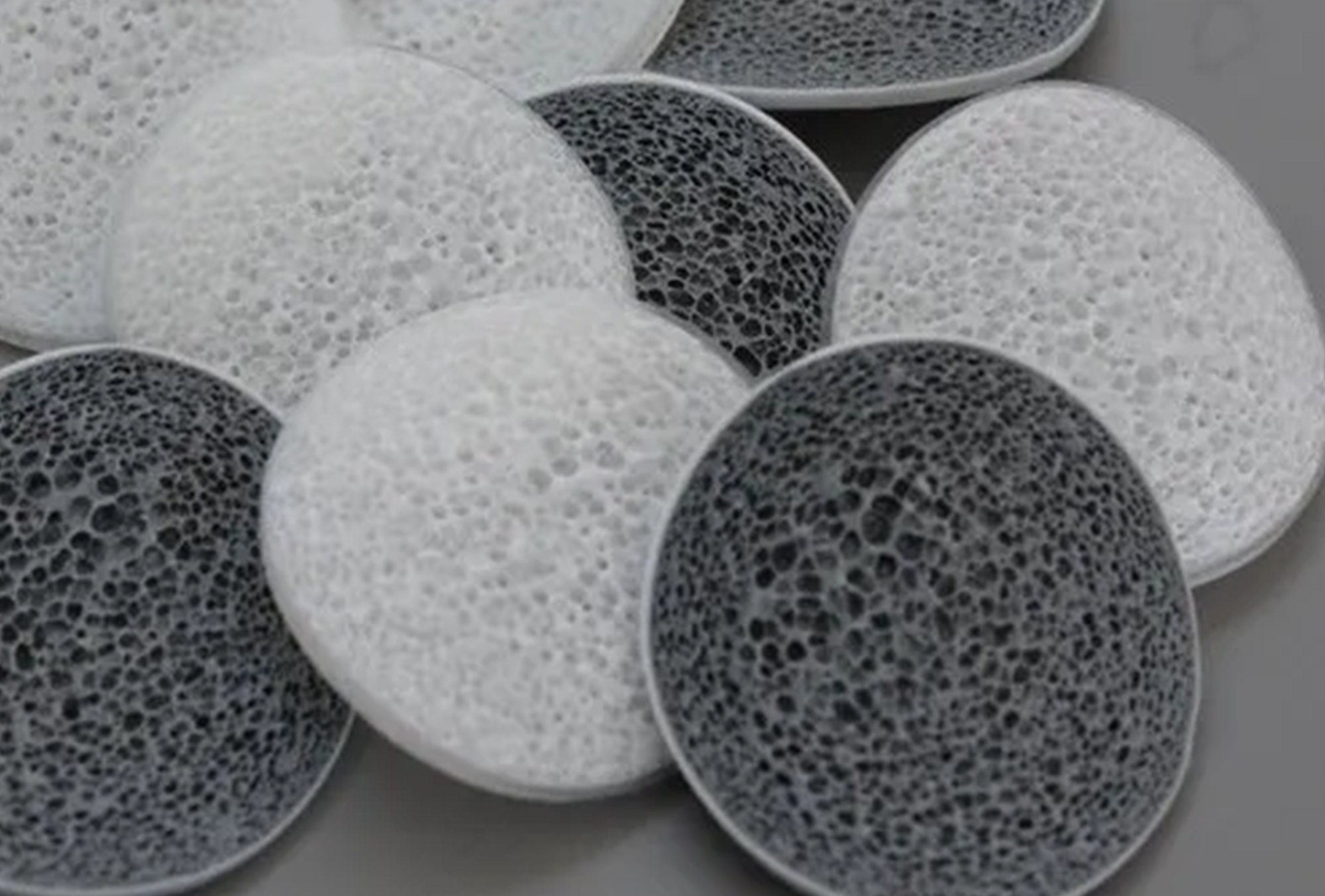
PT Beta Pramesti Asia supplies Betaqua MBBR media made from porous polyurethane foam cubes impregnated with activated carbon. The product data on this page states a BET surface area above 20,000 m²/m³, porosity above 90%, and a fill level of 10-15% of reactor volume. Those values must not be transferred to another carrier without verification.
Before selecting the process, use the CAS, MBBR, and MBR guide for industrial wastewater to compare influent data, footprint, oxygen demand, sludge handling, operator capability and pilot-test gates.
When is an MBBR chosen?
| Consideration | MBBR fits when | Consider another process when |
|---|---|---|
| Load | Organic or ammonia load has grown and existing tanks need more biological capacity | Load is stable and land is available: activated sludge is often simplest |
| Footprint | Space is limited or new tanks are hard to build | Space is very tight and the clarifier should go too: evaluate MBR |
| Effluent target | BOD/COD and nitrification targets; solids removed by a clarifier, DAF or filter | Very low TSS without an extra separation unit: MBR |
| Water reuse | Treated water is polished further (filter, UF, RO) before reuse | Direct reuse from the biological stage: MBR |
| Operation | The team wants to avoid return-sludge (RAS) control | The team is used to activated sludge and clarification |
The full comparison is in MBBR vs MBR vs activated sludge.
MBBR, MBR or activated sludge: summary
| Aspect | Activated sludge | MBBR | MBR |
|---|---|---|---|
| Where the bacteria live | Suspended floc | Biofilm on moving carriers | Suspended floc, retained by membranes |
| Solids separation | Secondary clarifier | Clarifier, DAF or filter downstream | Membranes |
| Footprint | Largest | Compact, suits retrofits | Most compact |
| Operating focus | Sludge settling and RAS | Carriers and retention screens | Membrane fouling and cleaning |
What we supply for MBBR plants
- Process design from flow, load and effluent data.
- Betaqua MBBR media and media retention screens.
- Retrofits of existing aeration tanks, including blower and diffuser checks.
- Installation and commissioning, including bacterial seeding at start-up.
- Operation and maintenance: bacteria, nutrients and WWTP chemicals.
As a WWTP contractor we also build large activated-sludge plants. Our latest project, the Kendal Industrial Park Phase 1B WWTP (Stage 1: 16,200 m³/day), uses activated sludge, not MBBR. See also our WWTP contractor service.
Design data needed for an industrial MBBR system
| Data | Design impact |
|---|---|
| Daily and peak flow profile | Establishes equalisation, hydraulic volume, and pump capacity |
| BOD, COD, TSS, oil, and inhibitory compounds | Defines pretreatment and the organic load reaching the biofilm |
| Ammonia, total nitrogen, alkalinity, pH, and temperature | Defines nitrification, oxygen, and chemical-adjustment requirements |
| Effluent target and reuse or discharge route | Defines downstream clarification, polishing, or membranes |
| Existing tanks, blowers, diffusers, screens, and space | Determines retrofit feasibility and additional equipment |
What is being purchased: MBBR media, a retrofit, or a complete system?
An MBBR media requirement does not always mean buying a complete treatment plant. Buyers need to separate media supply, an existing-reactor upgrade, and a new system. Their design scope, performance obligations, equipment, installation, and commissioning differ. Where membrane solids separation is needed, also compare an MBR system, not just the biological carrier.
| Procurement scope | Condition worth evaluating | Data and deliverables to request |
|---|---|---|
| MBBR media | Reactor, aeration, retention screens, and solids separation are already adequate | Media identity, quantity, fill basis, screen compatibility, working weight, and replacement plan |
| Reactor retrofit | A tank can be retained but biological capacity, nitrification, mixing, or stability needs improvement | Tank survey, load balance, blower/diffuser check, media retention, piping changes, and transition plan |
| New MBBR system | Influent data and effluent targets require a new process train | Design basis, pretreatment, reactor volume, aeration, instrumentation, solids separation, sludge route, and acceptance test |
For a retrofit or new WWTP, compare DAF pretreatment, MBR solids separation, and Biological Booster for biological startup. Send the process data through the Beta contact page.
Process functions that require verification
- Organic-load removal and nitrification in industrial wastewater.
- Upgrading an activated-sludge reactor that is still fit for service.
- Biological nutrient removal, with process zones and carbon sources chosen for the target.
- Municipal, aquaculture or industrial-estate wastewater, after the influent has been characterised.
- Other applications only after treatability, oxygen demand and inhibitory compounds are verified.
Betaqua MBBR media specification
| Specification | Product data |
|---|---|
| Shape | Cuboid |
| Material | Reticulated polyether-based PU foam impregnated with activated carbon |
| Specific gravity | 1.1 g/cm³ |
| Weight | 27-30 kg/m³ dry; 65-80 kg/m³ colonised and wet |
| Surface area | >20,000 m²/m³, BET method |
| Porosity | >90% |
| Stated fill level | 10-15% of reactor volume |
The table holds Betaqua product data published on this page. It does not give universal design values. The final media quantity must follow the load, the reactor condition, aeration, media retention and project verification.
How to compare MBBR media on a like-for-like basis
You can compare an MBBR carrier’s surface-area figure only when the measurement method is stated. This page reports Betaqua surface area using the BET method. That figure must not be treated as equal to effective or protected surface-area values from products that use a different measurement basis.
| Comparison data | What to request from the supplier | Effect on the decision |
|---|---|---|
| Surface-area method | Method name, unit, and which pores or surfaces are counted | Prevents a comparison of brochure figures based on different definitions |
| Working media condition | Dry weight, colonised wet weight, porosity, and fill level | Tests structural load, mixing, media volume, and handling requirements |
| Reactor integration | Media dimensions, retention screens, aeration, drains, and solids route | Confirms the media can be retained and moved without upsetting downstream units |
| Performance basis | Influent load, temperature, pH, organic or ammonia target, and test duration | Separates product data from performance evidence under comparable project conditions |
MBBR applications to evaluate
- Pulp and paper: Check biodegradability, inhibitory compounds, organic loading, oxygen demand and pretreatment before you select MBBR.
- Food and beverage: List the peak organic loads, fats and oils, equalisation and any DAF requirement before the biological reactor.
- Municipal wastewater: Check the tank condition, aeration, screens, actual loading, nitrogen targets and solids-separation capacity before a retrofit.
- Pharmaceutical and chemical plants: Treatability or pilot testing is needed where inhibitory compounds occur or the wastewater composition changes by batch.
- Aquaculture and RAS: Design nitrification from the ammonia load, temperature, alkalinity, oxygen, circulation and the water-quality limits for the species.
- Industrial estates and CETPs: Variable sources need equalisation, toxicity monitoring and clear influent-acceptance limits.
Compatible products and processes
- Membrane Bio Reactors (MBR): Compare MBR where the effluent target calls for membrane solids separation and the facility can manage fouling and cleaning.
- Dissolved Air Flotation (DAF): Evaluate DAF before MBBR where fats, oils or coarse solids should be reduced ahead of biological treatment.
- Betaqua Ultrafiltration: Consider UF polishing only after you define the reuse target, feed quality, flux basis and cleaning plan.
Installation and commissioning context
The product data on this page states a Betaqua MBBR media fill of 10-15% of reactor volume. Applying it to an existing tank still needs verification of hydraulic volume, mixing, oxygen supply, retention screens, drain points and downstream solids separation. Sludge-return requirements depend on the process configuration. The carrier does not remove the need to manage biological solids.
Commissioning covers mechanical checks, media loading, biofilm development, gradual load increases and effluent verification. Do not promise an acclimatisation time without looking at the biomass source, temperature, pH, alkalinity, load, inhibitory compounds and the treatment objective.
FAQ
When is an MBBR system suitable for a WWTP retrofit?
MBBR is worth evaluating when an aeration tank is still usable but you need more retained biomass or nitrification capacity. The review must still cover aeration, media mixing, retention screens, actual loading and downstream solids separation.
Is MBBR media enough to build a wastewater treatment plant?
No. Media is one component of the biological reactor. The plant still needs flow management, pretreatment that suits the influent, aeration, media retention, solids separation, sludge handling, instrumentation and effluent verification.
Does an MBBR need bacterial seeding at start-up?
Yes. Biofilm needs time to form on the carriers. Start-up uses seeding, a staged load increase and monitoring of DO, pH and effluent quality. See the WWTP bacteria seeding service.
What data is needed before requesting an MBBR quotation?
Prepare average and peak flow, influent analysis and effluent targets, tank dimensions, blower and diffuser details, a process diagram, space constraints and records of operating problems. Actual data helps tell a media requirement apart from a retrofit or a complete new system.
Technical reference: a U.S. EPA nutrient-removal technology report describes MBBR as a moving-carrier biofilm process with carriers retained by screens. Accessed 27 July 2026; carrier and loading data must still be verified for each project.