

Article
Closed Loop Chemical Treatment
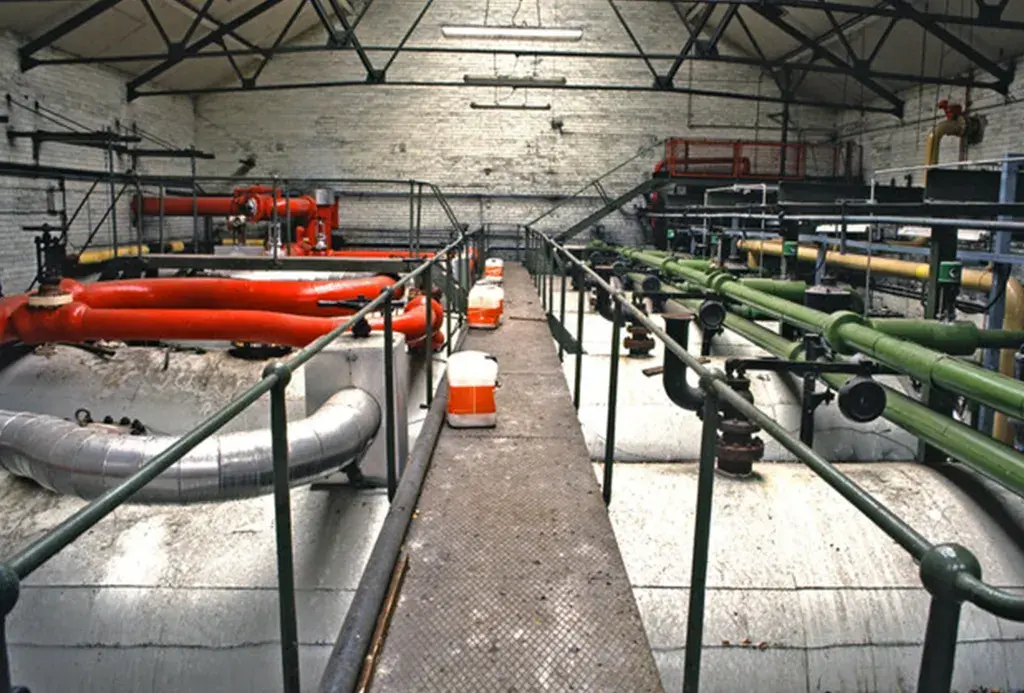
Closed loop chemical treatment for data centers protects chilled water and liquid-cooling circuits. It uses clean fill water, corrosion inhibitors matched to the metals, microbiological checks, glycol control and routine trend monitoring. These loops lose little water. Therefore poor commissioning water or the wrong chemistry can stay in the system for years.
Technically reviewed: 5 August 2026.
For the wider make-up-water, cooling-tower, blowdown, and WUE design basis, see the data center cooling water treatment guide.
Why closed loops become the weak point
A cooling tower has blowdown that removes contaminants continuously. A closed loop does not. Whatever enters at commissioning stays trapped inside and works slowly: poor fill water, welding flux residue, mill scale, bacteria. Symptoms only show when fine filters blind, delta-P climbs, or liquid cooling cold plates plug. In direct-to-chip systems, micro-channels at millimeter scale give zero tolerance to corrosion particles.
What should a closed loop chemical treatment program include?
A closed loop chemical treatment program should define the fill-water specification, the inhibitor chemistry, the biocide trigger, the glycol limits, the sample points and the acceptance trend before the loop is released to service. The strongest proposal names the metals being protected, the target residual or control range, and the corrective action when iron, copper, pH, conductivity or bacteria move out of trend.
1. Fill water: specify before you dose
Fill water quality, from safest down: demineralized water (a demin plant or mixed bed), then reverse osmosis permeate, then soft water from a softener. Raw municipal or ground water should not fill a precision loop. Hardness deposits on hot surfaces and chlorides speed up stainless steel pitting.
For liquid cooling, follow the rack/CDU vendor’s fluid specification. It is usually low conductivity, controlled particulates, and periodic replacement or polishing. Glycol blends (for protection or free cooling) also need demineralized dilution water, so their built-in inhibitor packages are not used up too early.
2. Corrosion inhibitors: match the metallurgy
A data center loop is usually mixed-metal: carbon steel, copper (coils, cold plates), brass and stainless. Therefore the program must protect all of them at once:
- Nitrite-based programs for carbon steel, combined with azoles for copper. They need routine level control because bacteria can consume nitrite.
- Molybdate or nitrite-molybdate blends are more stable against microbiological interference.
- All-organic / non-metal formulations where discharge limits at drain-down are a constraint.
Our closed loop chemical program covers these options together with azoles for copper protection. This is important for liquid cooling cold plates, which are almost always copper-based.
3. Microbiological control without strong oxidizers
Continuous chlorination does not belong in a closed loop. Strong oxidizers attack the inhibitors and the metals. The correct practice uses non-oxidizing biocides (for example isothiazolinone or glutaraldehyde) as scheduled shock doses, plus total bacteria count monitoring. Nitrate-reducing bacteria are the usual reason nitrite levels “disappear” without a trace. Slime-forming bacteria glue fouling onto heat transfer surfaces.
4. Monitoring: the parameters that actually matter
Six parameters, checked monthly (or continuously where sensors exist):
| Parameter | What to watch for |
|---|---|
| Conductivity | Rising = contamination or uncontrolled make-up |
| Inhibitor level | Falling = abnormal consumption, check bacteria |
| pH | Outside program range = accelerated corrosion |
| Dissolved Fe and Cu | Rising = active corrosion on steel/copper |
| Total bacteria count | Rising = biocide schedule failing |
| Glycol (if present) | Concentration and degradation |
Trends matter more than single readings. Iron rising three months in a row is an alarm even while the value is still “within limits”. The cooling tower side of the same plant can be monitored continuously with Betaqua Sentinel CTS.
5. Commissioning and cleaning older loops
A new loop must be flushed and passivated before the first inhibitor charge. Remove construction debris, degrease, then do the final fill with demineralized water plus inhibitor. An older, fouled loop can usually be recovered with targeted chemical cleaning. We circulate dispersants and iron oxide cleaners, then rinse. We deliver this service alongside our cleaning service for thermal systems.
FAQ
Should a closed loop need continuous top-up water? No. Frequent make-up means a leak. With the water come oxygen and minerals that accelerate corrosion. Find and fix the leak. Do not just add more inhibitor.
How often should closed loop water be replaced? There is no fixed schedule. The water stays as long as the monitored parameters stay healthy. Drain-and-refill is for when the chemistry is no longer controllable, or when the system changes quite a lot.
Our liquid cooling uses the vendor’s fluid — do we still need a chemical program? You still need monitoring. Ready-made fluids degrade. The facility water system (FWS) feeding the CDUs still needs treatment like any chilled water loop.
Want your data center’s chilled water and liquid cooling loops audited, including fill water, inhibitors and microbiology? The PT Beta Pramesti Asia team can help via the contact page.