

Article
Condensate Polishing at a Glance
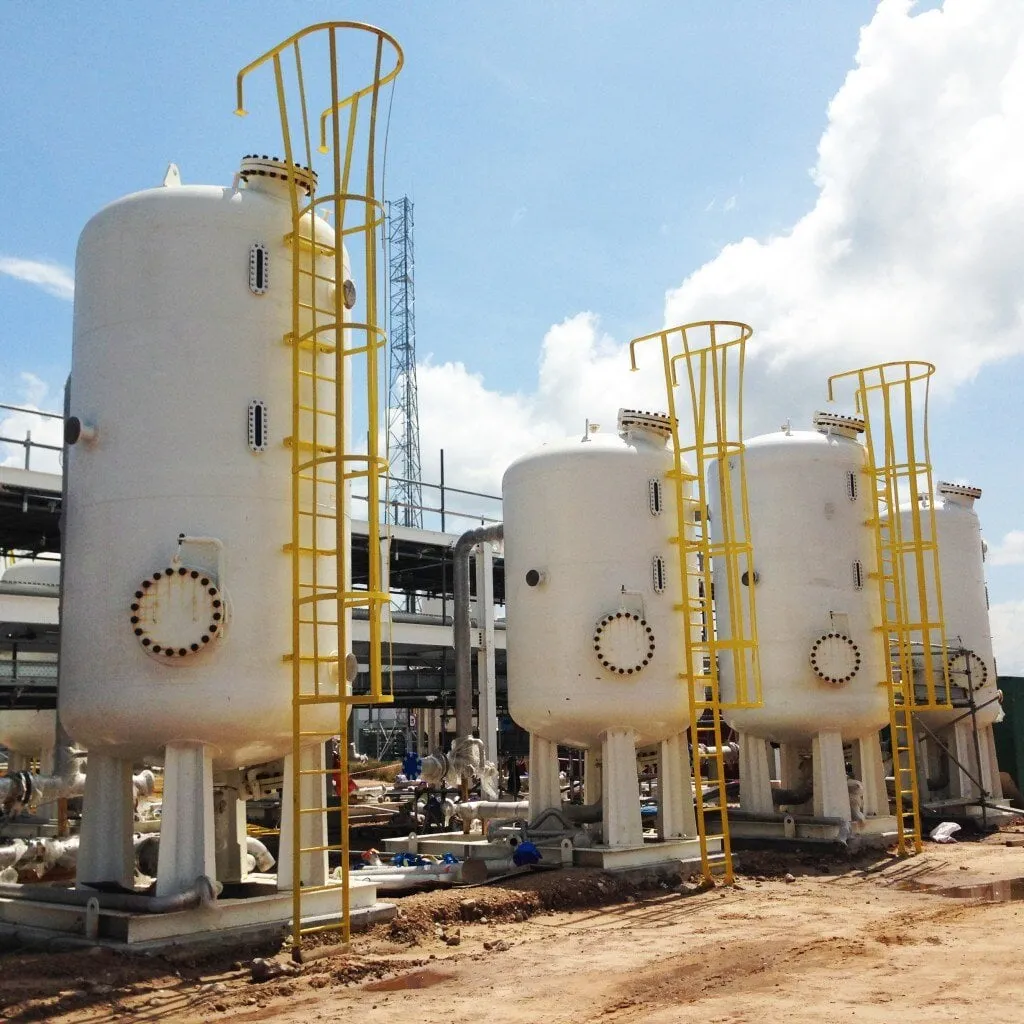
Steam power plants and high-pressure industrial boilers recycle steam condensate as feedwater. Making demineralized water is expensive, and the condensate is already hot. However, condensate picks up corrosion products and trace contaminants on the way back. Iron oxides from carbon-steel piping, copper from heat exchanger tubing, hydrocarbon traces from condenser leaks, and the occasional silica or sodium ingress all show up in the return line. If that mixture goes back into the boiler, tube life gets shorter and drum chemistry goes out of spec.
Condensate polishing is the unit process that catches those contaminants before the feedwater pump. A well-run polisher keeps cation conductivity below 0.2 µS/cm, total iron under 10 ppb, copper under 3 ppb, and silica under 10 ppb at the boiler inlet. A 600 psi or higher drum-type unit needs these numbers to avoid deposits and stress corrosion cracking.
Why condensate needs polishing
Even a well-sealed steam cycle leaks contaminants. Condenser tubes can develop pinhole leaks that let in cooling water at 30,000–40,000 mg/L TDS in the case of seawater-cooled stations. Carbon steel feedwater piping releases iron as magnetite and hematite, especially during start-ups and load swings. Copper alloys in low-pressure heaters add Cu species that plate out in the boiler at high pressure. None of these are visible in real time without analyzers, but they show up as deposits on superheater tubes within months.
The economic case is straightforward. A medium-sized 50 MW captive power plant burns several thousand tons of demin water per day if it has to make up for losses. Polishing closes that loop and recovers 95–98% of the cycle. It also extends boiler tube intervals, with fewer acid cleans and fewer forced outages, and lowers long-term operating cost.
Inside a condensate polisher
A typical polisher is a three-stage train. The condensate first passes through a heat exchanger. This drops the temperature from around 90–100°C to under 50°C. Polyamide ion-exchange resin and most polishing carbon degrade rapidly above 50–60°C. The cooled stream then goes through an activated carbon bed. The bed is sized for 5–10 minute empty bed contact time. The carbon catches dissolved hydrocarbons (oil from turbine seal leaks, lube grease) and residual chlorine. These would attack the resin downstream.
The polishing stage itself is a mixed-bed ion exchange resin vessel. It holds strong-acid cation and strong-base anion resin in the same tank, intimately mixed. Mixed beds remove sodium, chloride, sulfate, silica, and trace metals down to ppb levels in a single pass. Service flow rates are usually held at 60–80 m³/m² per hour. This keeps contact time adequate without crushing the resin. The bed exhausts when cation conductivity rises, which is the usual trigger. The polisher is then taken offline for external regeneration with HCl and NaOH. After that it is air-mixed and returned to service.
Some plants use deep-bed polishers with naked resin sized for 4–6 minutes contact. Others use precoat filter-demineralizers with powdered resin. Powdered-resin units are cheaper to install. However, they have shorter run lengths and higher consumable costs. Deep-bed mixed beds dominate at units above 100 MW.
Some plants need a polisher. For these plants we evaluate the requirements from boiler pressure, condensate return percentage, condenser-leak risk, and conductivity, sodium, and silica targets. These are set out on our condensate polisher for power plants page.
Operating ranges and failure modes
The numbers that matter day-to-day:
- Inlet temperature: under 50°C for standard resin, under 60°C for thermally stable grades.
- Inlet conductivity: usually under 1 µS/cm. A sudden rise indicates condenser leak.
- Pressure drop across the bed: 0.5–1.5 bar fresh. Replace internals if it climbs above 2.5 bar.
- Run length: 1,000–10,000 bed volumes between regenerations, depending on contamination load.
- Effluent silica: under 10 ppb is the standard target for high-pressure units.
The common failure modes are predictable. Resin fouling by oil from a seal leak ruins capacity and is hard to clean. Prevention through carbon pretreatment is much cheaper than recovery. Iron crud from the condensate can blind the top of the bed and cause channeling. Some plants install a magnetic filter or a cartridge filter ahead of the polisher to catch the ferrous particulate. Resin attrition from poor backwash technique shows up as fine resin in the effluent and rising silica leakage. A single excursion above 80°C can cost half the resin’s exchange capacity permanently.
Where polishing fits in the wider water cycle
Condensate polishing is one piece of a larger high-purity water program. Upstream, a demineralizer or RO-EDI train produces makeup water. Downstream, oxygen scavengers and amine-based pH control protect the feedwater piping. Polishing sits between those two. It is a final guard before water reaches the economizer and drum.
For combined-cycle plants with HRSGs, the polisher is sometimes bypassed during steady-state operation. It is brought online only during start-up and load changes, when corrosion product transport peaks. That hybrid approach saves resin life. However, it needs careful attention to cation conductivity trending, so the polisher comes back in service before contamination breaks through.
Beta Pramesti supplies rubber-lined demineralizers, mixed beds, and condensate polishers along with the boiler chemistry program: scavengers, amines, phosphate or AVT depending on the cycle. We supply power plants and captive boilers across Indonesia. Our engineering team can size polishing capacity against expected ingress rates. We can also recommend a regeneration strategy that fits the operations team’s outage schedule. For a discussion on your specific case, please contact us. We can walk through inlet water analyses and run a sizing case.