

Biological digestion
Fixed Bed Bio Reactor
Updated
Fixed Bed Bio Reactor for industrial water treatment, wastewater treatment, process water, and chemical programs in Indonesia with Beta Pramesti Asia.
Discuss the application.
Send the application, operating conditions and the result you expect. Our team will discuss the options with you.
Find Fixed Bed Bio Reactor solutions
Get good desalination results with our service
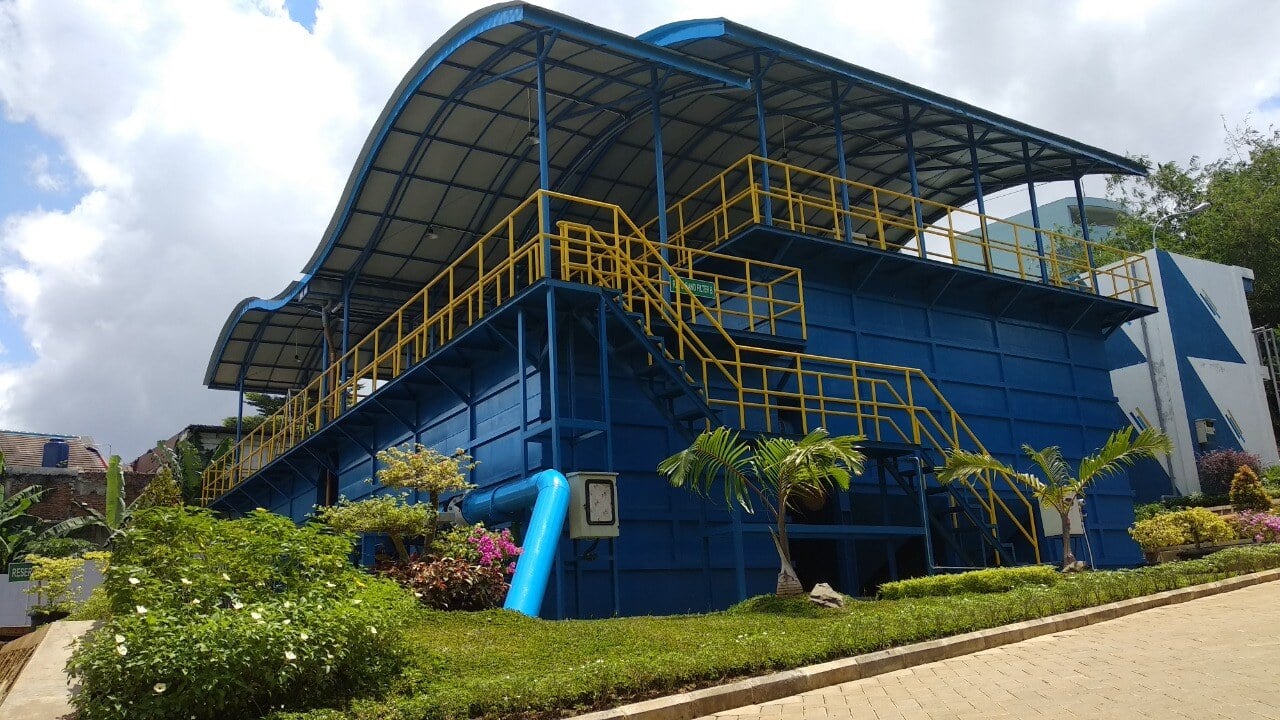
A Fixed Bed Bioreactor (FBBR) is one type of bioreactor used in biotechnology or waste treatment. Microorganisms grow and stick to the surface of solid media (the fixed bed) in the reactor. Here is a detailed explanation 👇
Working Principle
- Microorganisms form a biofilm on the surface of the media (such as stone, plastic, ceramic, or porous synthetic material).
- Liquid (substrate or effluent) flows through this media.
- The attached microorganisms break down the organic matter in the liquid through biological processes (usually aerobic).
In other words, this reactor works by flowing liquid over a surface covered with active microorganisms.
Main Components
- Reactor tank. This is the container where the fixed bed and liquid flow takes place.
- Support media. The microorganisms attach here (for example bioballs, gravel, or plastic fibers).
- Aeration system (for aerobic processes). This supplies oxygen to the microorganisms.
- Water distribution and jetting system. This makes sure the liquid flow is even.
Pros
- High density of microorganisms, because they stick to the media.
- Stable when the organic load changes.
- Easy maintenance, because the microbes do not need to be kept in suspension all the time.
- Efficient for effluent with low to medium organic concentrations.
Disadvantages
- The media can clog if it is too dense or the solids are high.
- Oxygen and substrate diffusion can be a limiting factor if the biofilm is too thick.
- Usually less efficient for effluent with high solids content than activated sludge (suspended growth) systems.
Typical Applications
- Treatment of domestic and industrial wastewater (for example from food, dairy, or pharmaceutical plants).
- Production of bioethanol, enzymes and organic acids in industrial biotechnology.
- Also used in nitrification-denitrification processes in wastewater treatment.
Learn more
and other info about our products and services.